Asia’s technology-heavy markets suffered one of their worst days in more than a year on Friday (November 6). Investors feared tougher regulatory scrutiny and a slowdown in AI build-out, after the steepest fall in US stocks since the “Liberation Day” tariff rout of April 2025. Japan’s Nikkei and Taiwan’s benchmark fell into bear-market territory, and South Korea briefly halted trading.
Wall Street sets off the rout
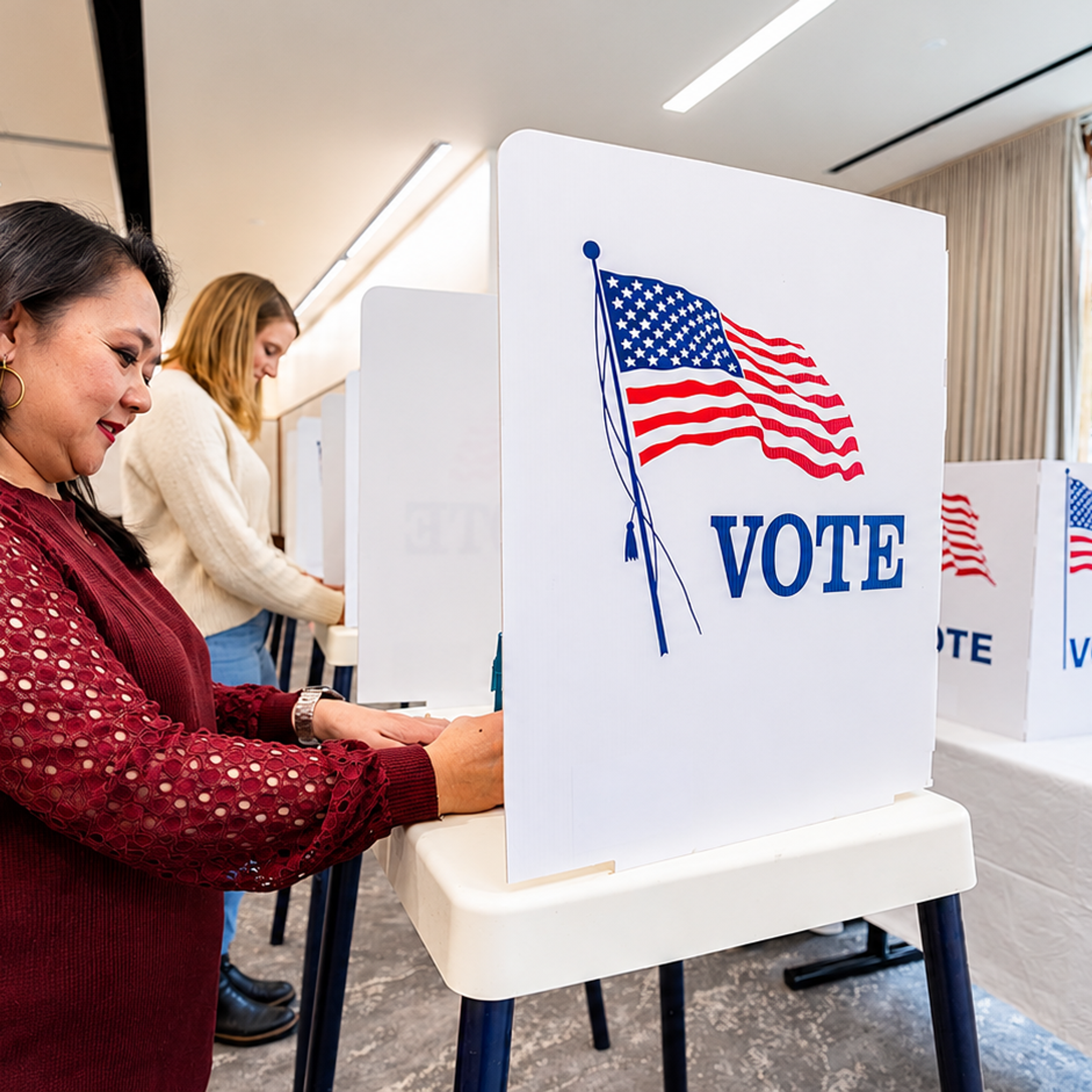
The trigger came in New York. The Nasdaq sank 5.5 per cent and $3 trillion was wiped off S&P 500 companies, as investors worried that Democrats, who dominated this week’s midterm elections, would apply the brakes to the AI boom. The Philadelphia Semiconductor Index slumped 12.2 per cent overnight, and the Nasdaq now stands 12 per cent below its record close of a month ago. Qualcomm fell nearly 10 per cent after smartphone chip sales missed estimates.
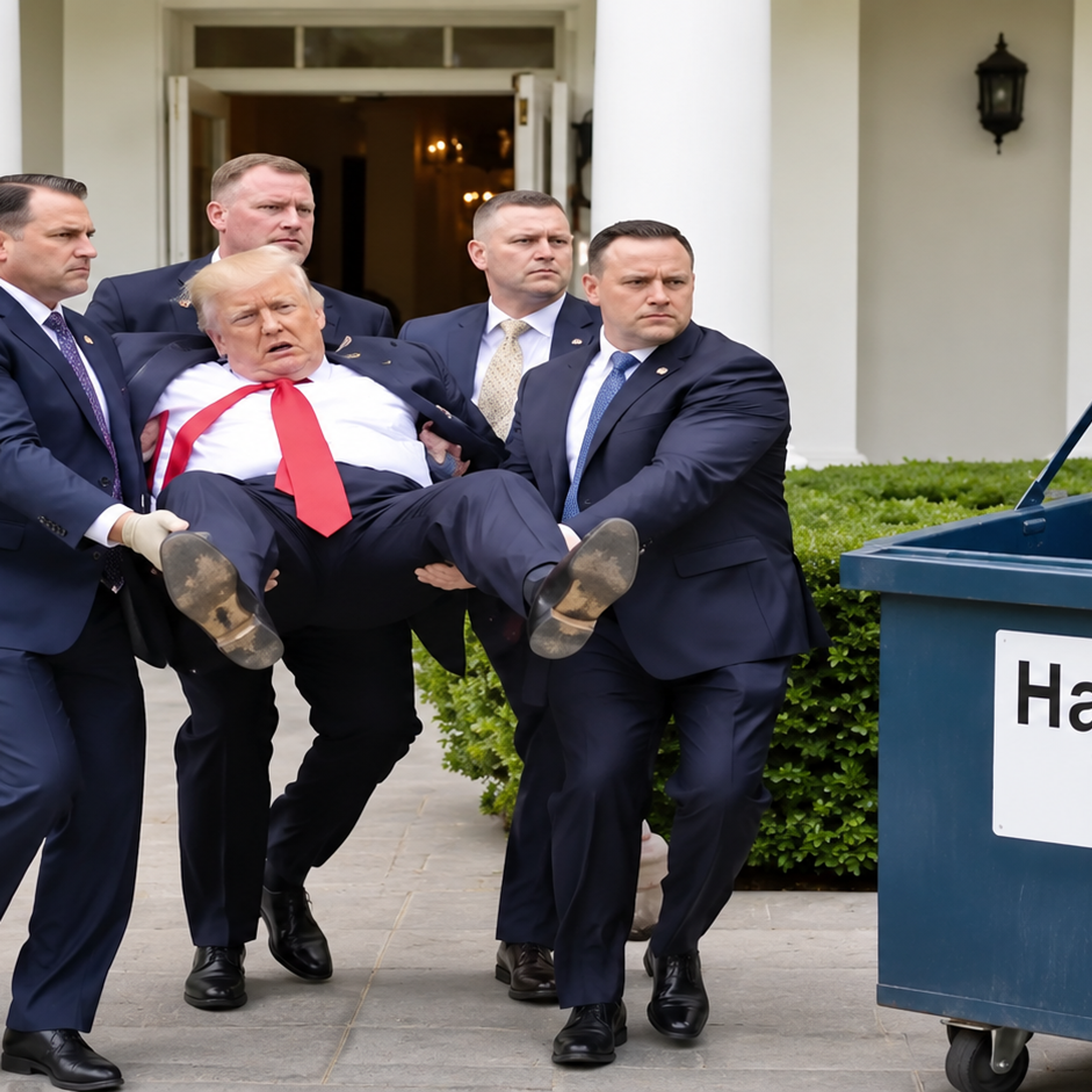
Donald Trump blamed his opponents on Truth Social where he said that the crash followed the Democrats’ strong showing on Tuesday, adding that “you only have yourselves to blame”. Analysts, however, see a more complicated picture. The political jitters are hitting an AI trade already on shaky ground over the return on enormous spending. Charu Chanana, chief investment strategist at Saxo, said that there was clearly “an element of panic” in the selling, with crowded positions making the adjustment far more violent.
Country by country
In Japan, the Nikkei 225 closed down 6.00 per cent at 57,410.91, more than 20 per cent below its June closing peak, which confirms a technical bear market. It was the worst drop since April 7, 2025, according to the Guardian. Advantest, Kioxia and SoftBank Group led the losers, extending Thursday’s falls, when Advantest dropped 15 per cent, Lasertec 14 per cent and Kioxia 13 per cent. SoftBank slid 11 per cent, and the cost of insuring against its default reached a four-year high.
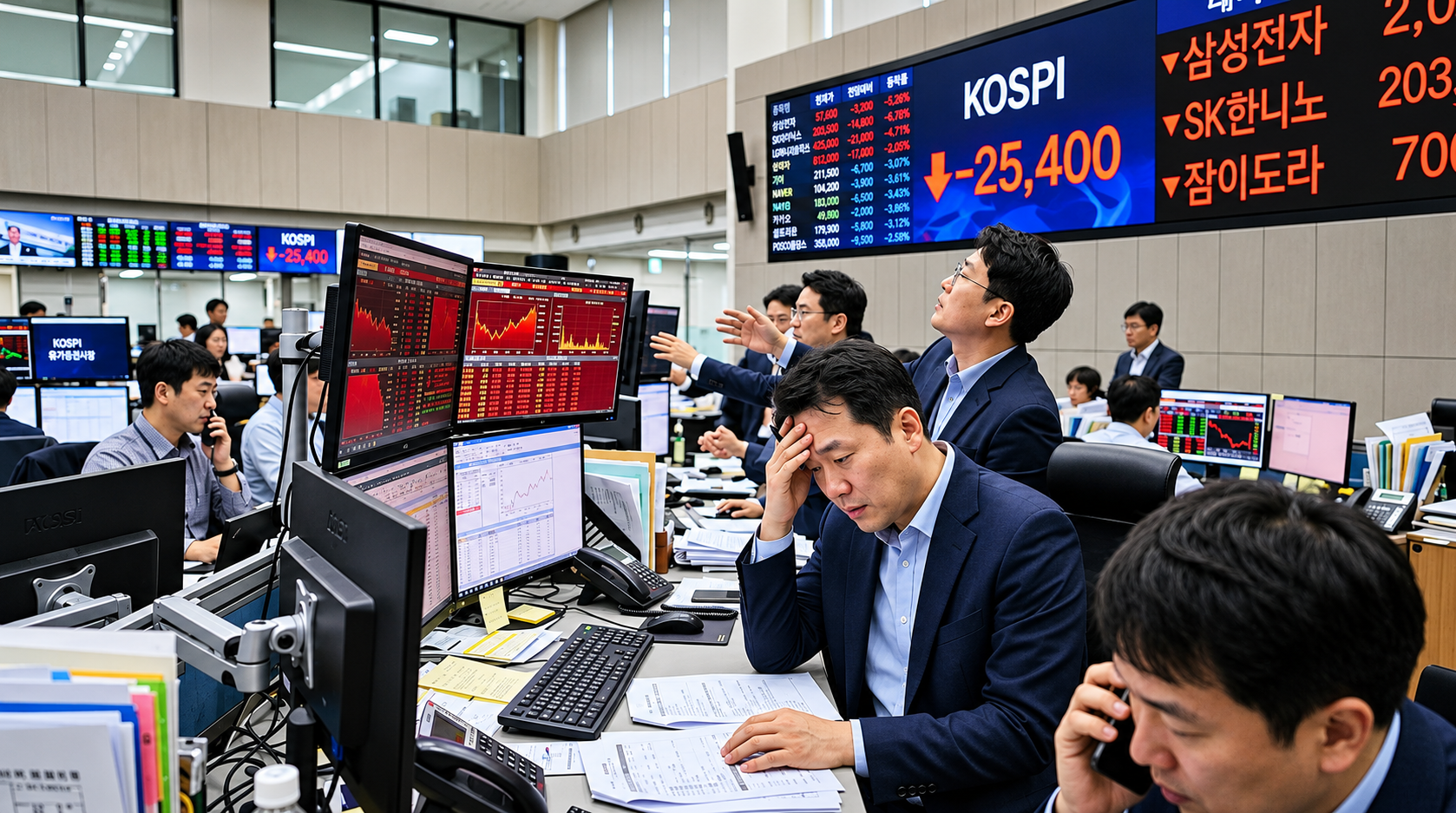
South Korea took the heaviest blow. The Kospi fell more than 8 per cent early on, dropped below 5,000 and triggered its 11th circuit breaker of the year. After an emergency government meeting it pared some losses, closing down 6.02 per cent at 5,059.65. The Kosdaq lost about 5 per cent, Samsung Electronics closed 6.35 per cent lower and SK Hynix shed more than 10 per cent. Seoul also waived a rule requiring brokerages to hold collateral worth at least 140 per cent of margin loans, temporarily, to limit forced selling.
In Taiwan, the Taiex closed 4.51 per cent lower at 39,701.64 after a brief plunge of 3,737 points, its largest intraday point drop on record. TSMC touched its daily lower limit, a fall of about 10 per cent, before recovering part of the loss, and ended 4.7 per cent lower. The financial regulator was expected to announce stabilisation measures.
The Chinese mainland held up better. The Shanghai Composite dropped 1.1 per cent, with bargain hunting and Beijing’s support measures limiting the damage, while the Shenzhen Component lost 2.57 per cent. The AI supply chain suffered more. The Star 50 and an AI index slumped as much as 5 per cent before recovering some ground. Optical transceiver makers bore the brunt, with Zhongji Innolight down 8 per cent to a one-year low and Eoptolink down 7 per cent. AI software firm Zhipu sank as much as 15.4 per cent, amid concern that a broader AI backlash could threaten the timing of Anthropic’s IPO.
In Hong Kong, the Hang Seng fell 1.27 per cent to 24,481 and the Hang Seng Tech Index lost 1.83 per cent. Alibaba dropped 3.8 per cent and Tencent 2.5 per cent. AI start-ups MiniMax and Z.AI tumbled 8.5 per cent and 10.5 per cent, data-centre supplier Weichai Power lost 7.3 per cent and chipmaker SMIC 4 per cent.
Elsewhere, Singapore’s Straits Times Index dropped 2.8 per cent and Australia’s S&P/ASX 200 about 0.5 per cent at one point in the session, though other reports put the declines at roughly 2.3 per cent and one per cent. India largely held up, as it is not a major chip-supply-chain market. The Sensex and Nifty opened marginally higher, after the Sensex had risen for six straight sessions.
Why the AI trade boomed under Trump
Since returning to office, Trump has treated AI as a pillar of economic strategy. His July 2025 AI Action Plan aimed to boost AI exports, fast-track data-centre and chip-plant development and cut federal regulation. It created environmental review exceptions for data-centre construction and widened access to federal land. He signed three executive orders to ease technology exports and speed up data-centre building. Companies gained the right to expense domestic research and development costs in the year they occur, and restrictions on chip exports to China were loosened. The president also courted tech leaders and presented the industry as central to growth.
That spending flowed to Asia. Asian tech firms benefited from demand for the semiconductors used in AI data centres, and some economists estimate AI infrastructure spending could reach $1 trillion a year. Samsung, SK Hynix, TSMC, Advantest and Kioxia became proxies for that US build-out.
Why it unravelled
Public opinion turned against the data centres themselves. Backlash over their environmental and community impact made AI spending a key midterm issue. Democrats who campaigned partly on a data-centre moratorium won governorships in Texas and Georgia, offices the party has not held for decades. Senator Bernie Sanders called for a nationwide halt to new data-centre development, and a CNBC poll found 56 per cent of voters saw AI and data centres as an important or major issue. The shock reached beyond Asia, with the FTSE 100 falling about 1.5 per cent as European markets slid.
What comes next
The policy picture is unsettled mostly. A Senate bill with mandatory ratepayer protections for new data centres has stalled, but those provisions could return as a standalone bill in the new Congress. Mr Trump retains the veto, and support for US AI leadership remains bipartisan. There is also a bullish case. Jefferies argues that data centres create jobs, that Democrats would be reluctant to see those jobs go elsewhere, and that they are unlikely to abandon the AI growth engine. Julius Baer notes that the spending numbers have not changed.
Financing is the main vulnerability. Investors fear a stalling build-out could hurt smaller firms whose ability to raise funds is already limited by higher rates, and CoreWeave and SoftBank’s credit costs are the ones to watch. Seoul and Taipei have started to intervene, and more stabilisation steps are likely if selling resumes. Uncertainty over Trump’s next move on Iran is keeping oil volatile, and investors are also awaiting the latest US jobs report.