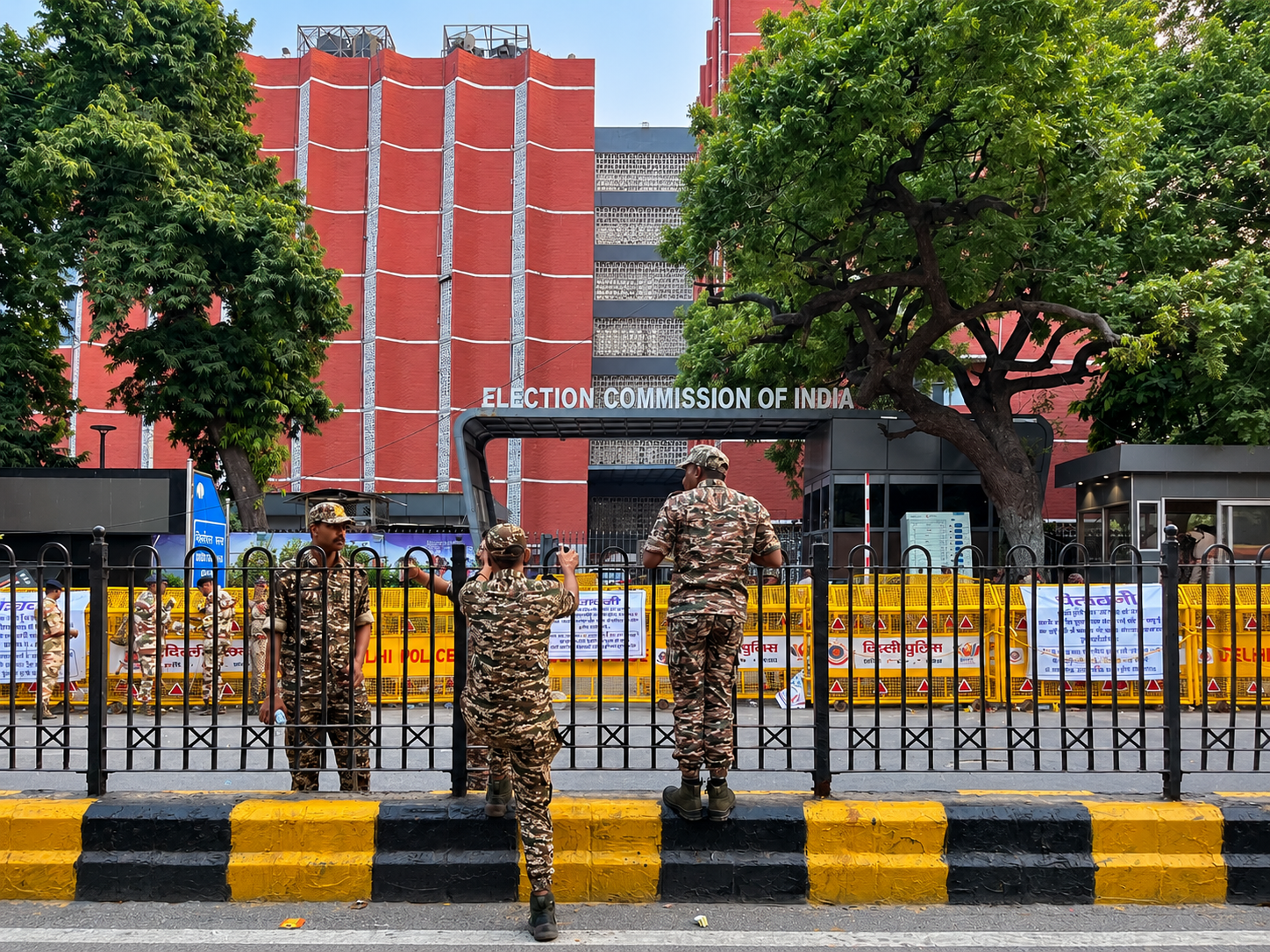
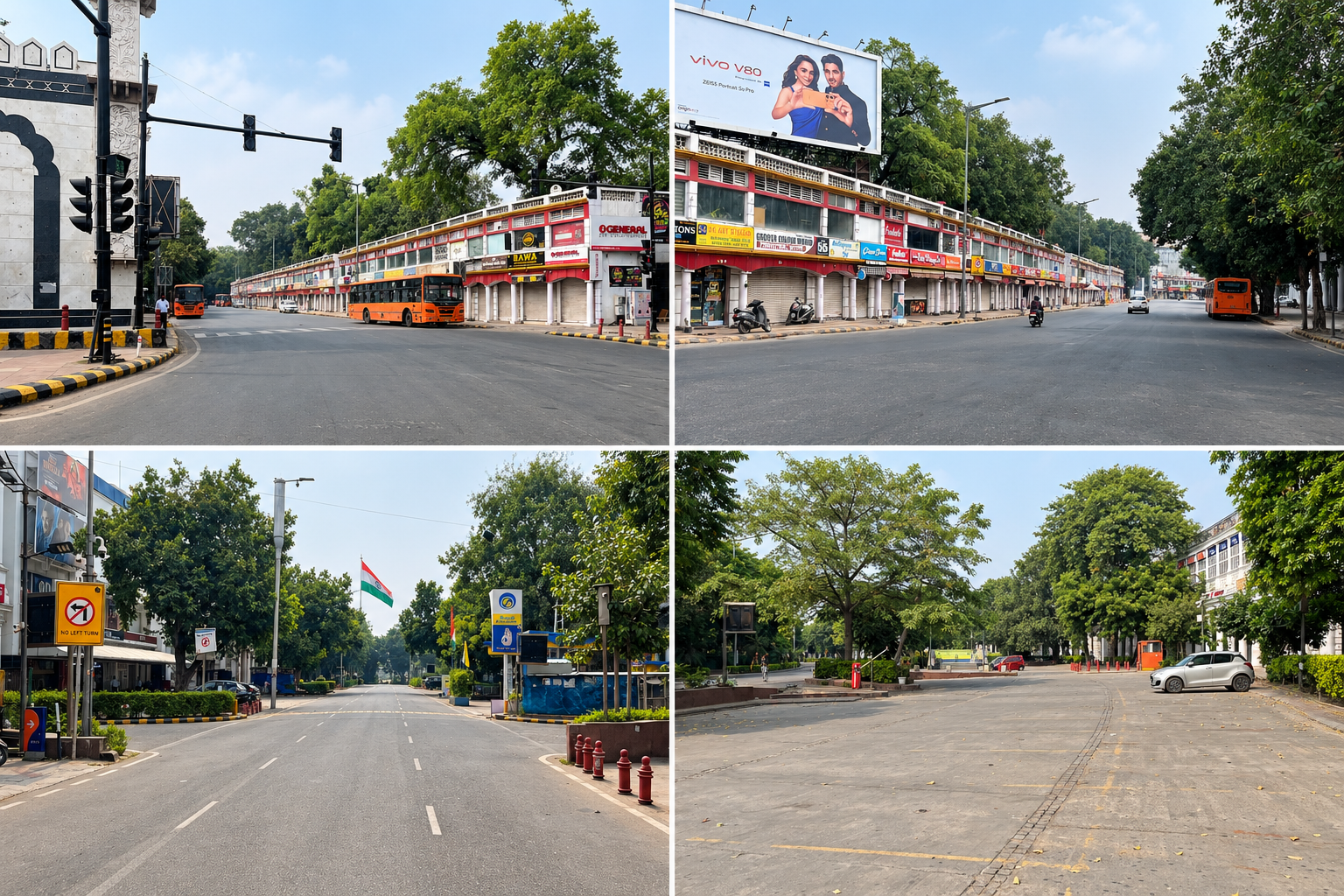
If you were in central Delhi on October 10, you will know what I mean. Loudspeakers on poles every 100 metres blared ominous warnings by the minute: any gathering of five or more people would invite grave consequences, and any disruption of police arrangements by protesters demanding the resignation of Chief Election Commissioner Gyanesh Kumar would bring stern action and arrest. On a day of near-empty roads, the air was filled instead with the state’s warnings to its own citizens.
Everything was shut. Shops stayed closed on a festive weekend, denying vendors heavy footfall and a possible windfall. All you could see was men and women in uniform. Nearly a lakh security personnel were deployed, while dozens of mini-trucks fitted with loudspeakers broadcast warnings commanding people to comply with police diktats. More than 50 metro stations were closed, buses ferried security forces instead of commuters, the internet was switched off to block communications, and long-distance trains were cancelled at their origin stations for fear that protesters would descend on the capital, as they did on July 20. That protest, called by the Cockroach Janta Party (CJP), demanded the resignation of Education Minister Dharmendra Pradhan, who failed to stop a series of leaks of examination papers that were to decide the future of scores of job aspirants.
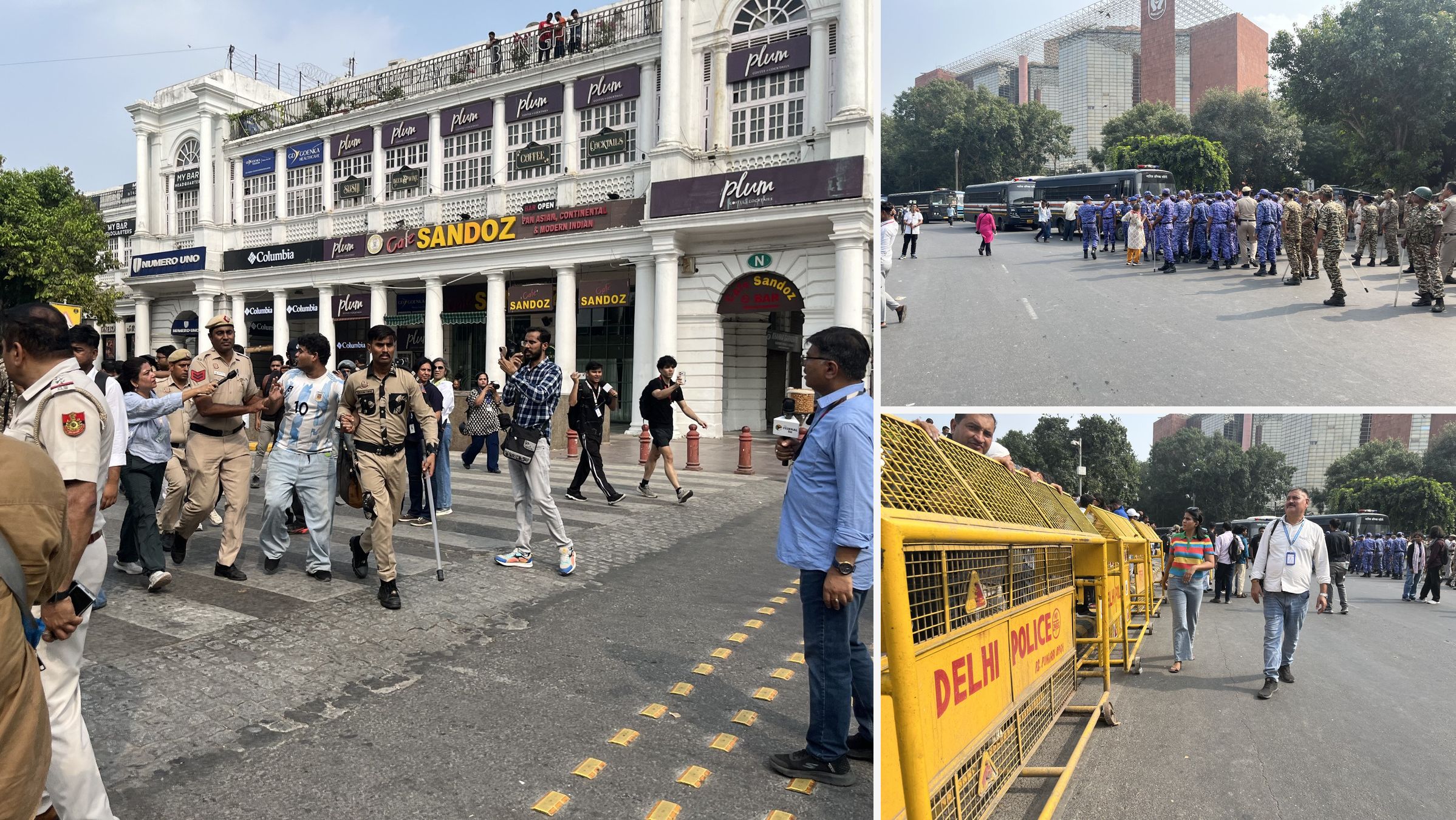
The defining images of July 20 were of police brutality: security forces wielding batons and dragging young dissenters out of the protest site at Jantar Mantar. It made the CJP’s protest the target of one of the most drastic clampdowns on dissent in independent India’s history. What followed on October 10 was a total crackdown: a systematic, curfew-like operation to stop a peaceful protest the government believed it could not contain. This was systemic violence, far beyond batons and pellet guns.
Caught unprepared
What, however, the government has not contained is the rising anger and disillusionment with a system that has consistently evaded accountability, even as the Modi government celebrates more than a decade in power and projects itself as devoted to building infrastructure. Critics say that project has benefited only the government’s cronies, not ordinary Indians.
The panopticon state was on full display. Face surveillance became routine, and indiscriminate detentions of protesters, and of journalists covering them, ran into the thousands. Delhi Police claimed to have detained more than 5,000 protesters on Saturday alone. The CJP said the figure could be above 15,000. Neither can be verified, as the police have stayed tight-lipped about their unprecedented action against young protesters. The government mounted its biggest ever deployment of security forces in the capital, including paramilitary units whose usual work is to fight insurgents.
The visuals of October 10 were not of police brutality but of the Indian state’s lurch towards full-scale authoritarianism. Even after 12 years in power, this is a government that still does not know how to meet public anguish with dialogue, and that was caught unprepared.
The protests span many issues, but one question runs through all of them: accountability. The government has bullied critics by ridiculing and silencing them, and through smear campaigns branding them anti-national and pessimistic. The events of October 10 showed that it is indifferent, or perhaps contemptuous, towards what the world regards as serious questions of rights and governance. A display of power and hubris may be all that seemed to matter to the Modi dispensation.
Imagine this. As a peaceful protester, you are detained and your phone is taken away for cloning. Face surveillance is used against you and your allies to force you into submission. The entire transport network is shut down, with no thought for those who need to travel for reasons other than protest. The protest leaders Abhijeet Dipke, Ashutosh Ranka and others were picked up by police before they could get off a flight from Mumbai. Dhruv Rathee, a popular YouTuber backing the youth movement, was picked up in the early hours, before he had even woken. He later said he had been “kidnapped” by people in plain clothes who claimed to be policemen.
‘Kashmirisation’ of New Delhi?
Many analysts have since likened the crackdown to the “Kashmirisation” of New Delhi. What does that mean? Ahead of the decision to end Kashmir’s constitutional autonomy by reading down Article 370, the same methods were used. Leaders and community elders were held under house arrest for months. Extra troops, added to an already heavy deployment, restricted travel and speech. Transport and telecom networks were cut, phones were cloned and surveillance was heightened.
The same playbook is used again and again to curb questions demanding accountability. Delhi is a different stage, and perhaps not as deeply surveilled as Kashmir, but on October 10 it saw much the same. The difference is that this government is dealing with a section of Gen Z that is irreverent towards power, so anxious that it has lost all fear, and led by a plugged-in leadership that has carried its message of accountability to every corner of India. None of this protest is illegal, whatever Delhi Police would have us believe.
Two scenes are at play. In the first, the government is blocking everything critical of it from social media, a power it acquired by amending India’s IT rules. It has asked platforms such as X and YouTube to take down thousands of pieces of critical content. After the batoning of protesters in July, its only idea of a course correction was to identify more than 500 dissenting social media accounts and online channels to block. It worked out how best to turn Delhi into a fortress, and how to disguise its brutal treatment of students and young protesters as a show of security preparedness.
In the second, the protesters demand dialogue and a government willing to hear their concerns rather than boast about the past decade, which they believe has done their futures little good. They are democratic in their messaging, accommodating different factions to unite the movement, and fighting to keep India’s electoral democracy intact. This second round of protests is happening because the controversial Special Intensive Revision (SIR) of electoral rolls, which has disenfranchised lakhs of Indians, is seen as an indiscriminate exercise, run by a chief election commissioner who, protesters believe, is acting unilaterally, possibly to give the ruling Bharatiya Janata Party an electoral advantage. The prime minister has not addressed the situation beyond saying that India’s young have been misled and are on the wrong path. In his 12 years as the country’s elected chief, he has yet to take open questions at a single press conference.
On seeing the heavy deployment, one protester told this writer that the BJP would no longer have an excuse to deride the Congress for imposing the Emergency in 1975, and that India was in a similar state of despondency.
Role reversal and the question of accountability
The optics are so starkly different that it is easy to believe citizens have taken it upon themselves to assert what the government should have done itself. Meanwhile, the government takes every step to reinforce the perception of a strong state, unapologetic about its authoritarian tendencies in its third term.
It is the government’s silence on issues that matter to people that triggered these protests, out of accumulated social anxiety and years of being kept in the dark about policies and programmes. This is in spite of it being the most PR-heavy government India has ever seen. The problem is that it has used that PR only to amplify its standing as a Hindu majoritarian, militantly nationalist government, while doing little to calm nerves about price rises, employment, housing and social security.
For years, when the government was seen to fail, other constitutional institutions came to citizens’ relief. For most anguished people, the courts were the respite. This moment is different. The Chief Justice of India likened the unemployed to “cockroaches”, prompting the satirical account that has since grown into a pan-India movement. Even when hearing petitions against the emergency-like situation, the Chief Justice, in what was a belated warning to the government, likened the protesters to flies and asked it not to use a “hammer” to kill them. Institutional collapse, or the perception of it, lies at the heart of the disconnect between the Indian state and its people.
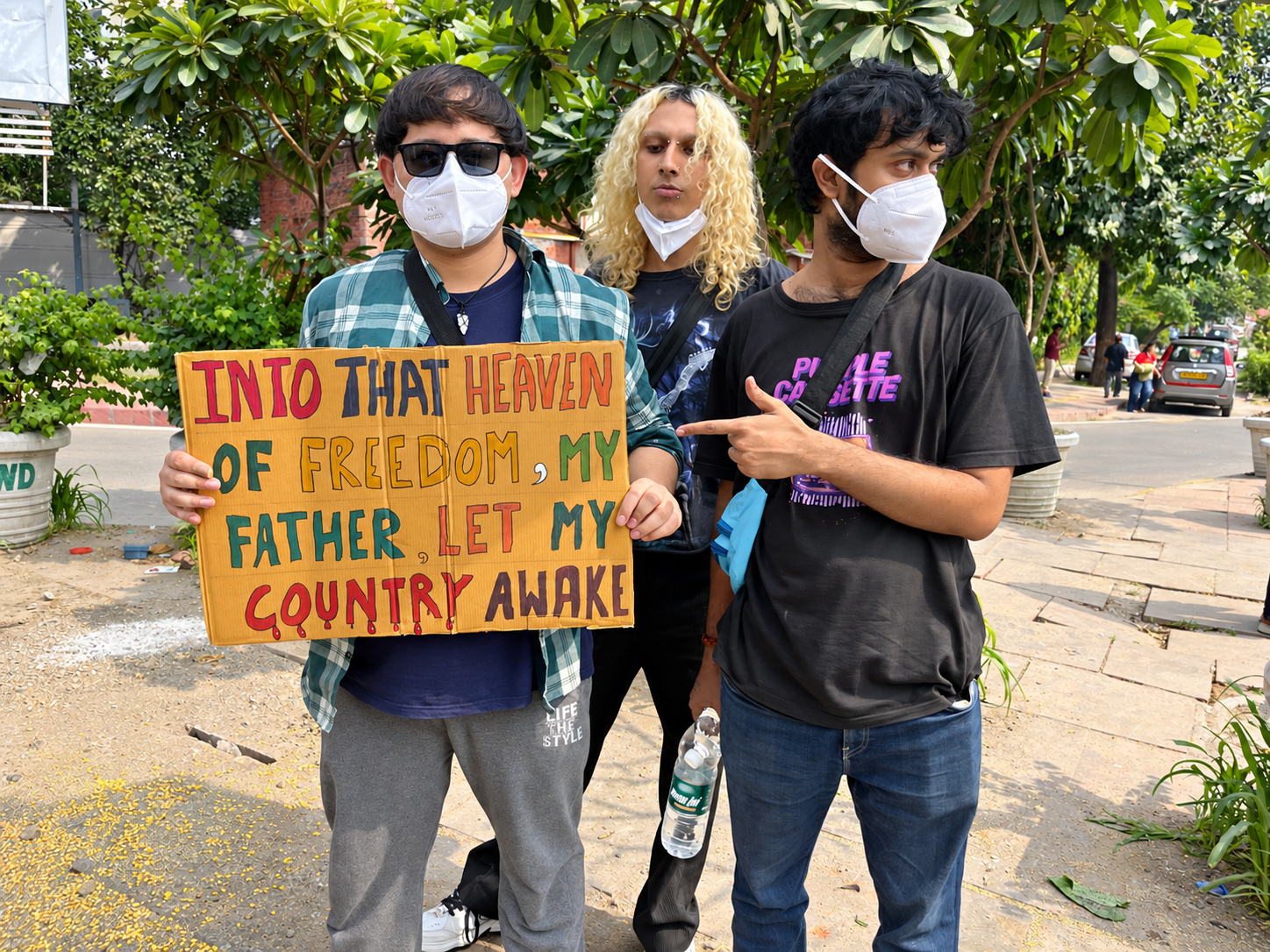
The CJP and student outfits have not merely made the government look helpless. They have also pushed a directionless opposition to ask what is pertinent. Accountability is now the opposition’s mantra, and its own series of protests against the chief election commissioner across India is drawing a wave of support not seen in the last decade.
The youth movement has spread a countrywide recognition that, contrary to what the government and its pliant big media show, things are far from good in India. The climate of fear created by the sustained clampdown on even the smallest dissent looks to be lifting. In trying to contain these protests with such drastic measures, the government may have made its own future uncertain – the CJP, and the protests by different outfits and parties that have followed, have grown into a movement against what ordinary Indians now widely see as state bullying.