Rio de Janeiro: Shut out of the United States and squeezed in Europe, China’s electric carmakers have found their biggest overseas market in Brazil, where Brasília is using tariffs and incentives to encourage them to manufacture locally.
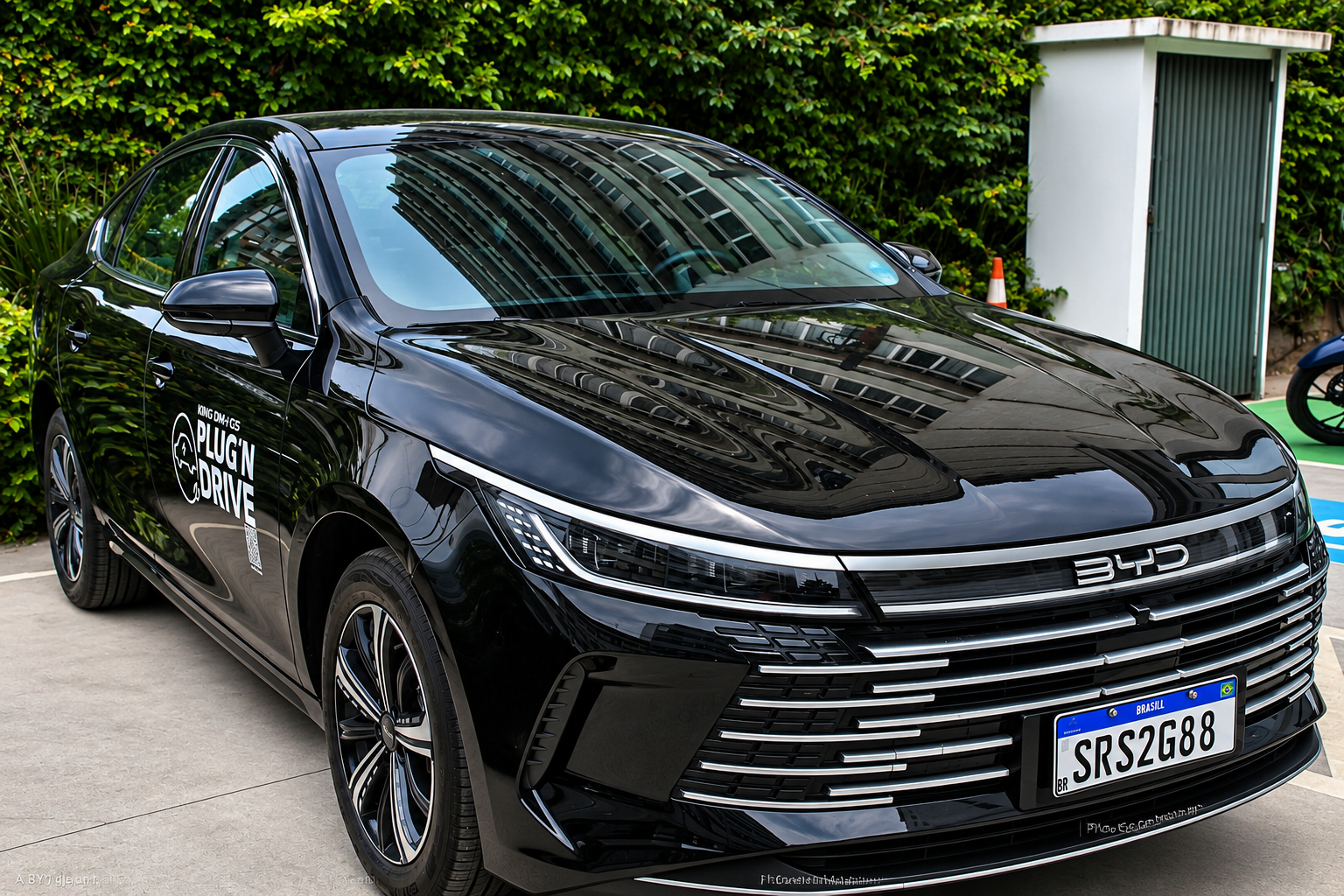
The scale is striking. In the first five months of 2026, Brazil became the world’s largest importer of Chinese cars for the first time, buying $5.2 billion of them, up 147 per cent on a year earlier. Brazilian sales of electrified vehicles rose 160 per cent in the first eight months of the year, and in September the country passed one million sold since 2012, across all brands. Electrified models accounted for roughly one in five new cars sold in August. BYD and GWM, which arrived two years ago, moved in 2025 from importing cars to building them in Brazil.
The bargain carries risks. Brazil’s automotive trade deficit hit a record $5.32 billion in the first half of the year, its established carmakers are lobbying for protection, and its charging network is struggling to keep pace. President Luiz Inácio Lula da Silva is betting that local production will turn a flood of imports into jobs, exports and a narrower trade gap.
Why China Is Looking Abroad
China is the world’s largest car exporter, having overtaken Japan in 2023, and its EV exports topped 2.5 million vehicles in 2025. After 15 years of heavy investment, worth some $230 billion according to the Centre for Strategy & International Studies, China’s EV output far exceeds its falling domestic demand. Subsidies have made the cars cheap: UBS analysts estimate that those made by BYD cost some 30 per cent less than similar Western models.
That price advantage has provoked tariffs in the West, as the United States and the European Union seek to protect domestic carmakers and the millions of jobs they support. The US has imposed a 100 per cent tariff on Chinese-made EVs. In October 2024, the EU imposed tariffs of 17 per cent to 35 per cent, depending on each manufacturer’s level of subsidy. Last month, Brussels and Beijing agreed to cap Chinese hybrid imports at 350,000 units a year, a reduction of about 50 per cent. With these two vital markets effectively closing, China is aggressively seeking others.
Livio Ribeiro, economist and expert on Sino-Brazilian trade relations, argues that conflict should never be the aim of trade agreements. “Cooperation is good, ok? So, with trade, you have to have partners, not competitors. Nowadays, people see the trade agenda, the international agenda, as a clash of civilisations. That’s wrong. It’s about building up a future that’s not precisely the same for everyone, but it’s about building it together. So, whenever you talk about cooperation, about integration, that’s good,” he tells NWS.
Brasília’s Bargain
Ribeiro sees the cooperation achieved between Lula and Chinese President Xi Jinping at the 2024 G20 Summit in Rio de Janeiro as very promising. While Donald Trump’s presidency threatens trade wars across the globe, the two leaders have balanced the needs of their huge economies. In late July they agreed by telephone to accelerate negotiations on a China–Mercosur trade agreement, a deal Brasília had long resisted.
The logic is complementary. Brazil, a producer and exporter mainly of raw commodities, needs investment in green energy and in the production of green goods. China is keen to reach Brazil’s huge consumer market with manufactured goods and green energy infrastructure. Ribeiro considers China’s strategy of producing within that market a very smart move, particularly in electric vehicles. “They are changing their investment pattern from energy, electricity and land to things that are more related to services and domestic consumption in Brazil. Not only thinking about turning Brazil into an export platform, but also thinking about the internal supply of goods. To produce things that we (Brazilians) are going to consume.”
Brasília has also used tariffs as leverage. Import duties on electric and hybrid cars rose in stages from 10 per cent for EVs in 2024 to 35 per cent from July 2026, and duty-free import quotas for assembly kits have been used to steer carmakers towards local production. The shift has been abrupt: in the year to April 2024 alone, China increased its exports of EVs to Brazil thirteen-fold.
Brazil’s government is heavily committed to phasing out combustion-engine cars. Ricardo Bastos, president of ABVE (the Brazilian Association of Electric Vehicles), says his association hopes that one third of all cars sold in Brazil will be electric by 2030. However, the only wholly national EV manufacturer is a small start-up.
Why Brazilians Are Buying
Felipe Fera, a Brazilian influencer known as the Electric Car Ambassador, has helped stimulate demand for Chinese EVs since he first saw an electric car in Las Vegas. On Instagram, he reviews new models and explains the pros and cons of EVs to his one million followers. Felipe explains their appeal to NWS: “I recommend Chinese electric cars primarily because they have been developed to last. Now that quality has arrived in Brazil. And the cars have a durability, according to Brazilian analysts of Chinese batteries, of twenty years.”
Durability matters greatly to Brazilians, Felipe says. “In my opinion, the Brazilian market has one characteristic that’s very different from other markets. Here, they see cars as a part of their property. Which is different to concepts of rental in Europe and of leasing in the US, where it’s not seen as such a huge purchase. For a Brazilian, it’s more akin to buying something like a house.”
Beyond a shared desire to protect the environment from petrol and diesel pollution, Brazilians are discovering wider benefits. Alexandre Torquato, who drives for Uber, recently needed to replace his car and researched the market thoroughly, particularly Chinese electric cars. “The benefits I found are enormous. For example, the car has an eight-year guarantee. So, as the car is electric and not petrol-driven, the only maintenance cost I would have would be brakes and the tires. With a petrol-driven car, I’d have numerous expenses,” he tells NWS.
Petrol and CNG (compressed natural gas) are very expensive in Brazil. A full tank of petrol costs around $80, roughly 12 per cent of the median monthly salary. For Alexandre, who drives 10 hours a day, the saving is vital. “For example, I spent $500 (per month) on CNG and now I spend $135 on electricity. Because I installed a charging point in my building, so the cost goes straight to my electricity metre.”
Cristiane Ramos, a BYD salesperson in Rio de Janeiro, sees sales of Chinese EVs growing every month as buyers opt for the savings. “They see the price of petrol or diesel and when they charge their (electric) car, it costs one third of the price.” She adds: “BYD offers very favourable finance terms for buyers, which is important in Brazil because interest rates can be 25 per cent for car purchases,” he tells NWS.
Local Factories, Local Backlash
That surge in demand has, however, alarmed Brazil’s established carmakers. ANFAVEA (the National Association of Motor Vehicle Manufacturers) wrote to the government in June 2024, demanding an immediate rise in the import tariff to 35 per cent. In 2025, executives from Volkswagen, Stellantis, GM and Toyota urged Lula to refuse BYD’s request for lower duties on imported kits, and the government turned down the request. ANFAVEA protested again in July, when Brasília renewed a $463 million duty-free quota for kits alongside the 35 per cent tariff.
Partly to avoid these tariffs, China’s two principal EV exporters to Brazil, BYD and GWM, decided to build plants in the country. Two other incentives pulled them in: the government’s MOVER programme (Green Mobility & Innovation), which will invest $3.2 billion in the EV industry until 2030, and a trained workforce, since carmakers including Ford and Mercedes-Benz have ended production in Brazil since 2020.
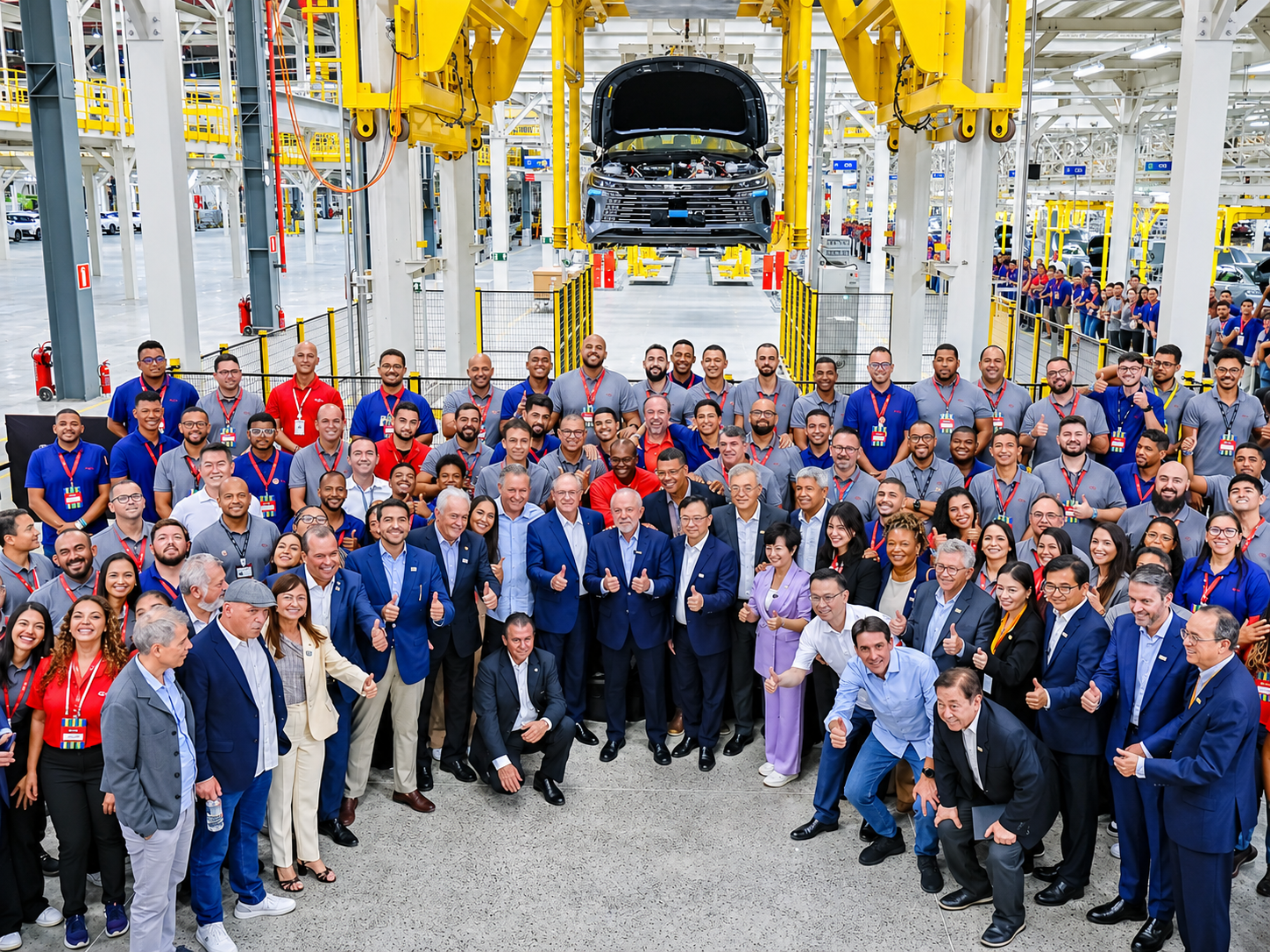
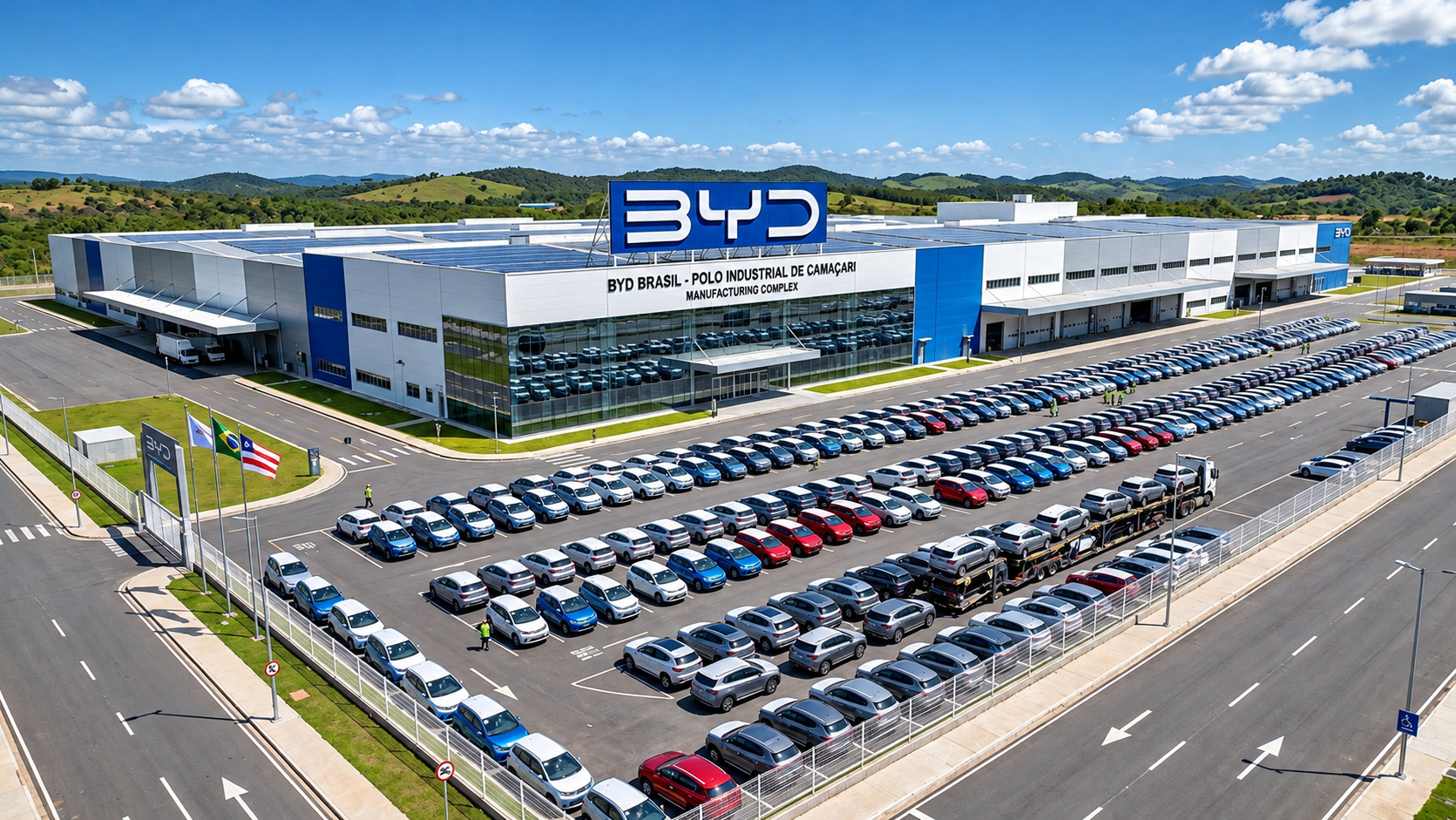
BYD’s complex at Camaçari, in Bahia, built on a former Ford site with investment of over $1 billion, currently employs 5,500 workers, with plans to expand. By July 2026 the plant was producing at an annual rate of 100,000 vehicles; BYD plans to reach 600,000.
The project has not been trouble-free. In May 2025, Brazilian prosecutors sued BYD, alleging human trafficking and “slavery-like conditions” for Chinese workers hired to build the site. Prosecutors later said BYD and its contractors had settled the case for 40 million reais; BYD has said only its contractors signed the compliance agreement.
The biggest prize is access to a regional export market. Brazilian-built cars can enter other Latin American markets tariff-free if 40-50 per cent of their components are sourced locally, a threshold BYD says it will meet by January 1, 2027. Its head for the Americas, Stella Li, has said the company already has orders for 50,000 cars from Argentina and 50,000 from Mexico to be exported from Camaçari. Lula is keen to use those exports to help close the nation’s trade gap.
Cristiane Ramos of BYD sees only benefits from Chinese EVs being produced in Brazil. “It will create more jobs for Brazilians. It will also make the cars cheaper. And also create more sales. Because we have a target consumer group of class B, C and D, such as taxi drivers.”
The Charging Bottleneck
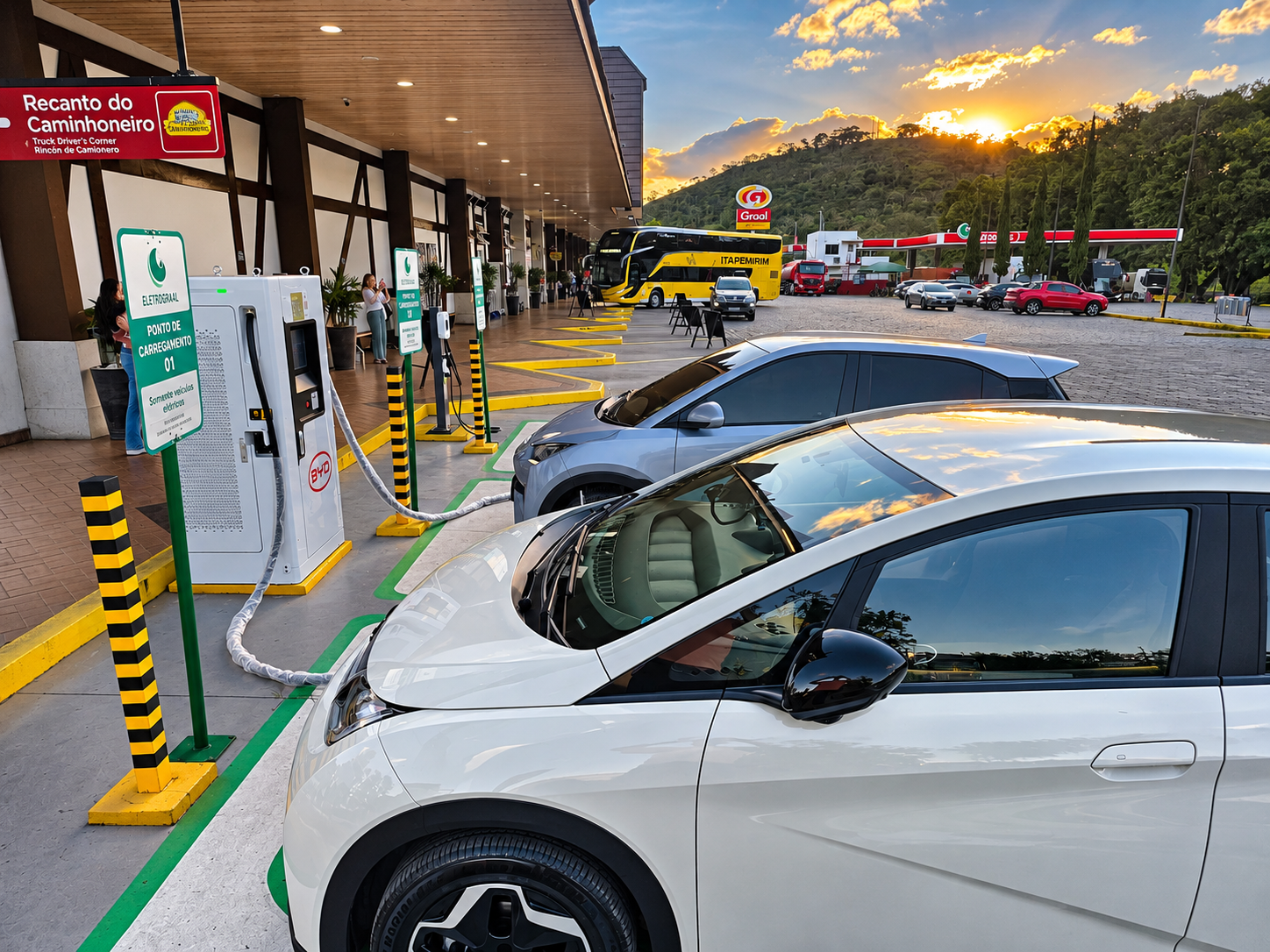
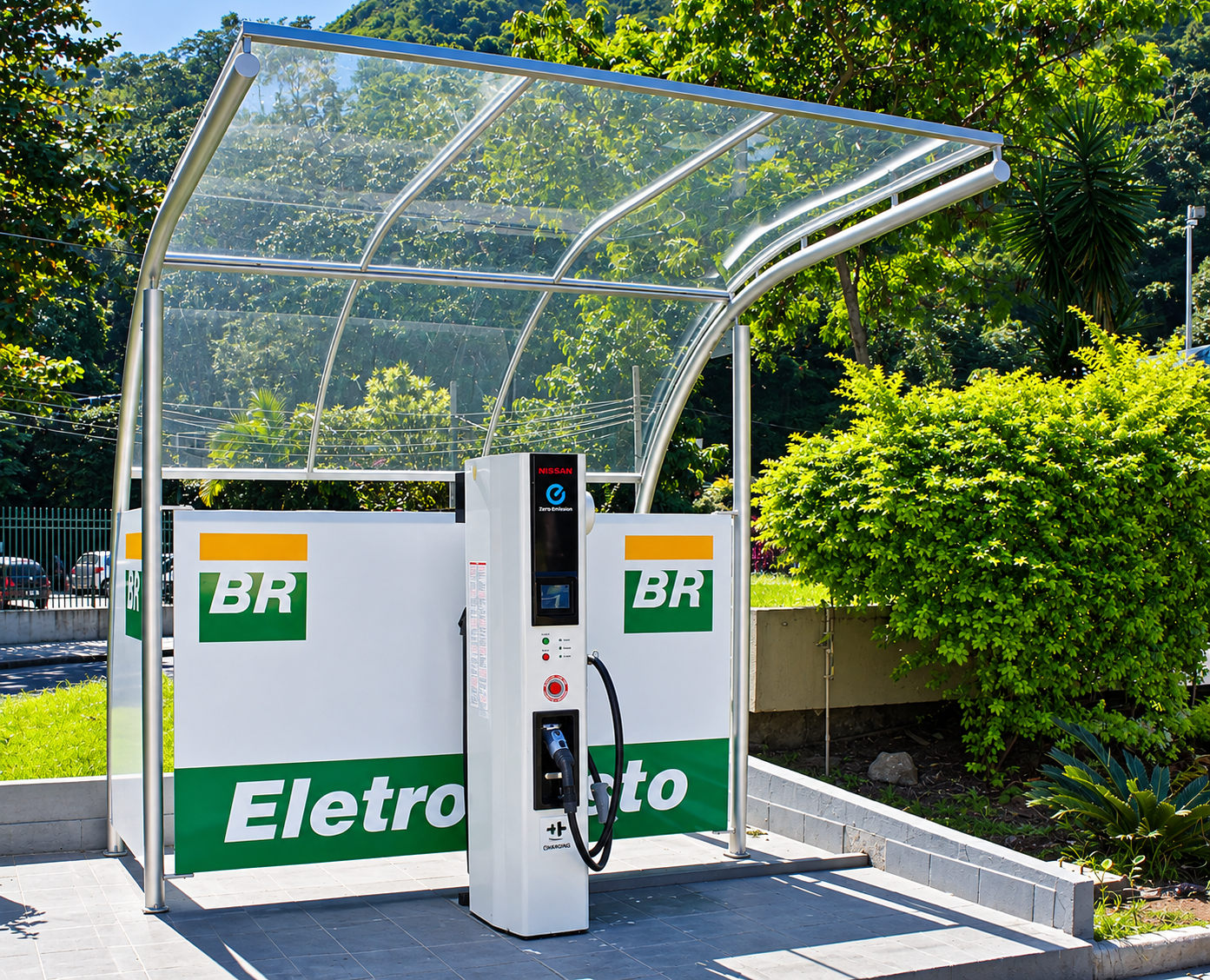
The boom has a flaw. Hybrids, which can run on petrol or ethanol, made up about 58 per cent of electrified vehicles sold in September; the other 42 per cent were fully electric and depend entirely on recharging. As of September 2026, Brazil has only 29,866 public charging points. The network has grown 77 per cent in a year, but ABVE calculates just one charging point for every 21.4 vehicles, and 62 per cent of them are slow-charging (A.C.) outlets that need two to five hours to charge a car fully. Most EVs are concentrated in São Paulo, Brasília, Minas Gerais and Rio de Janeiro. These also have the most chargers, but demand far outstrips supply, particularly in São Paulo and Brasília.
Home charging is harder still. Most residents of these cities live in apartment blocks. São Paulo now legally obliges such buildings to allow communal charging stations, but installation and permissions are complex. There is considerable resistance from residents who do not own EVs, problems with buildings’ energy supply, and the question of who pays the high cost of installation.
Brazil nevertheless has strong assets, Ricardo Bastos says. “Our advantages are substantial: an electricity grid that is 90% renewable, ready availability of rare earths and critical minerals, and a market open to new technologies.”