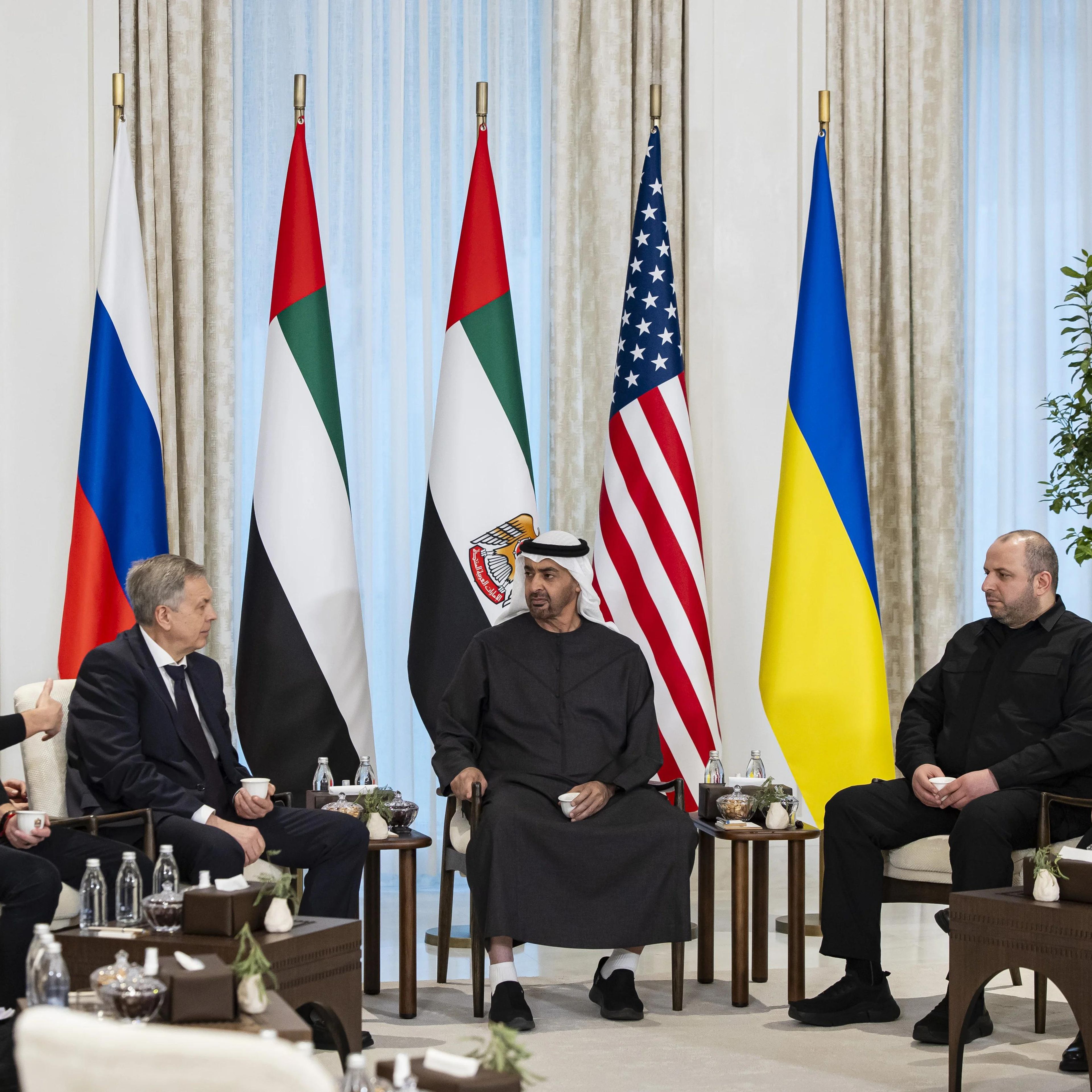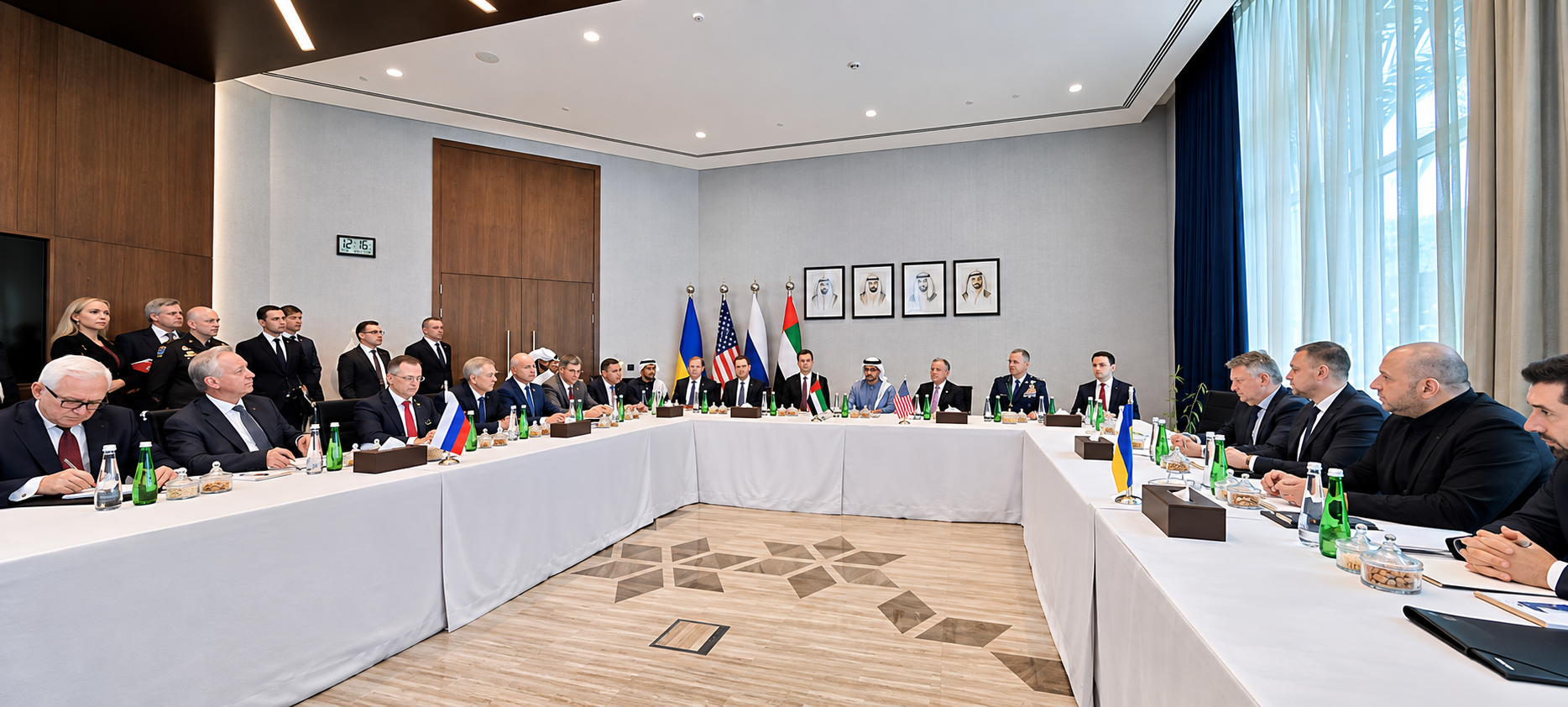
Russia and Ukraine have agreed in principle to a major prisoner exchange after two days of US-brokered talks in Abu Dhabi. They made no breakthrough on territory or post-war security guarantees for Ukraine, the two issues that will decide whether the war, now in its fifth year, can end.
The talks took place on November 10-11. US envoys Jared Kushner and Steve Witkoff are due to meet Russian President Vladimir Putin in Moscow on Thursday (November 12). They will finalise the prisoner numbers and seek his approval for Europeans to join the next round. They are then expected to travel to Dublin to meet Ukrainian President Volodymyr Zelenskyy.
Hosted by the United Arab Emirates, the talks were the first formal trilateral negotiations since February. They were led by a Kremlin aide and Ukraine’s spy chief, and offered little sign of progress on the core disputes. The first session lasted four and a half hours; the second, just 90 minutes. Kushner, US President Donald Trump’s son-in-law, acknowledged the difficulties: “The reality is there's no trust right now between the sides. There were some pretty tough discussions.”
Beyond the prisoner exchange, the most significant development was a US proposal to discuss Europe’s broader security architecture, particularly its relationship with Russia. Kushner said, “President Putin will give the blessing for that to occur. I think that if he agrees to that, we will be able to make a lot more progress.”
What changed for Europe?
Since the war began, European capitals have largely opposed direct engagement with Russia. They fear Washington could strike a settlement at the expense of Ukraine and European security. Washington’s proposal to widen the negotiations could change that.
A series of developments in October rattled European governments. They included US sanctions relief on Russian diesel and a diesel supply deal involving Trump and Putin. Trump’s attacks on Zelenskyy and his demand that Ukraine’s president be replaced added to their concerns.
Despite seeking a seat at the table, European leaders are holding firm. Speaking in Romania, European Commission President Ursula von der Leyen said, “Any meaningful discussions about Europe’s security architecture can only be undertaken once a ceasefire in Ukraine has been achieved.” Polish Foreign Minister Radoslaw Sikorski echoed similar sentiments: “An arrangement about the future of Ukraine and of Europe above our heads would not just be unwise. It is actually impossible.”
Some also fear the new approach plays into Moscow’s hands. Judy Dempsey, senior fellow at Carnegie Europe, told Euronews, “This is an attempt by the Kremlin and President Trump to actually bypass NATO and redraw the security architecture of Europe.” She added, “Trump is doing Putin's bidding. Europeans have to say no to this. We have one architecture: it’s called NATO.”
Yet a common European position is becoming harder to sustain. Slovakia, Hungary, the Czech Republic and Bulgaria have diverged from the EU mainstream on Russia and Ukraine. Four countries have said they will not take part in EU funding for Ukraine, while German Chancellor Friedrich Merz wants such contributions to become binding. France could join the group opposing further funding if its political leadership changes.
The split has also surfaced over direct contact with Putin. On October 27, ahead of the Abu Dhabi talks, Finnish President Alexander Stubb and Norwegian Prime Minister Jonas Gahr Støre held a 90-minute call with him to convey European concerns directly to Moscow. Danish Prime Minister Mette Frederiksen and Swedish Prime Minister Ulf Kristersson criticised the initiative. They questioned how the call had been coordinated and warned that unilateral diplomatic moves could undermine European unity. Stubb and Støre have not ruled out further contact with Putin.
What Russia wants
While Europe debates whether to engage Moscow, Russia has little incentive to abandon a strategy of attrition. Despite heavy battlefield losses, the Kremlin appears confident that it can outlast Ukraine and its Western backers.
Its demands are largely unchanged. It wants no further NATO expansion into former Soviet republics, including Ukraine, and no deployment of long-range weapons near its borders. It also wants recognition of its control over Donetsk and Luhansk, the two eastern Ukrainian regions that make up the Donbas. Before its full-scale invasion in 2022, Moscow also demanded that NATO withdraw troops from member states that joined the alliance after 1997. NATO rejected the demand.
Russian analysts see Abu Dhabi as a chance to put Moscow’s long-standing security concerns on the formal diplomatic agenda. Anastasia Gafarova, deputy director of the Center for Political Information, told Gazeta.ru, “The issue of the overall security architecture in Europe has been included in the agenda for the first time – something Russia had consistently been denied before.”
Not everyone in Russia thinks involving Europeans would help. Dmitry Suslov of HSE University warned, “Bringing the Europeans into a single negotiating format at this stage risks completely blocking and derailing the negotiations.” Andrey Klimov, a member of the State Duma International Affairs Committee, was more dismissive, “Western European figures were the instigators of this entire catastrophe from the outset, and they are still attempting to obstruct a normal settlement.”
Western analysts argue that Moscow’s emphasis on European security could push Ukraine’s immediate interests into the background. Natia Seskuria, senior research fellow at the Royal United Services Institute (RUSI), told Euronews, “By broadening the negotiations, Moscow seeks to make Ukraine’s future a secondary question within a larger bargain over Russia's relationship with Europe.”
What Ukraine wants
Kyiv wants a settlement that does not concede its territorial integrity or sovereignty. It has long resisted direct engagement with Russia on Moscow’s terms but joined the US-led process because it sees few alternatives. It wants a deal before the end of 2026, as Russia intensifies attacks on its power infrastructure ahead of winter.
The shrinking length of the Abu Dhabi sessions has raised doubts about the prospects. RT’s Alexandra Bokova, managing partner of the Strategic Communications Agency, compared them with the 2025 Istanbul talks, the first direct Russia-Ukraine negotiations of the full-scale war. Those shrank from nearly two hours in May to just over an hour in June and about 40 minutes in July. The pattern suggests longer talks do not necessarily mean progress.
Ukraine may therefore keep engaging Washington while hoping to outlast Trump’s remaining two-year term. European backing could prove crucial in sustaining Kyiv’s position if US pressure for concessions intensifies.
What happens next?
All eyes are on Moscow, where Kushner and Witkoff meet Putin on November 12 before heading to Dublin to see Zelenskyy. A comprehensive settlement remains uncertain. Russia has shown little willingness to retreat from its territorial and security demands, and Ukraine refuses conditions that would compromise its sovereignty.
Europe is unlikely to agree to a broader security settlement before a ceasefire. The Abu Dhabi talks have moved the process forward only marginally. A prisoner exchange offers a limited humanitarian gain, and the prospect of European participation opens the door to wider discussions. Whether that can produce a durable settlement is still an open question.