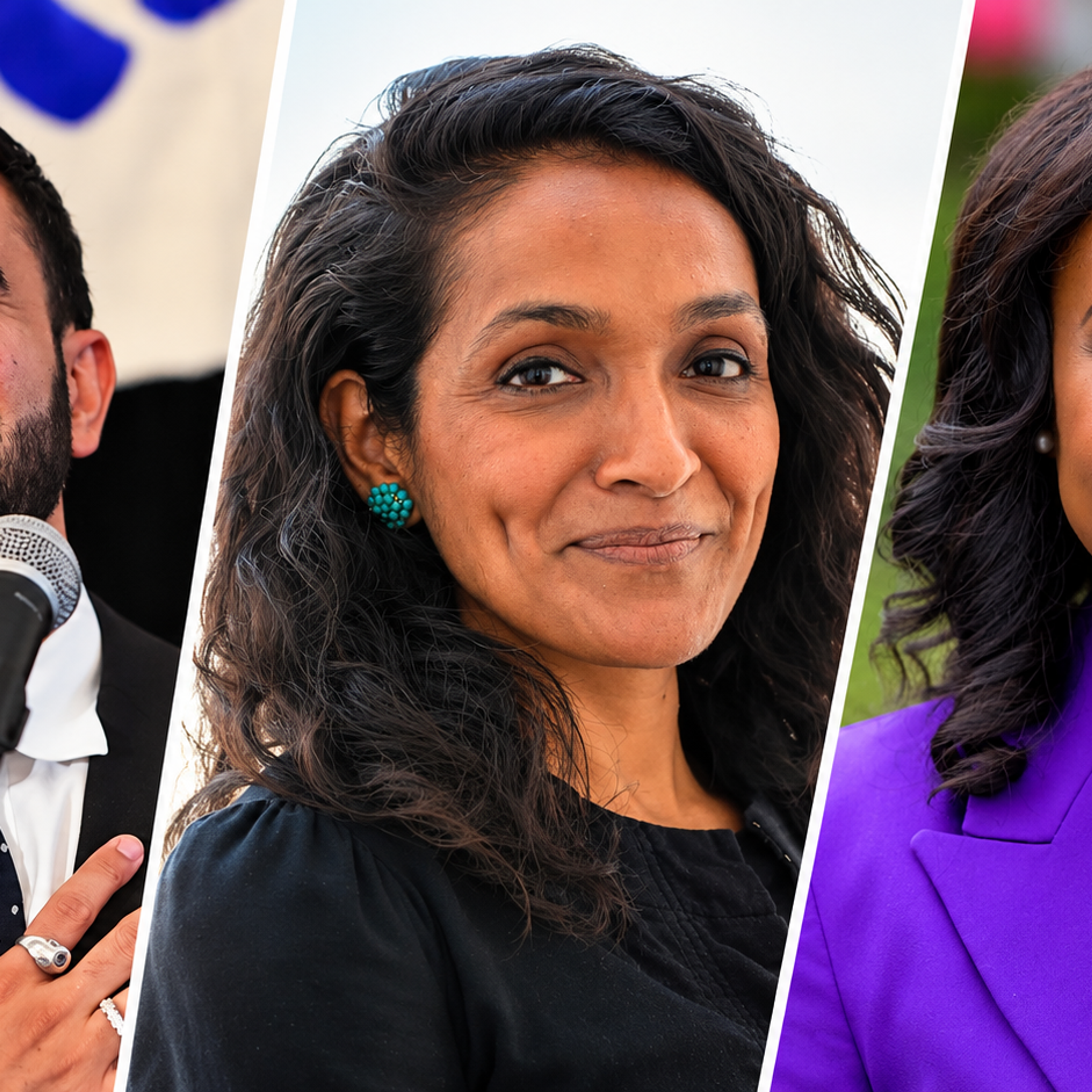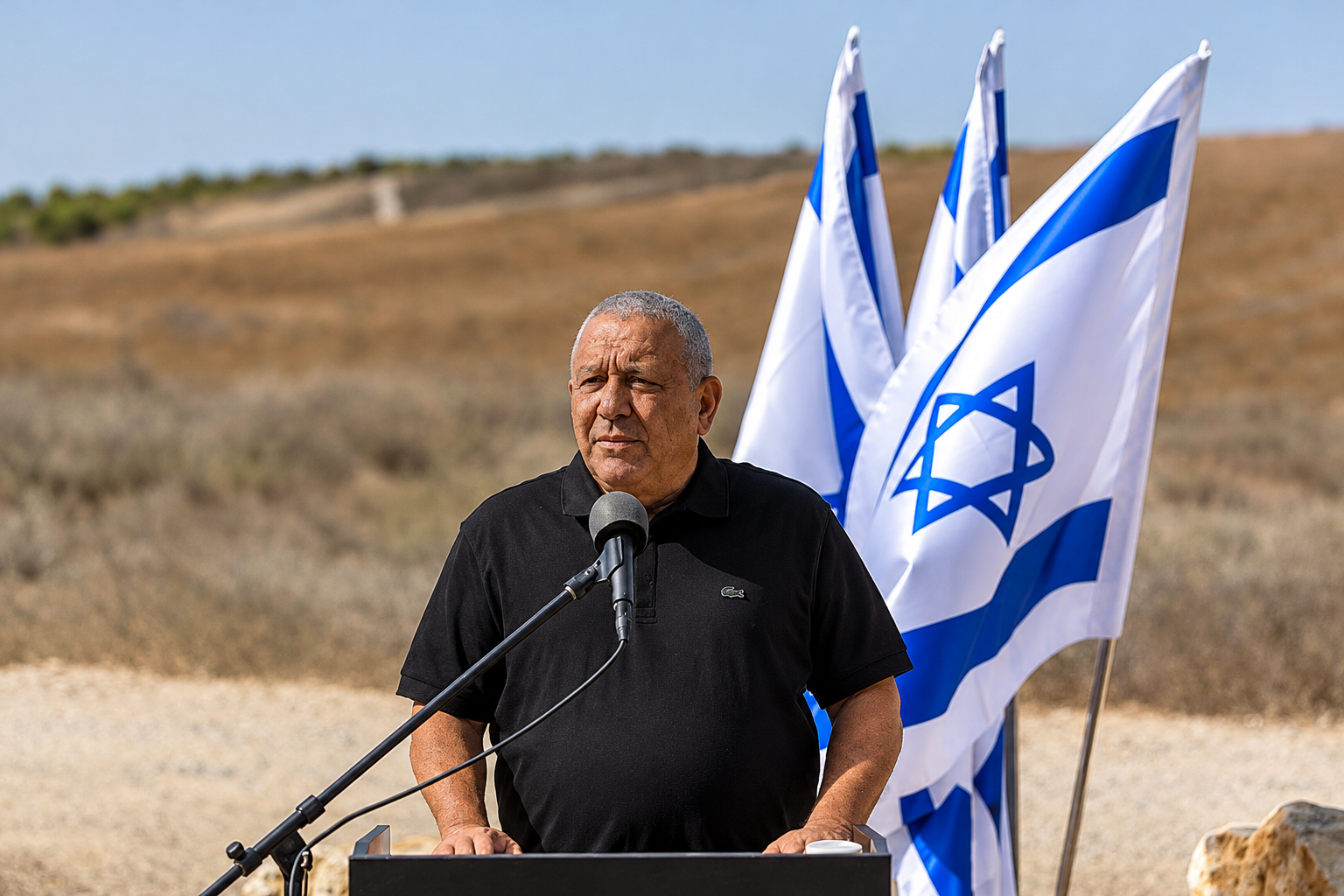
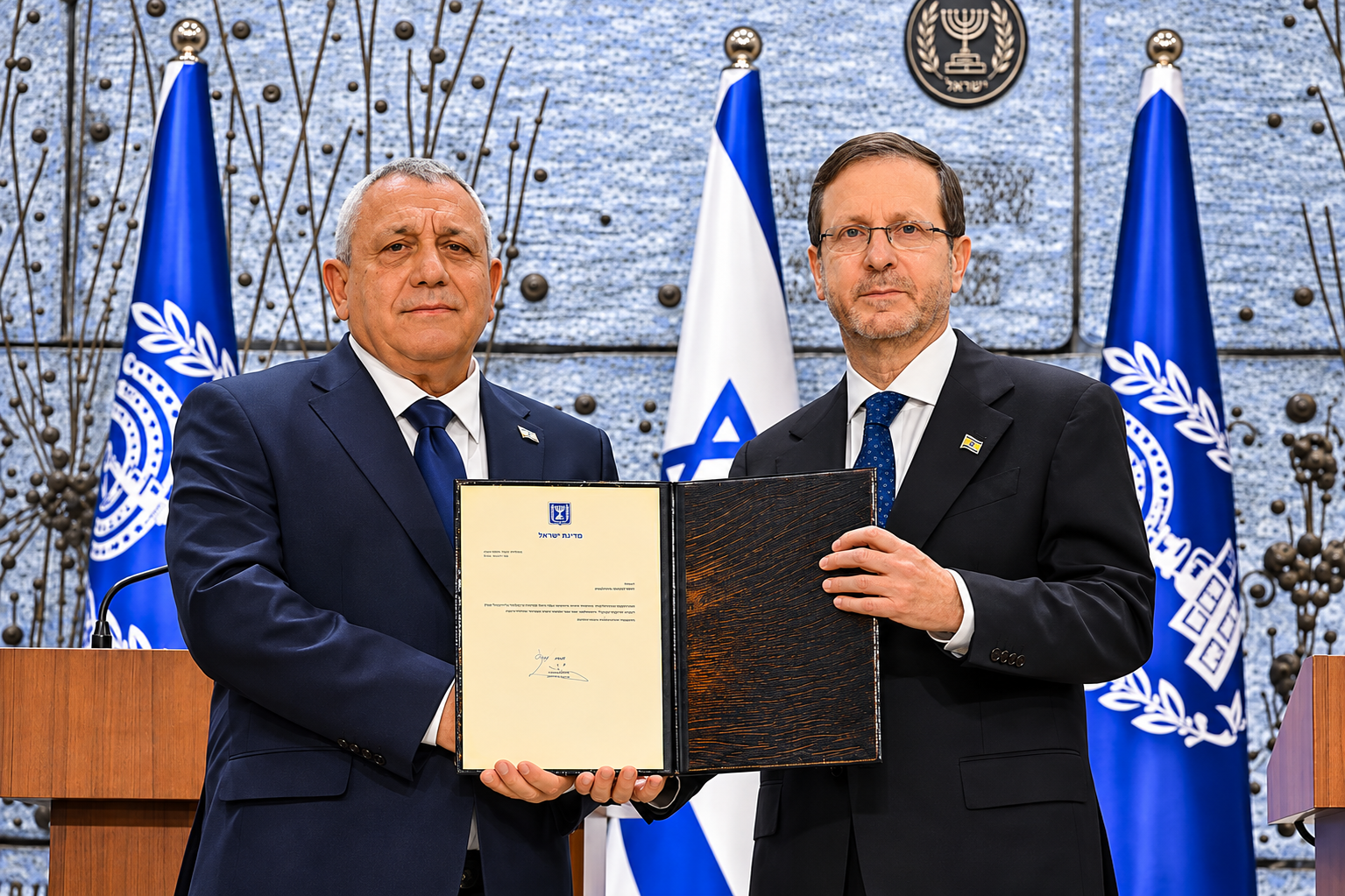
Israel’s president Isaac Herzog on Sunday tasked retired general Gadi Eisenkot with forming the next government. He has 28 days to find a majority, but his allies’ red lines may make that impossible. Eisenkot, leader of the centrist Yashar party, won the mandate on November 8 after factions representing 67 members of the Knesset, Israel’s 120-seat parliament, recommended him, against 46 for Prime Minister Benjamin Netanyahu. But 19 of those 67 come from the Arab-led Joint List and Ra’am. Most of Eisenkot’s own bloc has ruled out relying on them.
During his mandate ceremony on November 8, Eisenkot said Israel was in a “challenging and critical situation”. He pledged to proceed with patience and a deep commitment to a “Jewish, democratic, egalitarian, liberal and secure Israel”, and to prevent another election resulting from deadlock. However, he signalled that he could compromise on some of his campaign promises to form a government. He invited all parliamentary factions, including members of Netanyahu's Likud and Religious Zionism parties, to join his proposed national emergency government, meaning he is open to alliances previously considered off-limits.
Who is Gadi Eisenkot?
Eisenkot, 66, is a retired lieutenant general and the leader of Yashar, now Netanyahu’s main challenger. He was born in Tiberias in 1960 to Moroccan Jewish immigrants and raised in Eilat. He spent four decades in the Israel Defence Forces (IDF), rising through the Golani Brigade to become the 21st Chief of Staff, from 2015 to 2019. He entered politics in 2022 and briefly served in the wartime government after the October 7, 2023 Hamas attacks before founding his own party. The war has cost him personally. His son, Gal Meir Eisenkot, was killed in combat in Gaza in December 2023, and he has lost two nephews in the fighting.
Knesset numbers
Israel held its election on October 27. Control of the Knesset breaks down as follows, according to the final count. A majority needs 61 seats.
- Netanyahu’s right-wing bloc, 53 seats: Likud (27), Otzma Yehudit (7), United Torah Judaism (UTJ, 7), Shas (6) and Religious Zionism–Zehut (6). This is the outgoing government's core, down from the 64 seats the coalition won in 2022.
- The opposition “Change” bloc, 48 seats: Yashar (21), B’Yachad, led by former prime ministers Naftali Bennett and Yair Lapid (12), The Democrats (8) and Yisrael Beiteinu (7). Most of these parties have ruled out relying on Arab parties.
- Arab-led parties, 19 seats, a record: Joint List (11) and Ra'am (8). They sit outside both Zionist blocs, and Jewish parties, particularly on the right and in parts of the centre, have long shunned them as coalition partners. The Arab parties say they are ready to back the Change bloc.
Neither Zionist bloc wants to deal with the Joint List or Ra’am. A second fault line runs through the opposition. Avigdor Liberman’s Yisrael Beiteinu refuses to sit with the ultra-Orthodox parties, UTJ and Shas, unless they accept military conscription for their communities. They refuse. Liberman resigned as defence minister in November 2018 in protest against Netanyahu's decision to accept a ceasefire with Hamas following rocket attacks from Gaza. Liberman, who has now indicated that he could be willing to accept UTJ and Shas joining a government without first agreeing to conscription, has signalled some flexibility on this issue.
Eisenkot’s four options
1. A unity government: Netanyahu's camp has proposed to form a government with Eisenkot’s Change bloc to keep Arab parties out of power. Netanyahu proposes a rotation deal or a senior cabinet post for Eisenkot. Eisenkot has vowed not to serve under Netanyahu: “I will not serve under Netanyahu, not even in a rotation agreement,” he has declared. His bloc ran on criticism of the prime minister. However, Eisenkot's appeal to Likud and Religious Zionism MKs at the mandate ceremony suggests he is ready to form a government but doesn’t want to serve under Netanyahu.
2. A government backed by Arab parties: Almost all Zionist parties in both main blocs oppose it, except the Democrats party, citing the Arab parties’ positions on Hamas and on Israel’s status as the Jewish state. The Arab parties say they would support the Change bloc without changing their stands. Ra’am, a conservative party that favours Arab–Jewish coexistence, has signalled that Eisenkot’s conditions “will not be an obstacle” to negotiations. However, Ra’am leader Mansour Abbas has not formally recognised Hamas as a terrorist organisation. During his meeting with President Herzog, he declined to explicitly use that designation, while reiterating his opposition to political violence and support for disarming Hamas and other armed organisations. The Zionist parties are not budging. Liberman has ruled out Arab support, and without Yisrael Beiteinu’s seven seats, the Arab parties lift Eisenkot’s bloc to only 60, one short. Only the Democrats’ leader, Yair Golan, backs a coalition with them.
3. Peeling off the ultra-Orthodox parties: Liberman proposes that Eisenkot lure UTJ (7) and Shas (6) from Netanyahu’s bloc to reach 61. UTJ backed neither candidate in the president’s consultations. For that, he needs compromise and to exempt ultra-Orthodox members from conscription. It is also doubtful these parties will desert Netanyahu. Liberman is presenting what amounts to an ultimatum to Eisenkot: a government with the ultra-Orthodox, or another election. Now, Eisenkot said he would compromise on campaign promises, which would improve his chances of attracting the UTJ and Shahs.
4. A minority government. The Change bloc could govern with its 48 seats and rely on outside support from the Arab parties or UTJ in key votes. Eisenkot’s team is examining this option. Israeli governments need only more votes for than against, as the 2021 Bennett–Lapid coalition showed when it won 60–59. However, the Change bloc parties B’Yachad and Yisrael Beiteinu must agree with this idea, and they did not. Only the Democrats party has agreed to take Arabs’ support in any form.
Arab support problem
Eisenkot says he will accept the support of any MK who meets four conditions. They must recognise Israel as a Jewish and democratic state, and accept the values of its Declaration of Independence, including equality and freedom. They must also support mandatory military, national or civilian service for all citizens, and recognise Hamas as a terrorist organisation while committing to dismantling its military and governing capabilities.
These conditions present a particular challenge for the Arab parties. Mansour Abbas has stopped short of explicitly calling Hamas a terrorist organisation, although he has condemned political violence and called for Hamas and other armed organisations to be disarmed. His position does not amount to formal acceptance of Eisenkot's condition. The conditions could complicate talks with both Arab parties, and the ultra-Orthodox parties also reject compulsory service. Eisenkot's willingness to compromise on campaign promises could help bridge these differences.
The stakes
Eisenkot says Netanyahu has left Israel exposed internationally by fighting on every front. “If we continue in the present situation, we risk descending to dark places, to a point of no return from which it will be very hard for us as a society and country to come back from,” he said. “Therefore, there is great urgency for new leadership, leadership that you can look in the eyes and trust, whose concerns will always be Israel's welfare and Israel's security.”
Eisenkot has 28 days, extendable by up to 14. If he fails to form a government, Herzog can assign the task to Netanyahu. If he too fails to form a government in the next 28 days, at least 61 MKs can request that the president assign the task to a specific candidate, who will then have 14 days. Netanyahu could therefore get another opportunity to form a government.
Netanyahu, Israel’s longest-serving premier, has survived several such crises over two decades. A failure would make Eisenkot the latest leader to challenge him unsuccessfully. Herzog has also been keen to avoid a repeat of the 2019–21 stalemate, which produced four elections in under two years. Akiva Eldar, a senior Israeli political analyst, told NWS that 59 per cent of the Change bloc favoured accepting Arab support, so Eisenkot should take it. “Either a unity government or a return to the polls gives Netanyahu another chance to stay in office,” he said. “However, Eisenkot will have to overcome the anti-Arab sentiment that followed the October 7 tragedy, as well as the incitement against Arab citizens, who make up 20 per cent of the population.”