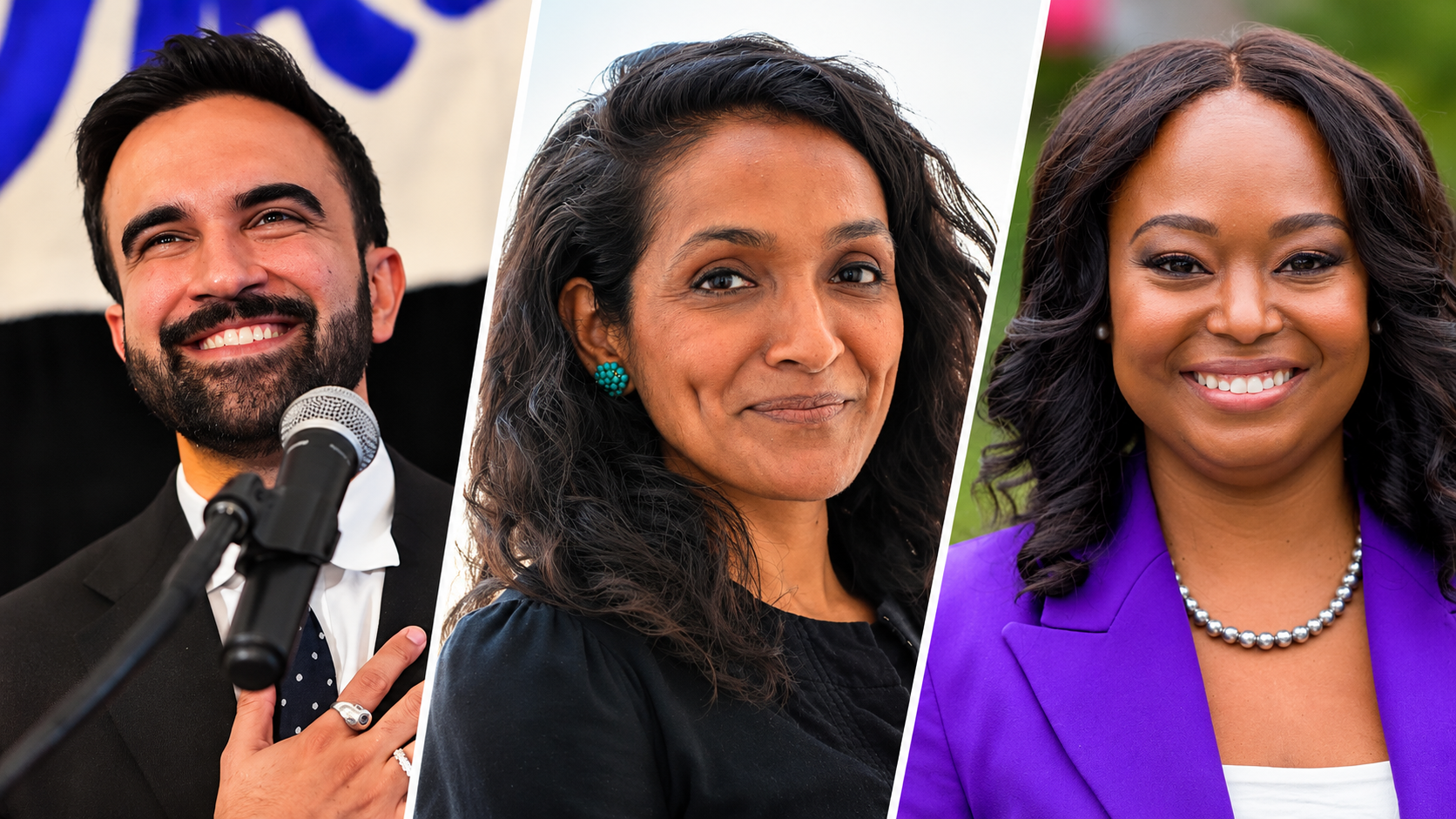
The Democratic Socialists of America (DSA), a relatively small socialist movement that spent decades on the fringes of American politics, has achieved a remarkable electoral breakthrough, producing mayors in three major U.S. cities: New York, Los Angeles, and Washington, D.C. With about 100,000 members, the organization has shown it can punch well above its weight, helping candidates aligned with its politics win both local and national elections.
The movement’s latest victory came on November 6, when Nithya Raman, a DSA member, defeated incumbent Los Angeles Mayor Karen Bass. Her victory completed an electoral sweep that also includes Janeese Lewis George in Washington and Zohran Mamdani in New York. Mamdani was elected in November 2025 in an extraordinary campaign that took him from an obscure New York state assemblyman, with initial support reportedly standing at just 1 per cent, to the mayoralty. At 34, he became the city’s first Muslim mayor and its youngest in more than a century. Lewis George’s victory will make her Washington's first new mayor in 12 years.
Together, these victories mark a significant moment for a movement pushing the Democratic Party toward a more explicitly left-wing political agenda. The achievement is particularly striking because the DSA is not a political party, and its members make up only a small fraction of the electorate in these cities. Instead of contesting elections independently, it has pursued a strategy of working within the Democratic Party, supporting candidates who share its political and economic priorities.
DSA – A successful American socialist project
Founded in 1982, the DSA emerged from the merger of two left-wing organizations: the Democratic Socialist Organizing Committee, led by prominent socialist thinker Michael Harrington, and the New American Movement, which adopted a collective leadership model. Harrington believed socialists should work within the Democratic Party rather than establish a separate political organization to contest elections. By operating within the existing political system, he argued, they could gradually move American politics to the left. That approach has remained central to the DSA's electoral strategy.
For decades, however, the organisation remained a marginal political force. In 2012, it had only 6,500 members and fewer than a dozen active chapters. Its fortunes began to change following Bernie Sanders's 2016 presidential campaign, which brought democratic socialist ideas into mainstream American political debate. Donald Trump's election that year further energised progressive activists and contributed to the organisation's expansion.
The momentum continued in 2018, when Alexandria Ocasio-Cortez, a DSA-backed candidate, won her Democratic primary in New York and subsequently entered Congress. Her victory demonstrated that candidates openly identifying with democratic socialism could attract substantial electoral support, particularly among younger voters. The DSA has since grown to more than 100,000 members, although some estimates put its membership higher. Its most prominent political figures include Mamdani, Ocasio-Cortez and Congresswoman Rashida Tlaib.
Endorsements are the organisation's principal electoral instrument. By late June, it had backed 150 candidates in the current election cycle; 35 had advanced or were running unopposed, while 34 had been defeated. The figures show both the scale of its electoral activity and that its candidates do not win every contest. The national organisation operates as a 501(c)(4) nonprofit rather than a registered political party. Some local chapters, however, have expressed ambitions to develop a more formal political structure. The Seattle chapter, for instance, has said it aspires to operate more like a political party.
The DSA’s growing influence has been accompanied by a shift in the issues around which its candidates mobilise voters. Although their campaigns reflect the specific problems of individual cities, housing affordability, childcare, public services and the rising cost of living have emerged as common priorities. The three mayoral victories offer different examples of how the movement has converted these concerns into electoral support.
New York: Childcare, rent and a promise of free buses
Zohran Mamdani's victory in New York provided the most prominent example of the DSA’s electoral strategy translating into political power. A 34-year-old democratic socialist born in Uganda, Mamdani defeated former New York Governor Andrew Cuomo twice, first in the Democratic primary and subsequently in the general election. His campaign focused on the financial pressures facing working-class and middle-income residents, with three prominent promises: free childcare, free buses and a freeze on rents in rent-stabilised apartments.
To finance his proposals, Mamdani advocated higher taxes on wealthy individuals and corporations, presenting his programme as an alternative to the city's established political and economic order. About 10 months into his administration, he has made progress on two of his three flagship promises. His administration secured a $1.2 billion commitment from the state government to expand the city’s 3-K early-childhood education programme and begin providing free childcare for two-year-olds.
He also secured a significant victory on housing affordability. The Rent Guidelines Board voted to freeze rents for one-year and two-year leases covering approximately one million rent-stabilised apartments. The decision took effect on October 1. However, his promise of free bus services remains unfulfilled. The low-cost shops proposed as part of his affordability agenda have also opened in only a limited number of locations.
Despite the failure to fully deliver on his mesages implementation challenges, Mamdani’s emphasis on working-class concerns and his efforts to translate campaign promises into government policy have given him considerable national visibility. Progressive activists are closely watching his administration to see whether democratic socialist policies can be implemented in one of America's largest and most complex cities.
Los Angeles: An unexpected challenge to the establishment
While Mamdani’s victory demonstrated the growing electoral appeal of democratic socialism, Nithya Raman’s success in Los Angeles illustrated the movement’s ability to challenge established political networks, including within progressive circles. Raman’s entry into the mayoral contest was itself unexpected. A city council member and longtime ally of incumbent Mayor Karen Bass, she entered the race just hours before the filing deadline, despite having previously endorsed Bass. Her decision drew accusations of betrayal from political allies and immediately divided progressive politicians.
Bass appeared to have the backing of much of the city's political establishment. Nine of the 15 city council members supported her, alongside several labour unions and business organisations. Her supporters also included California Governor Gavin Newsom, former Vice President Kamala Harris and former House Speaker Nancy Pelosi. The powerful Los Angeles County Federation of Labor and the Chamber of Commerce also backed the incumbent.
Raman’s relationship with the DSA leadership had been strained over disagreements on Israel and Palestine. She criticised the organisation's response to the October 7 Hamas attack on Israel. She later accepted an endorsement from Democrats for Israel-Los Angeles, prompting a censure from the local DSA chapter. The dispute resurfaced during her mayoral campaign, with national leaders questioning her position on the BDS movement. On November 2, the DSA national committee narrowly voted 14-13 against withdrawing its endorsement, exposing deep divisions within the organisation. Despite the internal tensions, Raman advanced to the runoff against Bass. Early counting had placed her third behind Bass and Republican candidate Spencer Pratt, but subsequent ballot counts lifted her into second place.
The November election produced a dramatic reversal. Raman defeated Bass, securing 52.1 per cent of the vote against the incumbent's 47.9 per cent. Her campaign focused on expanding housing construction, strengthening renter protections, and overhauling the city's response to homelessness. These issues resonated with voters confronting Los Angeles's persistent housing affordability crisis. Raman’s victory mattered not only because she defeated an incumbent mayor but also because she overcame a formidable coalition of political, business, and labour interests. Her success demonstrated that candidates associated with the democratic socialist movement could win even when sections of the established progressive political establishment opposed them.
Washington: Housing affordability, looming confrontation with Trump
The third victory came in Washington, DC, where Janeese Lewis George’s rise to the mayoralty further strengthened the DSA’s national profile. Lewis George, a city council member since 2021, built her campaign around housing affordability and the rising cost of living. She secured approximately 53 per cent of the vote in the Democratic primary, defeating Kenyan McDuffie, who received about 37 per cent. In a city where Democrats dominate electoral politics, the primary effectively decided the mayoral contest. Lewis George led in seven of Washington’s eight wards.
Her campaign attracted support from labour unions and progressive groups. Associated Press said she was the first Washington council member since 1998 to use the democratic socialist label openly. Her policy agenda focused heavily on economic security, particularly for renters and working families. She advocated making childcare more accessible, reducing utility bills and strengthening tenant protections. Her housing proposals included financial support for converting properties into cooperatively owned housing.
Beyond economic issues, Lewis George opposed teen curfews and police cooperation with federal immigration enforcement. Critics questioned whether her ambitious programme was financially and politically realistic amid economic uncertainty. During earlier campaigns, opponents had also accused her of being soft on crime. Her victory attracted less national attention than those of Mamdani and Raman, partly because Washington is considerably smaller than New York and Los Angeles and also because her mayoral contest did not generate the same level of political drama.
The relationship between Washington and the federal government is likely to become a major test of her administration. President Trump had warned that the federal government could take back control of Washington if Lewis George won the election. After her victory, he said he would meet her but also stressed the need to ensure the capital remained a safe and prestigious community. Lewis George, for her part, has pledged to stand up aggressively against federal intervention in the city’s affairs. The dispute could bring her administration into a confrontation with the White House over the limits of local autonomy and the federal government’s authority over the US capital.
New force in Democratic Party
The victories in New York, Los Angeles and Washington demonstrate the Democratic Socialists' growing ability to translate grassroots mobilisation into political power. The three mayors have different political backgrounds and face distinct local challenges. Yet their campaigns shared an emphasis on the economic anxieties of ordinary residents, particularly housing costs, childcare expenses, public services and the broader affordability crisis. The DSA’s strategy of working within the party has allowed its candidates to access established electoral structures while challenging the policies and priorities of its traditional leadership.
Critics argue that the organisation’s politics are too far to the left for a party seeking to maintain broad electoral appeal. Supporters, however, credit it with channelling public frustration over affordability and economic inequality into successful electoral campaigns. Whether the three administrations can deliver on their ambitious promises remains to be seen. But their victories have already established the DSA as a political force that the Democratic Party can no longer easily ignore.