On the shore of Gaza, where displaced families shelter in the shadow of ruined buildings, Haifa Bassam Abu Shamala sits down with her cello and plays the theme from Schindler’s List. The music mingles with the sound of the waves. The instrument is cracked: the glue holding its wood together melted when her family’s home was attacked, and its soundboard split. She paid about $200 to bring it back to life.
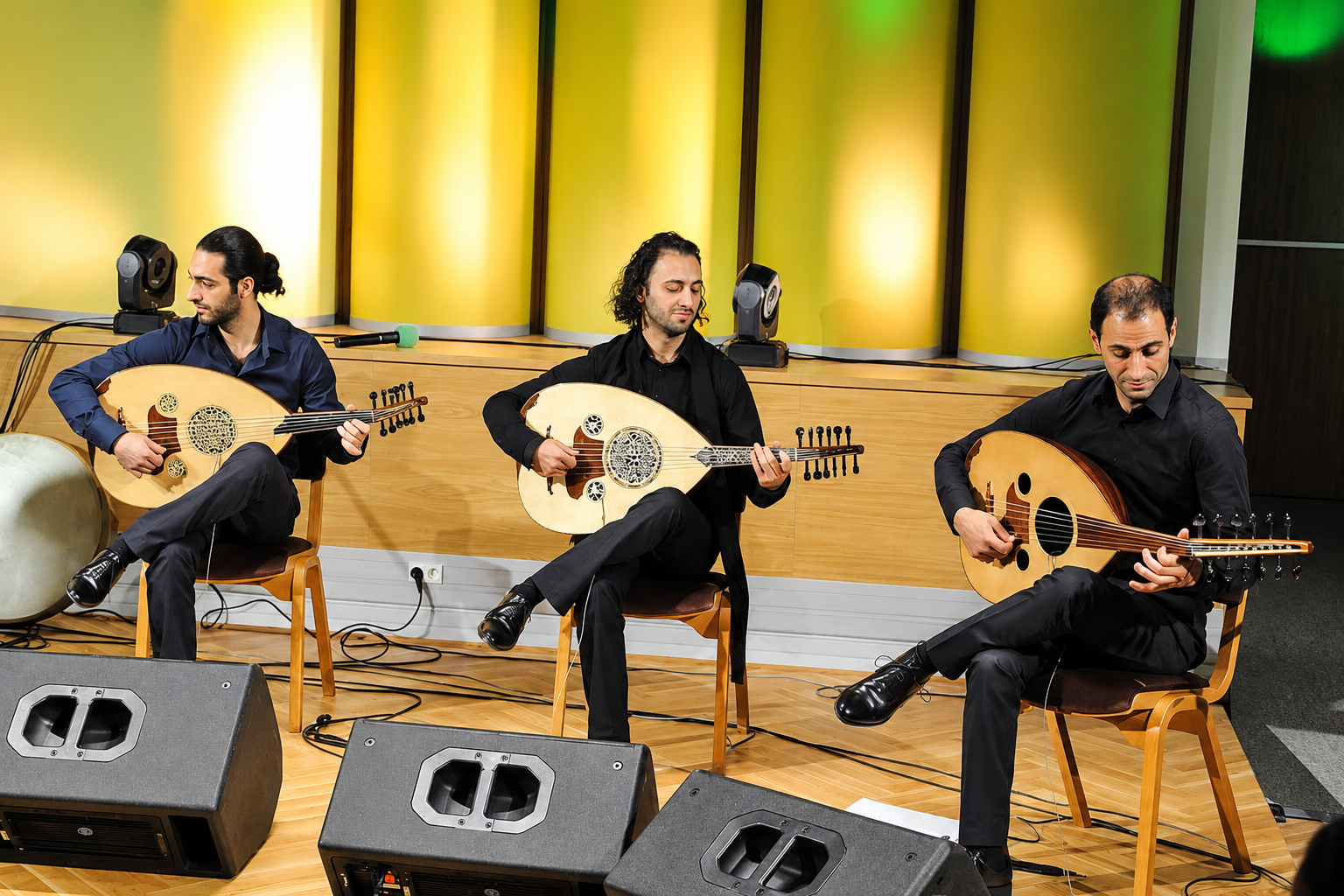
In Al-Nuseirat refugee camp, Suheil Abu Shawish builds ouds from the planks of humanitarian aid crates. The rosewood, mahogany and Indian teak he once used are gone, and a litre of glue that cost two shekels now costs 160 (about $50). Still, the 54-year-old keeps carving. “I breathe music, and I love life,” he told The New Arab.
Gaza’s war, which Palestinian officials, rights groups and UN-appointed investigators describe as genocide and which Israel denies, has left many musicians homeless. They are building instruments from salvaged wood, paying to repair war-damaged ones and teaching children in makeshift settings, to keep the territory’s musical life alive after the destruction of cultural spaces and a severe shortage of materials, as The New Arab reported. Since October 2023, instruments, strings and spare parts have been hard to obtain under the Israeli blockade. The Edward Said National Conservatory of Music, Palestine’s first music institute, lost its Gaza City headquarters and the instruments inside it.
A cello that survived an attack on her home
Haifa Bassam Abu Shamala, 22, began playing the cello at 11 and later joined the Edward Said National Conservatory of Music. She studied information technology and computer science at Al-Azhar University in Gaza and works in visual design. Her family’s home was attacked during the war. They had spent more than a decade building and improving it and lived there for less than two years.
The cello was badly damaged: the glue holding the wood together melted, and the soundboard cracked. She left it behind when her family was displaced, as there was no room to carry it. She returned during a fragile ceasefire in early 2025, after 49 days away, and found it needed extensive repairs. Displaced again, she left it behind once more before eventually taking it with her.
Strings, rosin and spare parts remain scarce in Gaza, making even routine maintenance difficult. She sometimes carries the cello to the coast to play for the displaced families sheltering there, including the theme from Schindler’s List, composed by John Williams, to the sound of the waves. The cello’s cracks, she said, remind her of what has happened to Gaza. “The instrument I love bears its own scars, just as the city bears the marks of war,” she said.
Abu Shamala has also founded Beyond Gaza, a collective of young women who use music, visual arts and performance to express their identities and present a view of Gaza beyond war and destruction. “We are people who love life, and we are a people who deserve to live,” she said.
Oud-making from aid crates
For Abu Shawish, some materials that once sold for about 10 shekels ($3.30) now costs 700 $230). With the specialised tools and materials gone, he has turned to electric ouds suited to stage performance. He also repairs damaged instruments, keeping their original details intact. “For me, music is not merely a hobby; it is a mission and an integral part of our identity and culture,” he said. He remains committed to making instruments and keeping a place for art in Gaza.
Teaching under displacement
Fouad Khader, a music teacher and activities coordinator at the Edward Said National Conservatory of Music in Gaza, has spent much of the war trying to keep programmes running for children. He has been displaced more than 25 times, which makes regular lessons and contact with students very hard to maintain. “Whenever conditions allow, we try to return, gather our belongings and reconnect with the students,” he said.
With the conservatory’s Gaza City headquarters destroyed, teachers have had to find available instruments, repair damaged ones or borrow them. The conservatory restarted its music programme in northern Gaza in November 2025 with a new group of students. Khader said children still need chances to learn music, interact with each other and express themselves, and that the aim is to keep them connected to the arts even though many of the places where they once learned have disappeared. The Gaza branch received an award from the International Music Council in 2025 for its Gaza Sings project, which was recognised for sustaining musical activity during the war.
Music as refuge
Psychologist Rawan Ahmed said that children exposed to war and displacement face constant stress that affects their emotions, behaviour, sleep, concentration and relationships. Music, she said, gives children a way to express feelings they may struggle to put into words. Group activities can also help them build relationships and a sense of belonging.
Adults can likewise use playing, singing or listening to music to cope with daily pressures, she said. Regular artistic activity can help restore routines and social interaction, both of which displacement often disrupts. Ahmed cautioned that music cannot undo the psychological effects of war or replace specialised mental health care. Artistic activities work best as part of wider psychosocial support, she said, in settings that offer participants a reasonable degree of safety and stability.
For many Gazans, music is a personal outlet rather than a profession. Hanan Ghazal said she took up music to escape the atmosphere of war and the constant sense of insecurity. She said there are few places in Gaza where people can learn new skills, and described music as a refuge, calling her decision ‘wonderful’.