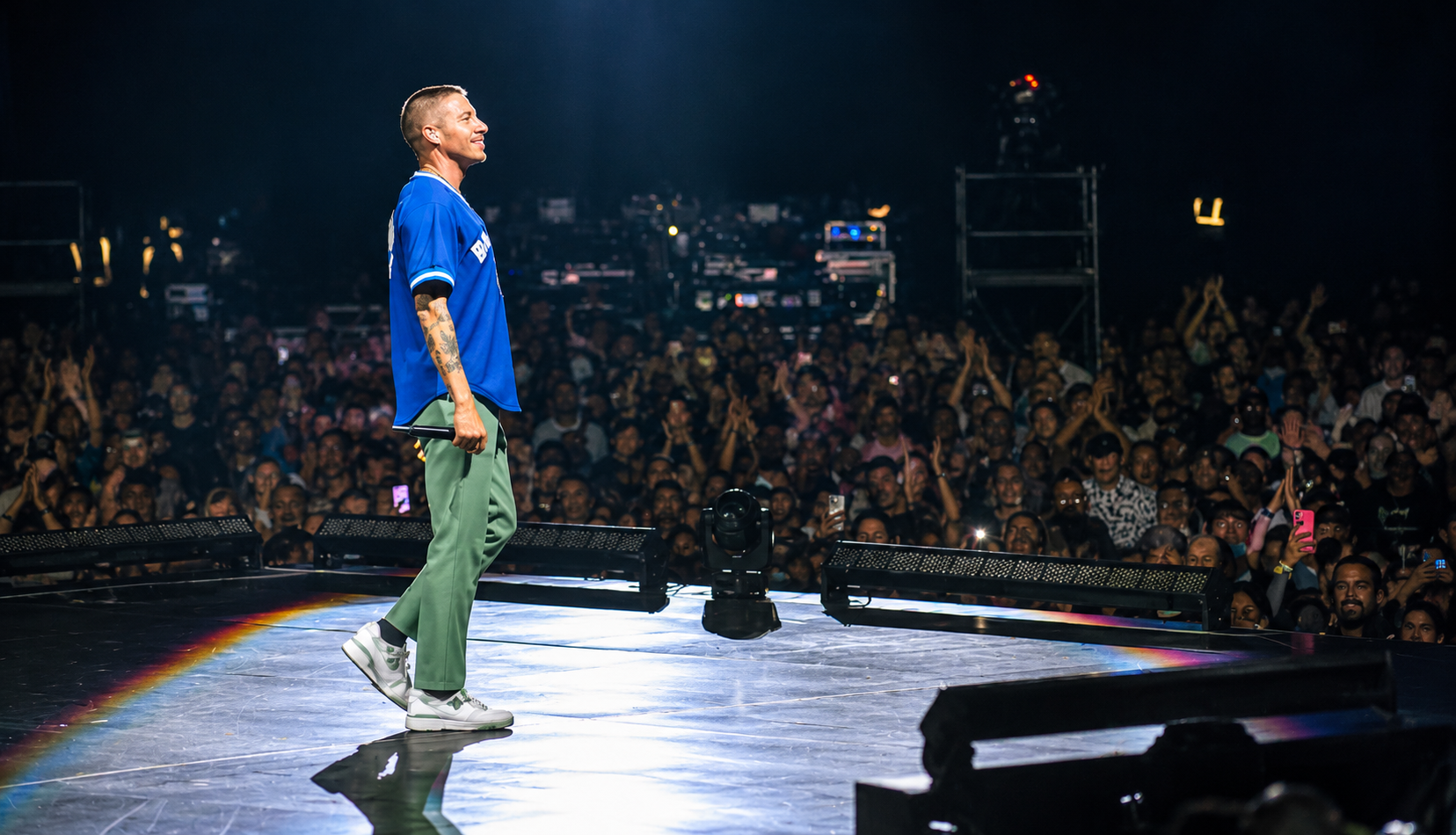
American rapper Macklemore has accused nine major US concert venues of shutting out his proposed Free Palestine benefit tour, alleging that concert dates were withdrawn after organisers disclosed that the performances would raise funds for Palestinians. The Grammy-winning musician has described the episode as an attempt by powerful commercial interests to intimidate artists and restrict political expression, vowing to continue his activism even if it costs him his career.
In a lengthy statement published across seven Instagram slides on November 6, Macklemore said his team had initially secured access to available dates through the end of 2026 at some of the country's most prominent arenas. However, he alleged the opportunities disappeared once venue operators learned the proposed performances were Palestine benefit concerts.
The venues he named include Madison Square Garden (New York City, New York), Prudential Center (Newark, New Jersey), Barclays Center (Brooklyn, New York), UBS Arena (Elmont, New York), Intuit Dome (Inglewood, California), Kia Forum (Inglewood, California), Crypto.com Arena (Los Angeles, California), Chase Center (San Francisco, California) and Climate Pledge Arena (Seattle, Washington).
According to Macklemore, the discussions with the venues followed a similar pattern despite differences in the conversations. He said available dates had initially been offered around mid-September, but the arrangements fell through after the purpose of the concerts became known. He described the experience as unprecedented in his more than 20 years of touring.
The rapper believes the episode reflects a wider climate of pressure on musicians, writers and entertainers who publicly support Palestinians. He argued that commercial influence and the threat of losing professional opportunities have become effective ways of discouraging artists from taking political positions that powerful interests oppose.
Macklemore also expressed regret that he had not spoken publicly about the pressure earlier. He said he had initially avoided discussing his personal experiences because he did not want the controversy surrounding his career to overshadow the humanitarian crisis in Palestine. His position has since hardened, and the rapper has made it clear that maintaining professional relationships would no longer take priority over his political convictions.
He said he would rather lose opportunities in the music industry than protect people whose business interests, in his view, take precedence over Palestinian lives. His statement also challenged fellow performers who might be reluctant to express support for Palestine because of the potential consequences for their careers.
Business interests and freedom of expression
A central theme of Macklemore's statement was the influence of wealthy individuals and commercial organisations over the American entertainment industry. He questioned how a country that places considerable emphasis on freedom of speech could allow a small group of powerful business owners to determine which political causes receive access to major public platforms.
He argued that the expression Free Palestine had become unacceptable to certain commercial interests not because it threatened public safety, but because it challenged established political and economic relationships. The rapper also appealed to artists who fear losing sponsorships, concert opportunities and professional relationships if they publicly support Palestinians. He acknowledged that such concerns were understandable but urged performers to recognise the strength of collective action.
He said his vision was a music industry in which artists placed freedom of expression and solidarity above commercial endorsements and brand partnerships. He maintained that political speech should not become a professional liability simply because it challenges the interests of influential people. The allegations raise broader questions about the relationship between private ownership of cultural infrastructure and freedom of expression. Major arenas are privately operated commercial properties, but they also function as important public gathering spaces where musicians reach audiences numbering in the tens of thousands. Decisions about access to these venues can therefore have consequences beyond individual concert arrangements.
European benefit concerts offer a different picture
The alleged setbacks in the United States contrast with Macklemore's recent European benefit concerts in Dublin, Paris and London, which he described as among the most meaningful performances of his career. The events attracted tens of thousands of people and brought together more than 40 artists and speakers in support of Palestinian liberation. Macklemore said the audiences represented people from different religious, cultural and social backgrounds who had come together around a common humanitarian cause.
He rejected attempts to portray the Palestine solidarity movement as one rooted in hatred, arguing that the atmosphere at the European performances was characterised by solidarity, love and collective resistance. The concerts were organised to raise funds for organisations supporting Palestinians, with proceeds directed towards humanitarian and other assistance.
The European performances also followed a controversy involving the rapper's participation in the US leg of Ed Sheeran's Loop Tour. Macklemore was removed from the tour after making remarks supporting Palestine during an opening performance. Sheeran later said the tour's promoter, not he, made the decision. The other four opening acts and Sheeran's backing band later withdrew from the tour in solidarity with Macklemore.
The episode added to concerns among sections of the music industry about the professional consequences of publicly expressing political positions on the Israel-Palestine conflict.
Political shift and growing public support
Macklemore also argued that political attitudes towards Palestine were changing despite the influence of powerful lobbying organisations and wealthy business interests. He referred to Michigan politician Abdul El-Sayed and his political position on Gaza and US arms sales to Israel as an indication of the growing space for such arguments in American politics.
His broader contention was that wealthy individuals who control major commercial institutions should not assume that their influence over businesses translates into control over public opinion. The rapper pointed out that audiences, artists and ordinary consumers are central to the success of the entertainment industry. They buy concert tickets, fill arenas and sustain the commercial empires of venue operators. In his view, that gives the public considerable influence over the industry's direction.
He warned that attempts to prevent him from performing in major American arenas would not end his involvement in Palestine solidarity activities. Instead, he intends to work with other musicians and organisers to stage additional benefit concerts, potentially using outdoor spaces and alternative venues.
Macklemore said losing access to established arenas could push artists to organise performances independently rather than relying on conventional commercial infrastructure. His message to venue operators was unequivocal: ownership of concert halls does not give billionaires ownership of the audiences who fill them. He concluded that artists and organisers would build their own platforms if established venues kept closing their doors.