The man who built the world’s most valuable chip company, and who spent years persuading Washington to let it sell more to China, is now the subject of a board inquiry into whether he was cultivated by Chinese intelligence. Jensen Huang, Nvidia’s founder and chief executive, has admitted in a message to staff that he was unfaithful to his wife. The woman at the centre of the reports is Alice Huang, who is a Chinese businesswoman and former executive at Megaspeed, a Singapore data-centre company that has bought billions of dollars of Nvidia’s most advanced processors and is under investigation over whether some reached China in breach of US export controls.
US intelligence officials, according to The New York Times and the Financial Times, believe that she was working for Beijing. China calls the claim a smear, Nvidia says that it has no reason to think national security or company secrets were compromised, and nothing made public so far shows that Huang knew of any intelligence role or passed anything on. Yet the affair has exposed how much of the global AI race rests on one executive’s relationships on both sides of the Pacific.
What happened
Huang’s admission came in a company-wide email dated Sunday (November 8), in which he did not name the woman involved. Nvidia’s board announced that its independent directors, assisted by outside counsel, will oversee an inquiry into the national security concerns raised in news reports. The board said that even as it had no reason to believe that national security or Nvidia’s secrets had been compromised, the review would examine all available information. It also said that US national and economic security take priority over the interests of the company and its shareholders.
In its official statement of November 8, the board said a committee of independent directors, assisted by outside independent counsel, would oversee the investigation. It stated: “The Board prioritizes U.S. national and economic security, which is paramount to the interests of NVIDIA and its shareholders.” It said Huang fully supported the review and had committed to cooperating with it. The board also expressed confidence in Huang and his leadership team, saying it would provide further updates as appropriate.
John Rizzo, Nvidia’s head of public policy communications, said the news would not slow the company and that Huang would continue to lead it without interruption.
The apology
Huang opened with the words "”I owe my family and all of you an apology.” He then wrote “I was unfaithful to my wife”, adding that “there is no excuse for what I did.”
Huang’s full message, published by Nvidia in its newsroom, offers a more detailed account of his apology. “Leading NVIDIA is the privilege of my life. My responsibility is to serve you and be worthy of your trust. I have fallen short of that responsibility. I am fully committed to NVIDIA and will work to earn back your confidence,” he wrote.
“Regarding the national security concerns raised in news reports, NVIDIA’s Board of Directors has initiated an independent investigation. I support the investigation and will cooperate fully. I love our country and our company. I am committed to protecting NVIDIA and supporting America’s national security. I am proud and grateful to be an American,” he said.
Who is Alice Huang, and what is Megaspeed?
Alice Huang, also known as Huang Le, was a television reporter in China before becoming a senior executive at Megaspeed. According to the Times and the Financial Times, US intelligence monitored her relationship with Huang for more than a year. Those reports say that she was recruited by a Chinese intelligence agency to gather information about Nvidia’s AI chips and to influence its export policy, and the Times reported links to China’s Ministry of State Security. Officials initially did not believe that Huang himself knew of her alleged activities. The two were reportedly documented together at a bar in Taipei in June 2024, around the time Megaspeed began buying chips in large volumes.
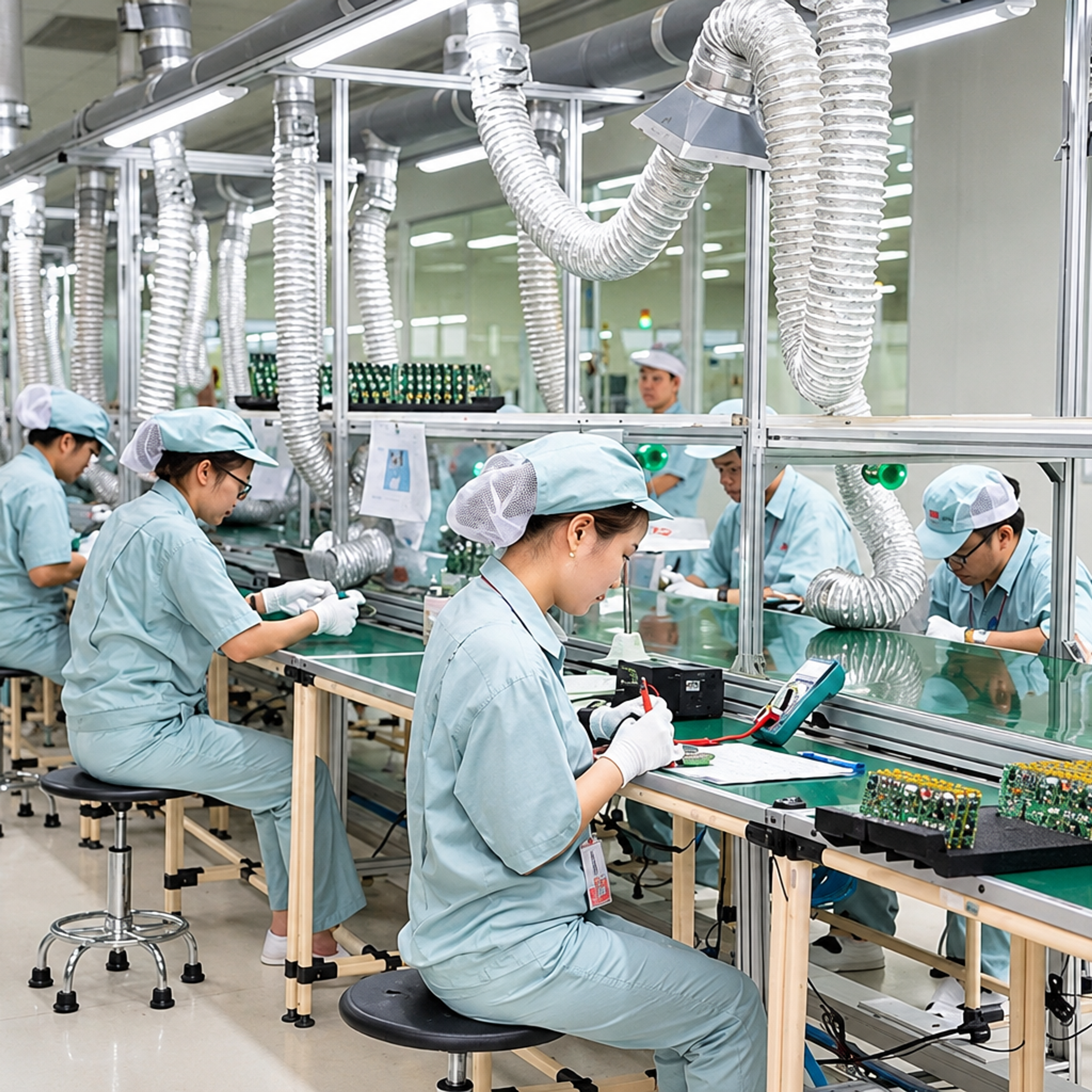
Megaspeed emerged as a spin-off of 7Road, a Chinese games and cloud company with state-backed investors. 7Road sold it to a British Virgin Islands company belonging to Alice Huang, and in November 2023 it passed to Swiftdata, a Singapore company owned by Tan Yong Pong, also known as James Tan. The Times counted more than $4.8bn of Nvidia chips bought over two years.
In October 2025 Senator Tom Cotton asked the Commerce Department to investigate it as a possible conduit for diverting American chips. That month Singapore police opened a probe and the Times reported that Commerce had begun its own. According to the Times, Megaspeed ran Nvidia-powered data centres in Malaysia and Indonesia that appeared to serve customers in China remotely. Megaspeed, however, denies any wrongdoing.
Washington and Beijing respond
Three Republican committee chairmen, Brian Mast of Foreign Affairs, John Moolenaar of the China Select Committee and Rick Crawford of Intelligence, wrote to Huang that the reports raised “significant national security concerns”. They asked him for a closed-door briefing on November 18, the day after Nvidia reports quarterly earnings. Nvidia has said that its regional cloud customers receive “ordinary business information” and nothing relevant to national security.
The politics are awkward for the White House, because of its own conduct. The Times reported that President Donald Trump was briefed on the relationship earlier this year and chose not to act, and that Secretary of State Marco Rubio had warned administration officials about it. Asked on Sunday about Huang, Trump said that he had not heard that Huang had done anything wrong.
In Beijing, Foreign Ministry spokesperson Guo Jiakun called the spy claim “completely groundless”. The state-run Global Times dismissed the story as a political spy thriller without hard evidence. Washington consultant George Chen told the AP that the real questions are whether Huang knew of any espionage and whether sensitive information was compromised, and that these require evidence rather than speculation.
Why it matters: chips, markets and leverage
Advanced AI chips have become the central currency of the rivalry between the United States and China. Washington restricts what Beijing can buy because the same processors train frontier AI systems, and Nvidia, whose chips power most of them, sits at the heart of that policy.
The commercial stakes have shrunk dramatically. Before export curbs tightened, Nvidia held about 95 per cent of China’s advanced chip market. Its latest annual filing says the company is effectively foreclosed from China’s data-centre market, and that this has helped rivals build larger ecosystems to challenge it worldwide.
Huang has consistently argued that restrictions merely hand the market to Chinese competitors. After a December 2025 meeting with Trump, Washington allowed sales of the H200 chip under conditions that included a 25 per cent tariff. Reports said Beijing approved purchases of about 400,000 units for firms such as ByteDance, Alibaba and Tencent. But Beijing has also been promoting domestic chipmakers, and one Bernstein projection has Huawei overtaking Nvidia in China’s AI chip market.
Diplomacy now runs through the chip as well. Chips are a bargaining counter in trade talks, and Huang has travelled with Trump to China and could join his next Asia trip. Critics therefore ask whether Beijing sought leverage over a man whose advocacy helps shape American policy. Defenders reply that his lobbying for looser controls long predates anything alleged.
What happens next
The board’s findings, the November 18 briefing and any move by Congress to compel disclosures are the next tests for Huang and for Nvidia. Commerce officials and Singapore’s police are still examining Megaspeed.