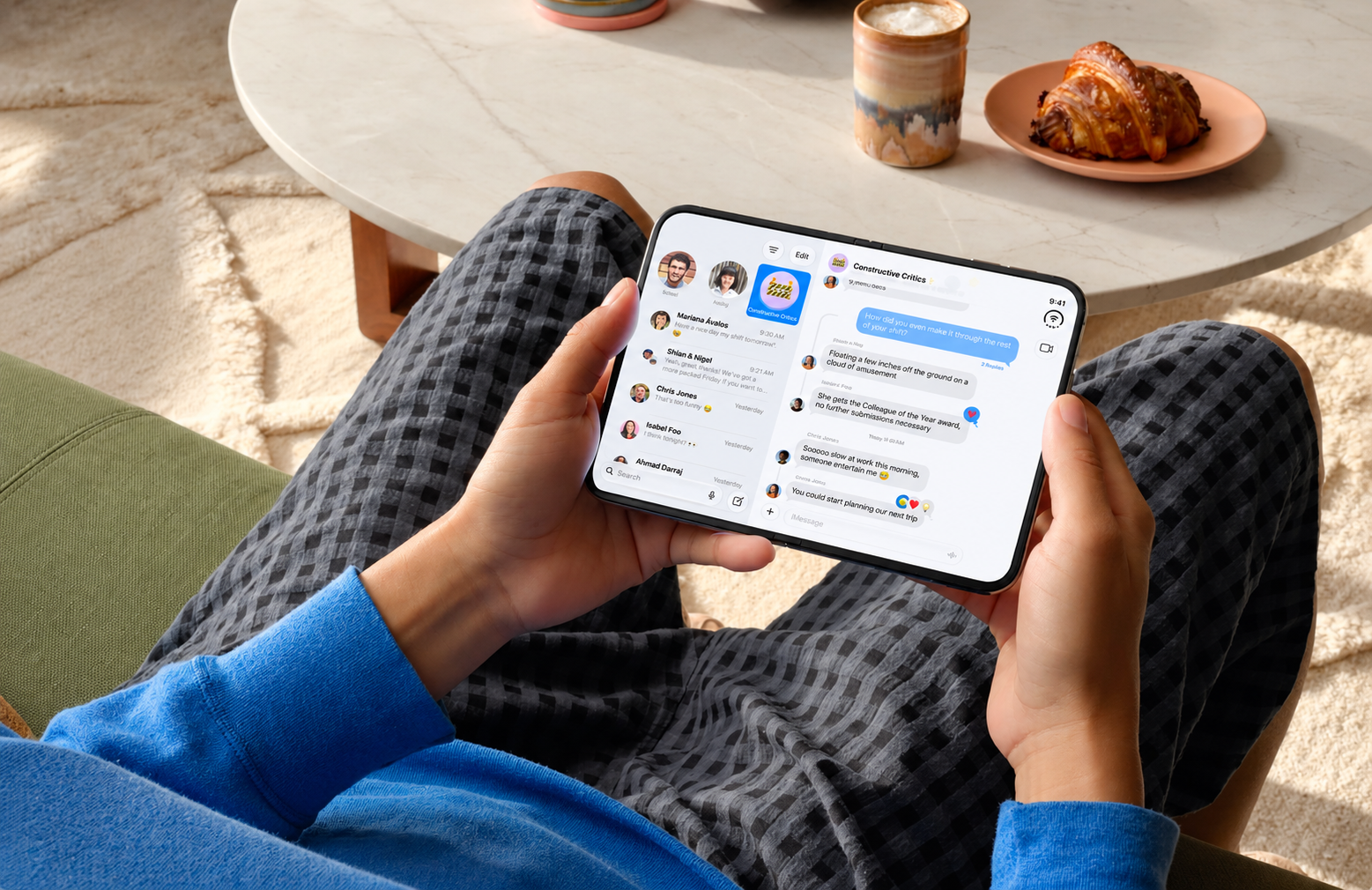
Apple spent seven years denying it was building a folding iPhone. China’s phone-makers spent those same seven years building five generations of them, selling tens of millions of units, and quietly deciding what a “premium” phone should look like without waiting for Cupertino’s approval. So, when Apple finally unveiled its first foldable, the iPhone Duo, on September 9, 2026, the moment came less like a revolution and more like a late arrival at a party that China had already been hosting for years – with its own price ladder, and its own idea of who is winning.
The foldable phone has become the clearest stage on which the broader US-China technology rivalry is now playing out – not in courtrooms or export-control filings, but in hinges, price tags, and the increasingly uncomfortable question of whether “Designed in California” still commands a premium in the one market that arguably out-engineered Silicon Valley first.
A crowded homecoming
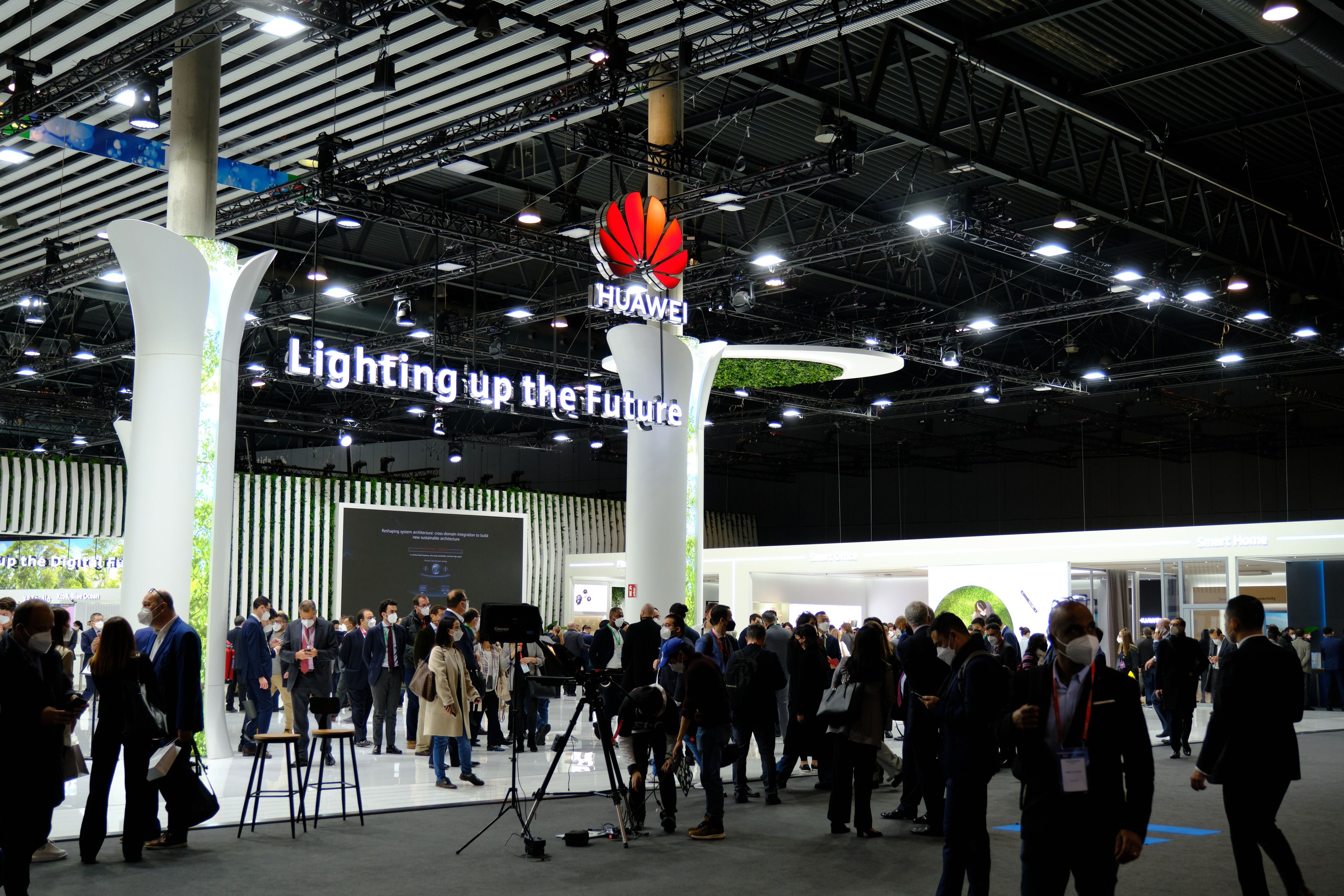
Apple picked an awkward week to turn up. On September 7, 2026, both Huawei and Xiaomi launched new foldables in China, two days ahead of Apple’s own event. Huawei’s tri-fold Mate XT2 unfolds into a tablet-sized screen, runs on a homegrown Kirin 9050 Pro chip, and starts at roughly $2,980.
Xiaomi’s 18 Fold, a book-style device starting around $1,638, pairs a proprietary Xring O3 chip – an AI processor built from 24 billion transistors, a 26 per cent increase on its predecessor – with memory chips sourced from domestic supplier ChangXin Memory Technologies (CXMT). It was a move with a deliberate all-Chinese bill of materials that founder Lei Jun showcased alongside new EVs from Xiaomi’s Skynomad line, underlining that the company sees itself challenging not just Apple and Huawei but Tesla too.
Huawei also sells a cheaper book-style model, the Pura X Max, at the same entry point as the Xiaomi 18 Fold. Honor, Oppo and Vivo all compete in the category too. By the time the iPhone Duo’s China price of 15,999 yuan (about $2,230) was confirmed, Chinese shoppers already had a full ladder of book-style, flip and tri-fold designs to measure it against – and social media reaction skewed towards scepticism, with commenters on WeChat saying they would rather wait for a second-generation model than pay full price for the first.
The scale of Huawei’s grip on the category explains the shrug. International Data Corporation’s Francisco Jerónimo has put Huawei’s share of China’s domestic foldable market at 79 per cent, though other estimates cited around the same launch window place it closer to 68 per cent, drawing the same conclusion that this is Huawei’s category to lose. Huawei was also first to market with a tri-fold design, launching the original Mate XT a full generation ahead of anything that Apple has attempted. Jerónimo’s own assessment, delivered as the Duo launched, was that Apple’s entry had “just handed Chinese buyers their first genuinely compelling reason to reconsider” – which is a considerably lower bar than “beat Huawei”.
What China intends to do with this
For Chinese manufacturers, foldables are not just another product line – they are the chosen battleground for proving that Chinese engineering, not merely Chinese assembly, can define the next generation of premium smartphones.
That ambition operates on three levels. The first is technical leadership: Huawei’s tri-fold devices forced the whole industry, Apple included, to react to a form factor Cupertino still has not shipped, and it did so using a domestically designed chip after years of being cut off from advanced foreign silicon.
The second is price-tier pressure. Xiaomi’s 18 Fold undercuts the Duo by several hundred dollars while offering broadly comparable specifications, forcing Apple to justify its premium in a market where that premium is no longer assumed. One 2026 industry analysis describes Chinese brands’ overseas strategy as shifting from pure volume competition towards building genuine brand premiums in the $200-400 band – the tier that actually determines long-term profitability rather than headline market share.
The third, and most strategic, layer is technological sovereignty. HarmonyOS, the operating system Huawei built after Washington severed its access to Google’s Android services, now runs on hundreds of millions of devices and is increasingly treated as a genuine alternative ecosystem rather than a stopgap. Xiaomi is making the same point in a different register: its 18 Fold runs on a self-designed Xring chip paired with memory from the domestic supplier CXMT, giving it a bill of materials with no dependence on US-controlled components. Pairing an independent operating system, or an independent chip and memory supply, with a first-mover form factor is, for both companies, less about beating Apple on a spec sheet than about demonstrating that China’s tech sector can lead without US components at all.
How the rivalry got here
None of this, however, began with foldables. The clearest origin point for the modern US-China phone rivalry runs from 2018 to 2020, when Washington moved from treating Huawei as a telecoms-equipment security concern to treating it as a company to be technologically isolated. Congress first barred US government agencies from buying Huawei and ZTE equipment under the 2019 National Defense Authorization Act, signed in August 2018. The decisive blow came in May 2019, when the Commerce Department added Huawei to its Entity List, cutting the company off from US chip designs and Google’s Android services. A year later, in May 2020, Washington expanded the restrictions further, barring any manufacturer worldwide that uses US semiconductor equipment – including TSMC – from supplying Huawei at all.
The effect was immediate and severe as Huawei’s global smartphone share collapsed from around 17.6 per cent in the second quarter of 2019 to roughly 4 per cent by the third quarter of 2020, while its chip-design arm HiSilicon’s share of the global smartphone chipset market fell essentially to zero.
But the sanctions didn’t kill Huawei – they redirected it. Cut off from Google, the company built HarmonyOS. Cut off from Western chip fabrication, it poured resources into domestic semiconductor development. By 2024-2025, that investment began paying off: Huawei’s shipments recovered to around 46-47 million units, and the company reclaimed the top spot in China’s domestic smartphone market during both the first and second quarters of 2026, according to Counterpoint Research figures cited alongside the Duo’s launch. Some trade policy analysts now argue that the export controls, though genuinely damaging in the short term, ultimately accelerated China’s push for chip self-sufficiency rather than preventing it – a verdict Beijing’s tech champions are unlikely to dispute.
Market share: a more contested picture than headlines suggest
Globally, the smartphone market is now a genuine three-way contest. Samsung reclaimed the overall global shipment lead from Apple in the second quarter of 2026, with Xiaomi holding a solid third place, according to Counterpoint. Within China specifically, Huawei has led shipments for two consecutive quarters, with Apple second ahead of Vivo and Oppo – a reversal from the years when Apple comfortably topped China’s premium segment.
The foldable category tells a related but distinct story. Samsung still leads worldwide in foldables with roughly a third of the market, but Counterpoint forecasts Apple could capture around a quarter of the global foldable segment by the end of 2026 – putting it marginally ahead of Huawei’s roughly 24 per cent foldable share, even as Huawei continues to dominate foldables specifically within China. Zoom out to the wider handset market and Chinese vendors collectively – Xiaomi, Vivo, Oppo, Huawei, Honor and Transsion – now account for somewhere around half of all global smartphone shipments, a dominance built less on any single flagship than on coverage across every price tier and region on earth.
Diversifying: two different kinds of hedge
Both sides of this rivalry are diversifying – but in opposite directions, which is itself revealing.
Apple is diversifying its supply chain away from China. Under what is widely described as a “China plus one” strategy, Apple has shifted a growing share of iPhone assembly to India, which by mid-2025 had overtaken China as the largest source of smartphones exported to the United States, with India’s share of those exports jumping from 13 per cent to 44 per cent in a single year, according to Canalys data. Tim Cook has said the majority of iPhones sold in the US now originate in India, while maintaining that China remains the manufacturing base for most Apple products sold elsewhere in the world. India’s Apple supplier ecosystem has grown from essentially nothing in 2012 to around 40 component and assembly partners by mid-2026, spread across eight states, with Chinese firms now making up less than a tenth of that supplier base – a shift accelerated by India’s own tightened scrutiny of Chinese investment following the 2020 Galwan Valley border clash.
Chinese brands, meanwhile, are diversifying their customer base rather than their factories. Having largely saturated China’s mature domestic market, Xiaomi, Transsion, Oppo and Vivo have spent the past decade building volume in markets the American and Korean giants have historically underserved. Transsion – barely known outside the industry – has become the dominant phone brand across Africa through its Tecno, Infinix and itel brands, holding a market share research firms have variously put at over 40 per cent and as high as 51 per cent, while pushing further into South Asia, the Middle East and Latin America.
In the second quarter of 2025 alone, Xiaomi shipped 42.4 million units globally and Transsion shipped 24.6 million, entering the global top five for the first time. That expansion has moved through phases: first winning on price in developing markets, now, according to industry analysts, trying to win brand credibility in the mid-tier that actually generates profit, the same tier where a discounted Xiaomi or Honor foldable can plausibly sit next to a marked-down iPhone.
The fold as proxy war
If taken together, this is less “Apple versus Huawei” than a compressed rerun of the wider US-China tech rivalry, playing out on a single product category in real time. Washington’s sanctions tried to keep Huawei out of advanced chips and largely succeeded overseas even as the company clawed its way back at home. Apple built resilience by moving factories to India and Vietnam. Chinese brands built resilience by moving customers to Lagos, Jakarta and São Paulo. And now, in the one segment where China arguably out-innovated Silicon Valley first, Apple’s belated and expensive entrance is being read less as a technological event than as a referendum on whether American design still commands a premium in Shenzhen’s own back yard.
Early signs indicate that the answer is: not automatically. Apple shares still rose more than 3 per cent on the Duo’s unveiling, and Counterpoint still expects Apple to take a meaningful slice of the global foldable market by year’s end. But inside China, where domestic manufacturers built this category from nothing while the rest of the industry waited, the reaction so far has been closer to a shrug than a stampede – and that may be exactly the outcome that Beijing’s tech champions were hoping for.