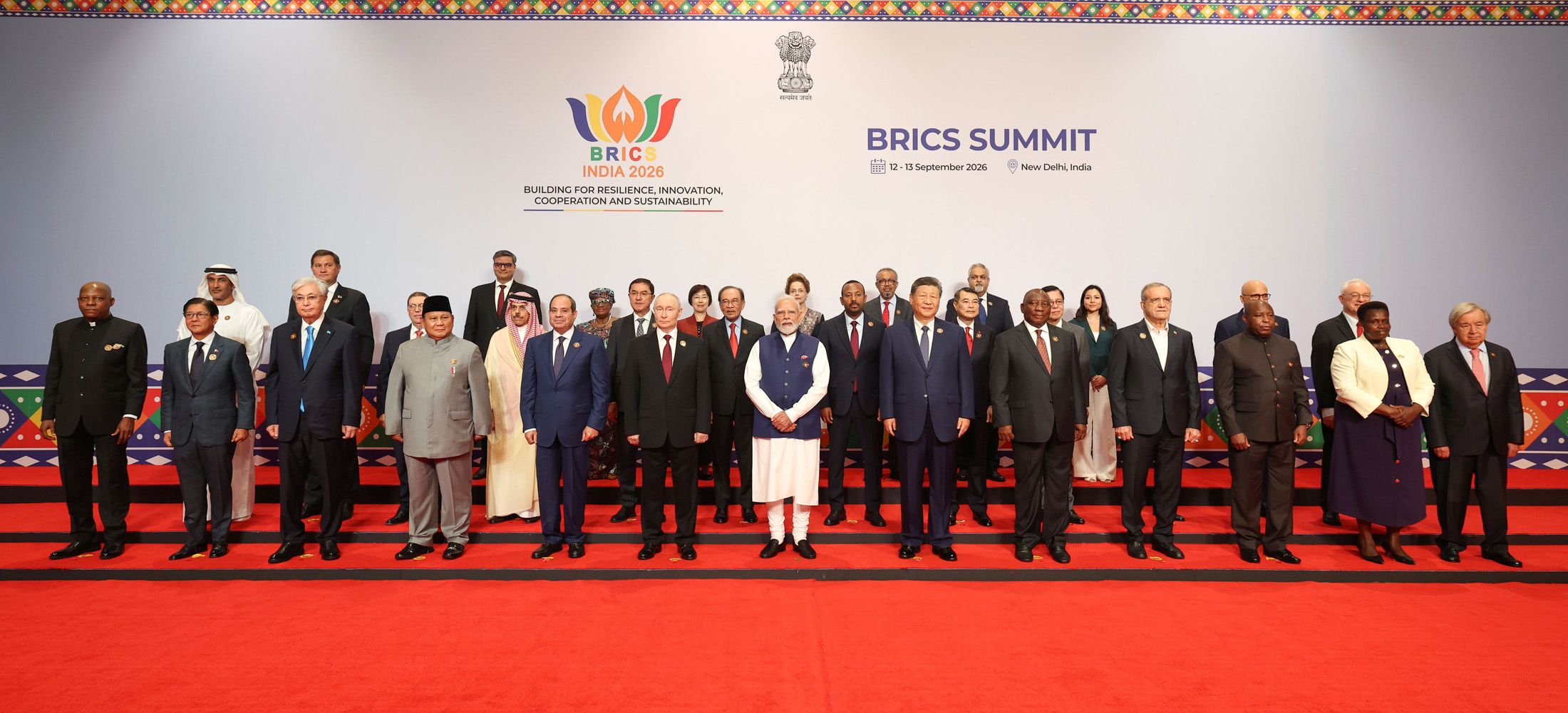
The BRICS heads of state meeting in Delhi took place amidst dramatic developments on the international stage. The rules-based international order now lies shattered. It has also been obvious for some time that the US is a hegemonic power in decline, though still capable of causing mayhem and destruction on a gargantuan scale.
The Trump administration has openly identified the BRICS grouping as a “threat” to American interests. Last year, he threatened an additional 10 per cent tariff on countries that support the grouping’s anti-American policies, and a hundred per cent tariff on BRICS member countries, should the grouping seriously pursue a de-dollarisation agenda. China, India and Brazil – the three countries that, along with Russia, formed the original core of BRICS – have already been singled out for massive tariffs.
BRICS was never an anti-American alliance to begin with. Now with eleven members, the grouping treads ever more cautiously on geopolitical issues. The United Arab Emirates (UAE), a new entrant, is among Washington and Tel Aviv’s closest allies in the region. India and the UAE are part of the I2U2 grouping, also called the Asian Quad, formed in 2021 along with the USA. Prime Minister Narendra Modi had gone on an official visit to Israel just two days before the war on Iran began. India is also a member of the QUAD military grouping along with the United States, Japan and Australia.
Both China and Russia have openly criticised the QUAD grouping, calling it an anti-China bloc that runs against the basic tenets of multipolarity.
Two countries, two readouts
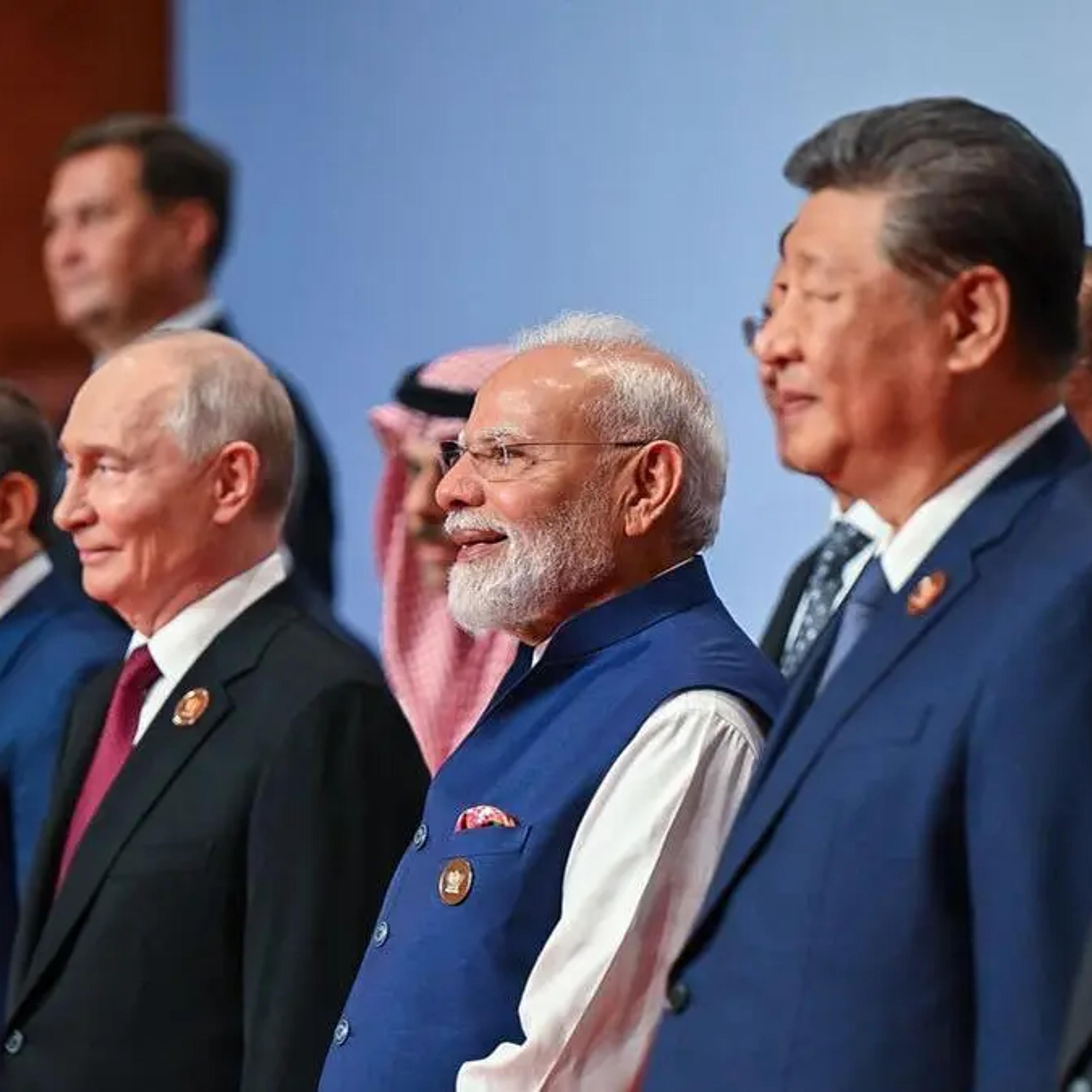
However, during the Delhi meet, BRICS members put up a show of broad unity. Chinese President Xi Jinping came to India after a gap of seven years. Relations between the two neighbours have improved considerably since the border skirmishes of 2020. For the last three years, the leaders of the two countries have met on the sidelines of the annual Shanghai Cooperation Organisation (SCO) and BRICS meetings.
During his meeting with Modi, Xi underlined the importance of expanding relations and growing trade between the two countries. Modi reciprocated by welcoming “the steady progress” in the relationship, while also emphasising that peace and tranquillity in the border areas would act as a further incentive for the continued development of ties.
Xi told the Indian prime minister that the two countries are “partners, not rivals”. The Chinese readout of the meeting quoted Modi as saying that India “follows an independent foreign policy” and that its ties with China were not influenced by any third country.
Even as the BRICS summit was under way, Indian and American troops were holding joint mountain warfare military exercises at 2,500 metres altitude in Auli, Uttarakhand, just 95 km from the LAC. The American-led exercise is codenamed “Operation Pathways”, stated to be aimed at ensuring “a free and open Indo-Pacific”.
Interestingly, the Indian readout of the Modi-Xi meeting omitted the line that the two countries “are partners, not rivals”. A small group of the Tibetan exile community staged a couple of protest marches during the two days Xi was in Delhi, despite the massive security blanket over the city. The Chinese president was the only notable absentee at the banquet hosted by Modi for the visiting heads of state.
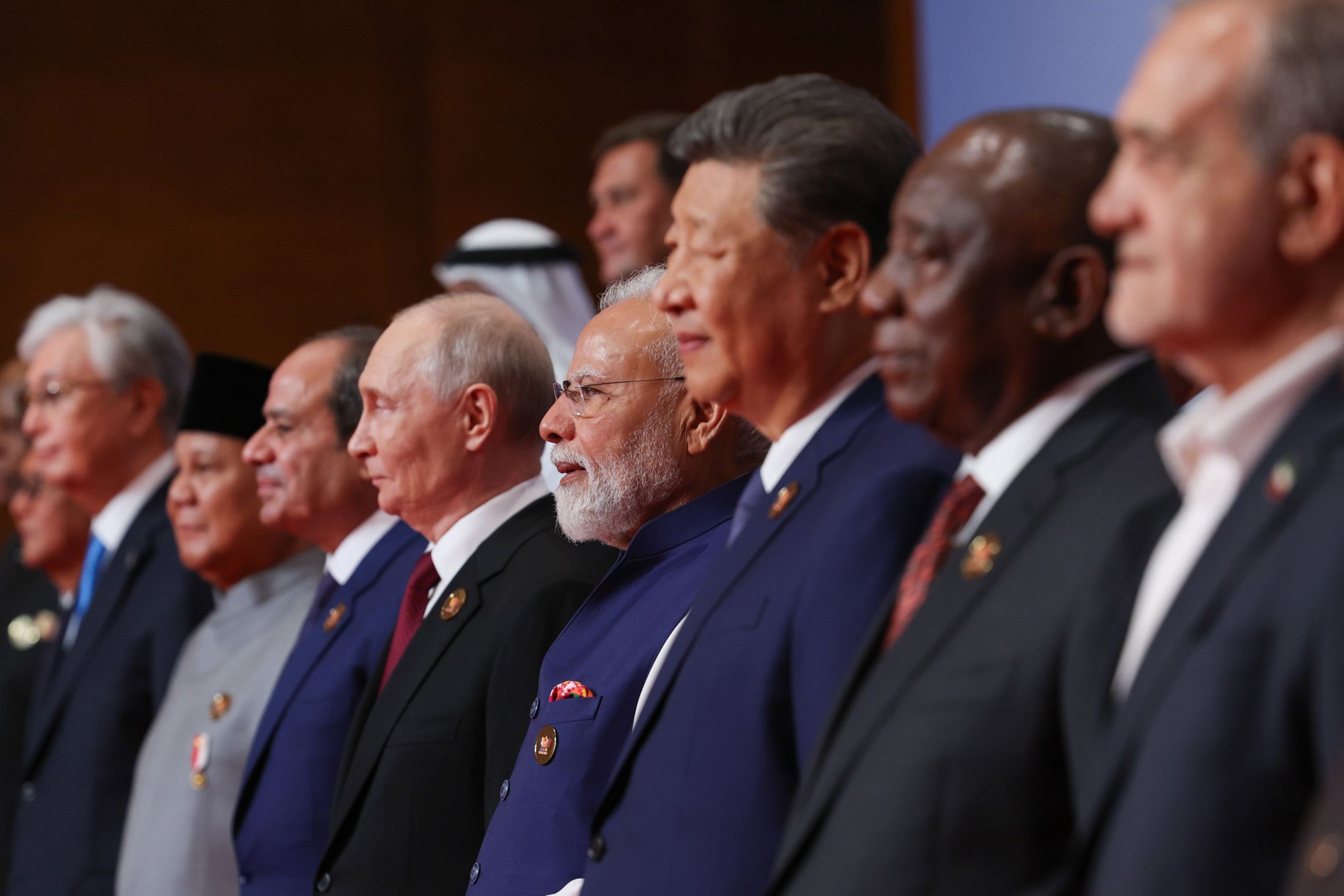
President Xi, in his concluding speech, called on BRICS countries to rally “the global South” to ensure a world order “free from double standards”. He did not name the US but was alluding to Washington’s recent actions in countries like Venezuela, Cuba and Iran. “A world without rules is like an intersection without traffic lights, where chaos and disorder would be inevitable,” Xi said.
Xi offered to share China’s expertise in open-source AI and smart manufacturing with BRICS member countries, part of five initiatives by China to promote economic and technological growth in the Global South. Open-source models and smart factories require magnets, chips, batteries and a supply chain of minerals – and China happens to be the main source of all these products. The US has imposed strict export controls on its advanced technologies.
Modi, in his speech during the concluding session, instead talked about the “weaponisation” of technology and critical minerals by countries. In 2025, China had put rare earth magnets under a global licence system while facing off with the Trump administration in the tariff war. The move adversely affected the Indian automobile industry.
A rare consensus
A lack of geopolitical trust between India and China did not prevent the grouping from finding common ground, as was evident from the New Delhi Declaration. Iran and the UAE had been accusing each other of aggression. Some members remained averse to openly criticising Washington's hegemonic policies.
These issues had prevented the BRICS foreign ministers from issuing a joint statement after their meeting in May this year. But a consensus document finally emerged before the Delhi summit ended.
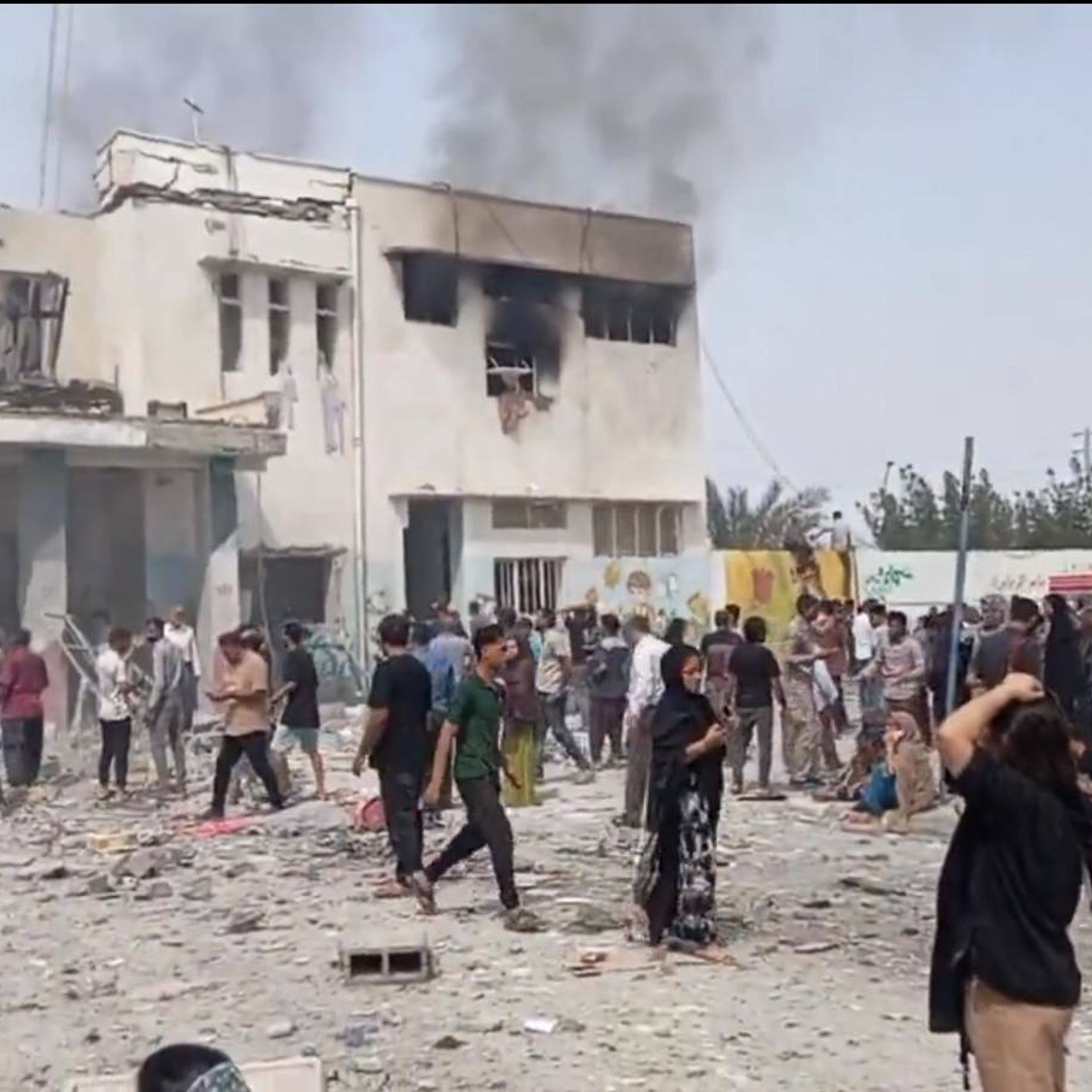
Much of the leaders’ attention was focused on the ongoing conflict in West Asia. The war waged on Iran by the United States shows no sign of ending, and instead threatens to engulf the entire region.
Ansar Allah, or the Houthis, which has controlled much of Yemen, has now expanded its reach to the Bab-el-Mandab choke point in the Red Sea. Like the Strait of Hormuz, virtually closed since June, Bab-el-Mandab is a critical waterway through which around 12 per cent of global maritime trade passes via the Suez Canal.
The Yemeni government based in the capital, Sana’a, has said that it will only prohibit Saudi Arabian ships from transiting the narrow Red Sea corridor. Saudi Arabia, admitted to BRICS but not yet formally a member, has been transporting the bulk of its oil through the Red Sea because of the closure of the Hormuz Strait. The global price of crude has been hovering above $100 a barrel since recent events, and many experts predict it could soon reach $130 a barrel.
The war in Ukraine threatens to seriously impact the global food supply chain, with both warring sides targeting ships carrying foodgrains. Ukraine and Russia are among the world’s biggest wheat exporters, with much of their market in the countries of the global South.
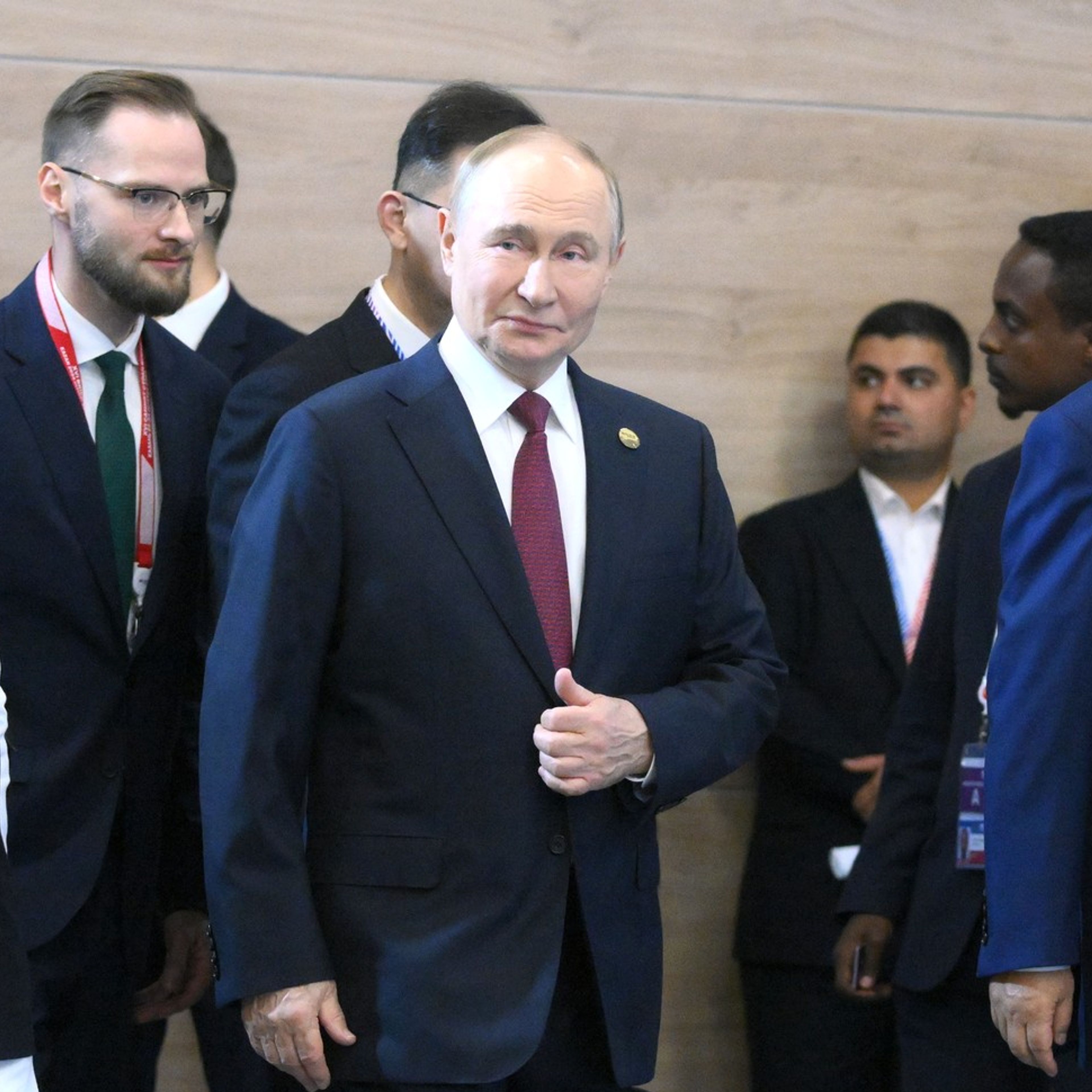
Russian President Vladimir Putin, in his concluding speech at the summit, proposed setting up a new collaborative grain market among BRICS member countries, along with a new insurance mechanism. He pointed out that the grouping has independent routes for the movement of capital, labour and technologies. “In fact, we can operate regardless of outside pressure,” the Russian leader said.
An uncommon meeting on the sidelines
Donald Trump’s foolhardy act against Iran has sent the global economy into a tailspin. Iran, the country worst affected, made its case effectively at the summit. President Masoud Pezeshkian held bilateral meetings on the sidelines with most of the attending leaders, including the Crown Prince of Abu Dhabi, Sheikh Khalid bin Mohammed bin Zayed al-Nahyan, representing the UAE – the first high-level meeting the two sides have held since hostilities in the Gulf began more than three months ago.
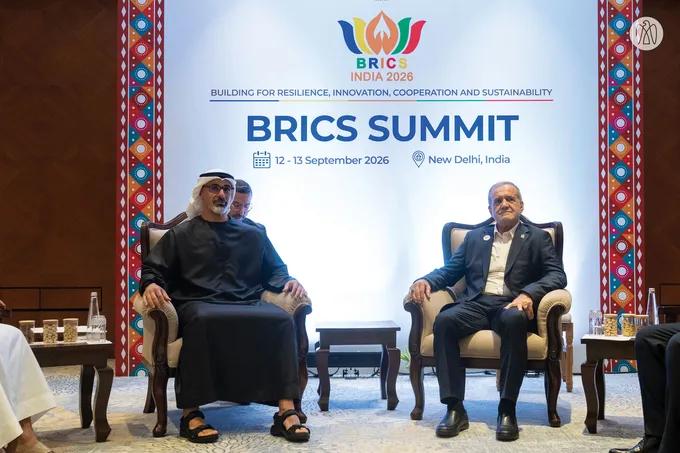
Pezeshkian, in his concluding speech, stressed that BRICS should play a greater role in making the international order more balanced and inclusive. He said the “unilateral sanctions” imposed by the West were directly impacting global food security, and that “economic resilience” could not be sustained without security – a reference to the military aggression against his country by the US and Israel.
Rio vs New Delhi, and why ‘America’ was not named
In the 140-paragraph New Delhi Declaration, BRICS condemned unilateral economic and secondary sanctions that violate international law. The country responsible for the sanctions, tariffs and the ongoing conflict in the Gulf is not named in the document. In last year’s BRICS Rio Declaration, the US and Israel had been openly condemned for striking Iran’s nuclear facilities in June.
The Declaration also calls for speedier measures to expand intra-BRICS trade by encouraging local currency settlements, alongside faster and cheaper cross-country payments. There has been no formal call for replacing the dollar during proceedings in Delhi, though the Russian and Iranian presidents both stressed the importance of de-dollarisation.
Pezeshkian said the BRICS New Development Bank should help facilitate transactions among member states in their own currencies. A statement issued after the meeting of BRICS finance ministers speaks of interoperable payment systems and local currency settlements.
On the political front, the Declaration once again reiterated the grouping’s support for the Palestinian cause and the right to full statehood. It expresses firm opposition to the forced displacement of Palestinians in the occupied territories and to demographic and geographic changes in Gaza. The BRICS statement continues to back South Africa’s case against Israel’s actions in Gaza at the International Court of Justice, and condemns Israel’s continued violation of the ceasefire and of Lebanon’s sovereignty and territorial integrity.
This year’s Declaration conspicuously avoided mentioning the conflict in Ukraine or the dire political and humanitarian crisis in Haiti – both of which had featured in the Rio Declaration. Instead, for the first time, an entire paragraph was devoted to America’s ongoing attempts to economically strangle Cuba. The BRICS statement expressed “deep concern” over the tightening of the economic blockade on the island nation. Cuba has not been allowed to import essential goods, including oil, since the abduction of Venezuelan President Nicolás Maduro by the American military in the first week of January. Cuba had imported almost all its oil from Venezuela. No mention was made in the statement of America’s breach of Venezuelan sovereignty earlier this year.