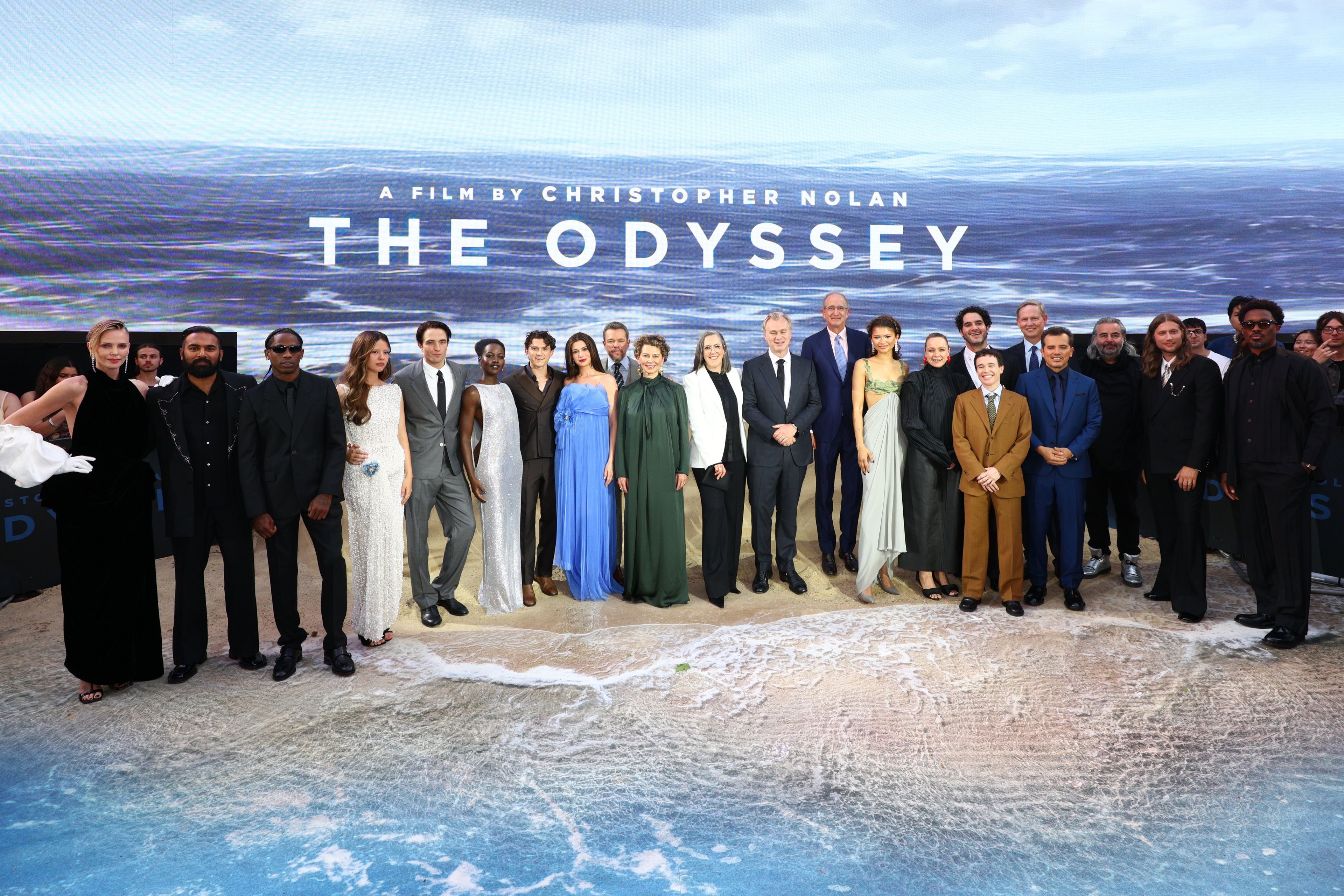
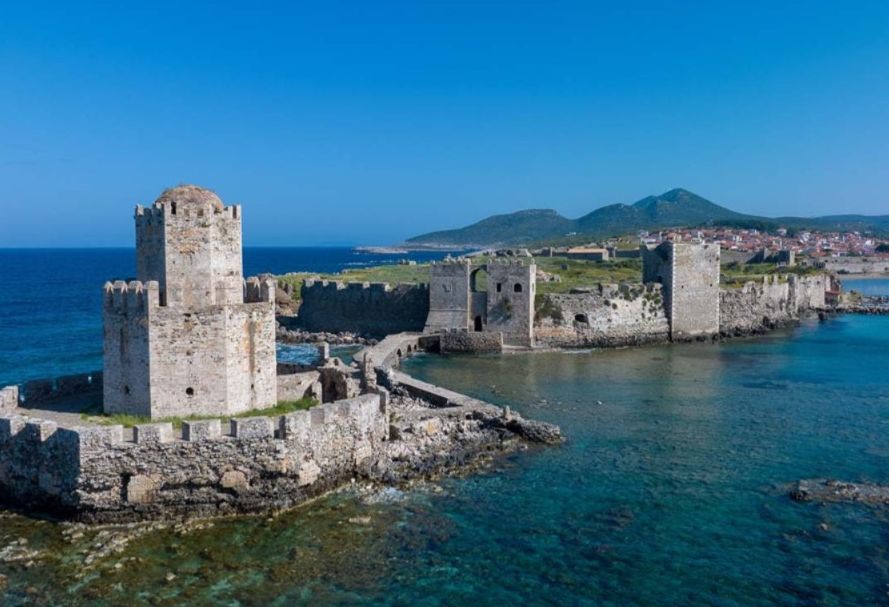
Christopher Nolan's IMAX retelling of Homer's epic has done more than fill theatres - it has sent travellers, readers and language learners scrambling toward Greece, and the country's tourism establishment is racing to turn a summer of hype into a durable trade. Matt Damon-starred historical epic portrays the wandering king of Ithaca in The Odyssey, and the movie was mostly shot in Greece. It featured historical Nestor's Cave, Voidokilia beach, Methoni Castle, and Acrocorinth among its locations. To cash in on the new craze, Greek Prime Minister Kyriakos Mitsotakis moved quickly to thank Nolan on a video call, Politico reported. Mitsotakis said the mega projects like The Odyssey would connect modern creativity with the ancient Greek culture.
From the Multiplex to the Peloponnese
Greek tourism officials are now trying to turn the movie’s endorsement into tourist footfall. The Greek National Tourism Organisation has already flown journalists out to Ithaca, Odysseus's storied home island. Separately, in the Peloponnese peninsula of southern Greece, regional authorities are assembling a dedicated trail called "The Odyssey Route - Homer's Peloponnese," with new signage and a companion website launching this autumn, tying film locations to other sites woven into the wider myth, including islets associated with the legends of Helen of Troy and Leda.
Peloponnese tourism official is honest: reality won't match the hype. However, he doesn't care, because the free publicity is worth it. Thanasis Michelongonas, the region's tourism deputy, admits something: the movie has built up huge expectations, and when tourists visit the real filming spots, they might feel a bit let down. They could see an actual beach or cave, but they can’t revisit an epic Hollywood scene. But he's not worried about that. The movie has given the region a massive amount of free attention and publicity. Even if a few visitors are mildly disappointed, way more people are now coming to visit than before, and that's a win.
Homer’s Odyssey
The Odyssey is the story of Odysseus's ten-year journey home to Ithaca after the Trojan War, battling monsters, gods, and endless delays to reunite with his wife Penelope and reclaim his kingdom. Homer, a Greek poet of the 8th century BC, is said to have composed the Odyssey and the Iliad as oral poetry. His verses were meant to be memorised and performed aloud for audiences, long before writing preserved them. Over time, the depth, structure, and enduring power of these epics earned Homer near-mythic status, and he came to be regarded as the founding figure of Western literature.
For centuries, Homer's Odyssey was treated purely as legend; a beautifully told myth about gods, monsters and a wandering king, with no real historical basis. That view began to shift in the 1870s, when the amateur archaeologist Heinrich Schliemann excavated a site called Hisarlik in modern-day Turkey and found the ruins of an ancient city he identified as Troy—the very city at the centre of the Trojan War that sets the Odyssey's events in motion. This discovery suggested the epics weren't pure invention but were built around a real war and real places, even if the gods, cyclopes and sea monsters were poetic embellishment. Since then, archaeologists have kept finding supporting threads. For instance, excavations at the Palace of Nestor in Pylos, Greece, have uncovered a real Bronze Age palace matching the one described in the poem, pushing scholars to see the Odyssey less as fantasy and more as myth wrapped around a kernel of genuine history.
The Numbers Behind the Buzz
With Nolan’s mega Hollywood project, there is a sudden surge of interest in sites linked to ancient Greek history and culture. Early bookings data backs up the optimism; easyJet holidays reported an 18 per cent week-on-week jump in bookings to the Greek mainland and islands in early August, while operator Unforgettable Greece told Travel Weekly that its Greece bookings were up 76 per cent year-on-year, prompting it to roll out 22 new itineraries linking Athens, Corfu and Ithaca.
The film has pulled readers back to the source material too. Homer sales have climbed 70 per cent in the UK and 76 per cent in the US since the start of the year, per Circana BookScan. A related report noted a sharp rise in Spotify listening hours for audio editions of the Odyssey in France as well. Perhaps the oddest ripple effect: language platform Preply found UK searches for "learn Greek" spiking dramatically around the film's release, a surge its language-trends expert Madeline Enos linked to audiences wanting to engage with both Homer's Ancient Greek and the modern language spoken in Greece today.
Not Everyone Is Cheering
The tourism windfall hasn't erased friction over the film itself. Greek audiences and commentators spent much of the summer arguing over Nolan's casting choices — including a Black actress in the role of Helen of Troy — and over Athens' conspicuous absence from the film's global publicity tour, which took in London, Paris, Mumbai, New York, Beijing and Seoul but skipped Greece entirely despite large parts of the production having been filmed there.
Hydra Island Success repeated?
Before Odyssey, the Greek island of Hydra enjoyed a similar boost from a Hollywood movie. When Boy on a Dolphin was shot there in 1957- the first Hollywood production ever filmed in Greece - a single scene of Sophia Loren emerging from the sea sent tourists flooding to the island the following summer. Rather than let the moment fade, Hydra kept building on it: a second hit film, Phaedra, arrived in 1962. By the early 1960s, the once-sleepy island had reinvented itself as a playground for Athens's elite and a fixture on the international jet set's map — a reputation it never really lost. Greek officials pushing the Odyssey Route are, in effect, betting they can repeat that trick: turning one summer's cinematic buzz into decades of durable appeal, rather than a fading headline.
Not every expert is convinced the moment will last. Politico quoted Angelos Chaniotis, a professor at Princeton's Institute for Advanced Study, who cautioned that a film's pull-on travellers usually fade unless it is backed by sustained investment in classical-studies programmes, the archaeological service and better-presented museums and sites. For now, Greek officials seem happy to bank the win first and worry about longevity later. As Michelongonas sees it, a movie can only carry a destination so far; however, turning down the free exposure it has generated would be the bigger mistake.