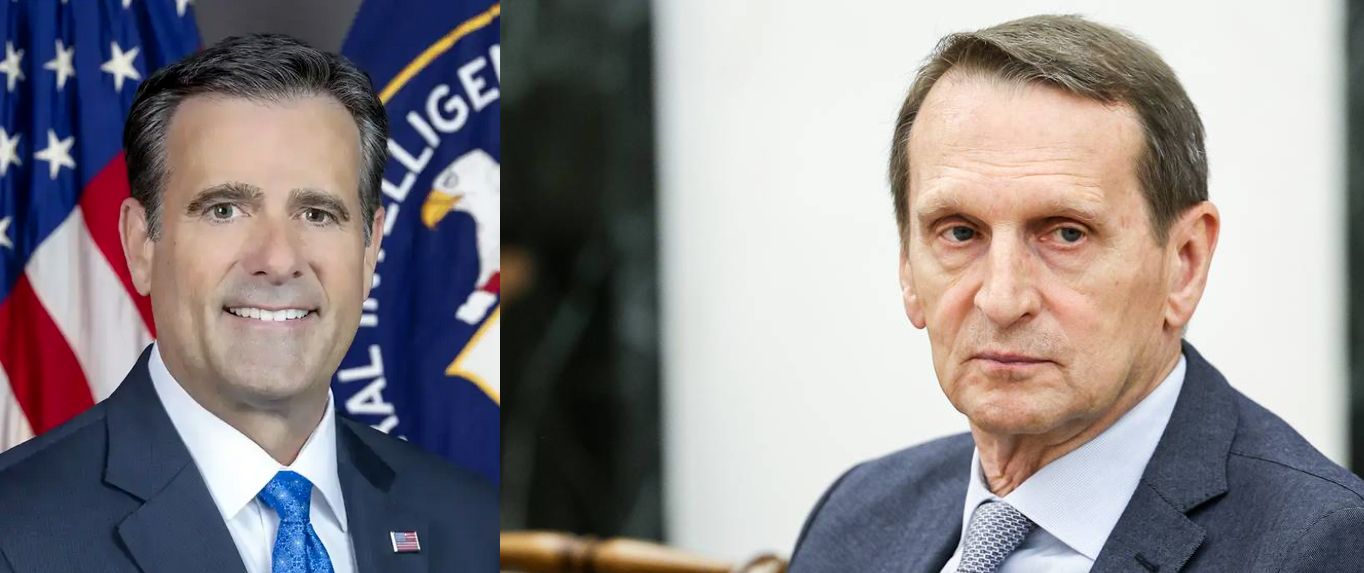
A US Air Force C-17 cargo plane slipped into Moscow’s Vnukovo airport on August 25, carrying CIA Director John Ratcliffe on the highest-level American visit to Russia in years. The trip came four and a half years into a war that shows no sign of ending, and it marked Ratcliffe’s first known journey to Russia as CIA chief, and the first by any CIA director since William Burns’s visit in November 2021, just months before Moscow invaded Ukraine.
How it played out
Flight trackers spotted the aircraft hours before the media identified who was aboard. The aviation OSINT account Armchair Admiral first posted the tail number and callsign as the plane left Riga, Latvia for Vnukovo. Flightradar24 followed with its own post – “An unusual visitor to Moscow this morning” – while Casus Belli mapped the plane’s full four-day route and Zaryon OSINT pinpointed the landing. Anton Gerashchenko then supplied ground confirmation, circulating footage of a diplomatic motorcade in Moscow. The War Zone reconstructed the full sequence – though at that stage, none of the trackers had clocked that the CIA director was aboard; the assumption was a routine embassy logistics run.
Hours later, CBS News broke the real story: “CIA Director John Ratcliffe is in Moscow, Russia for meetings, sources familiar with the situation told CBS News Tuesday.” Others confirmed the development soon.
Why the secrecy
The visit was not cleared with Moscow in advance. According to reports, Washington had asked Kyiv to pause drone strikes over Russian territory for several days beforehand to keep the airspace clear for the flight – and Russian air defence crews had to be told not to fire on the incoming aircraft. Ratcliffe’s arrival also landed awkwardly against the diplomatic calendar. It came a day after Treasury Secretary Scott Bessent unveiled “Operation Economic Outcast”, a campaign to isolate Iran by penalising countries – Russia among them – that keep trading with Tehran, and just after Steve Witkoff, US Special Envoy to the Middle East, and Jared Kushner, Special Envoy for Peace Missions, postponed a Moscow trip of their own.
Mechanics of the meeting
Senior US officials visiting Moscow typically fly a Gulfstream, as Witkoff and Kushner did in January. Ratcliffe instead boarded a C-17A Globemaster III – a cargo airlifter built with defensive countermeasures, not a VIP jet.
His choice of airport was equally deliberate. Vnukovo is Moscow’s real gateway for foreign dignitaries: it houses Russia’s own head-of-state VIP terminal, and the country’s top brass use it too. Touching down there put Ratcliffe inside Russia’s protocol machinery from the moment he landed.
The plane sat on the ground for roughly eight hours, according to flight-tracking data and media reports. His counterpart was Sergei Naryshkin, Russia’s foreign intelligence chief – not a stranger. The two had spoken by phone on March 11, 2025 and agreed on regular contact, a call Naryshkin at the time called “very constructive”. Ratcliffe has formed a back-channel communication with Moscow: he personally negotiated the release of Ksenia Karelina, a U.S.-Russian dual national and former ballet dancer who was jailed in Russia on treason charges, in April 2025 and was central to the large multi-country prisoner exchange in 2024 – a history that lends weight to speculation the trip also touched on detained Americans, even if it wasn’t the main purpose.
Moscow remains tight-lipped
Kremlin spokesman Dmitry Peskov stayed cautious, speaking through the state wire TASS. On the meeting itself, he said: “I can tell you that there were no meetings with the Russian president,” adding that “contacts took place through the intelligence services”. Putin was briefed afterwards, Peskov said, but Moscow declined to go further. He called the visit “a positive development” while cautioning that he could not yet say what effect it might have on the current crisis between the two countries.
American media speculates, Trump denies
Speculation over the trip’s real purpose consumed the US press for two days before Trump addressed it directly. Radio host Glenn Beck aired the two leading theories: that Ratcliffe had gone to warn Moscow against testing NATO’s resolve, or to discuss fresh sanctions over Iran and the Strait of Hormuz. Trump rejected both, calling the visit “semi-routine”: “He (Ratcliffe) is not in there for any of the things that you said... Would like to see the war with Ukraine end,” he said. CBS News, however, reported separately, citing sources familiar with the matter, that Ratcliffe had in fact raised Iran, warning Moscow of additional sanctions if the Strait of Hormuz is not reopened to shipping.
US-based analysts read more into the trip than the White House let on. Bradley Bowman, senior director of the Center on Military and Political Power at the Foundation for Defense of Democracies and a former national security adviser to the Senate Armed Services and Foreign Relations committees, told RFE/RL that he hoped Ratcliffe had carried a blunt message to the Kremlin. “I would hope on top of his list would be a direct demand that Vladimir Putin end this war of naked aggression against Ukraine,” he said.
Bowman added that Washington needed to make clear Russia would face increasingly painful measures if the war dragged on, while the US and its allies kept helping Ukraine defend itself. Glen Howard, chairman of the Saratoga Foundation and a Russia specialist, offered a blunter read of the symbolism alone: “CIA directors don't go to Moscow unless it is to ask something.”
A further speculation, reported by the Wall Street Journal, said that Ratcliffe travelled after US intelligence picked up early signs Russia was preparing for a possible new mobilisation wave – a theory that fits Russia’s parliamentary elections falling on 18-20 September, after which Ukrainian officials have long warned a mobilisation announcement would be likelier to land.