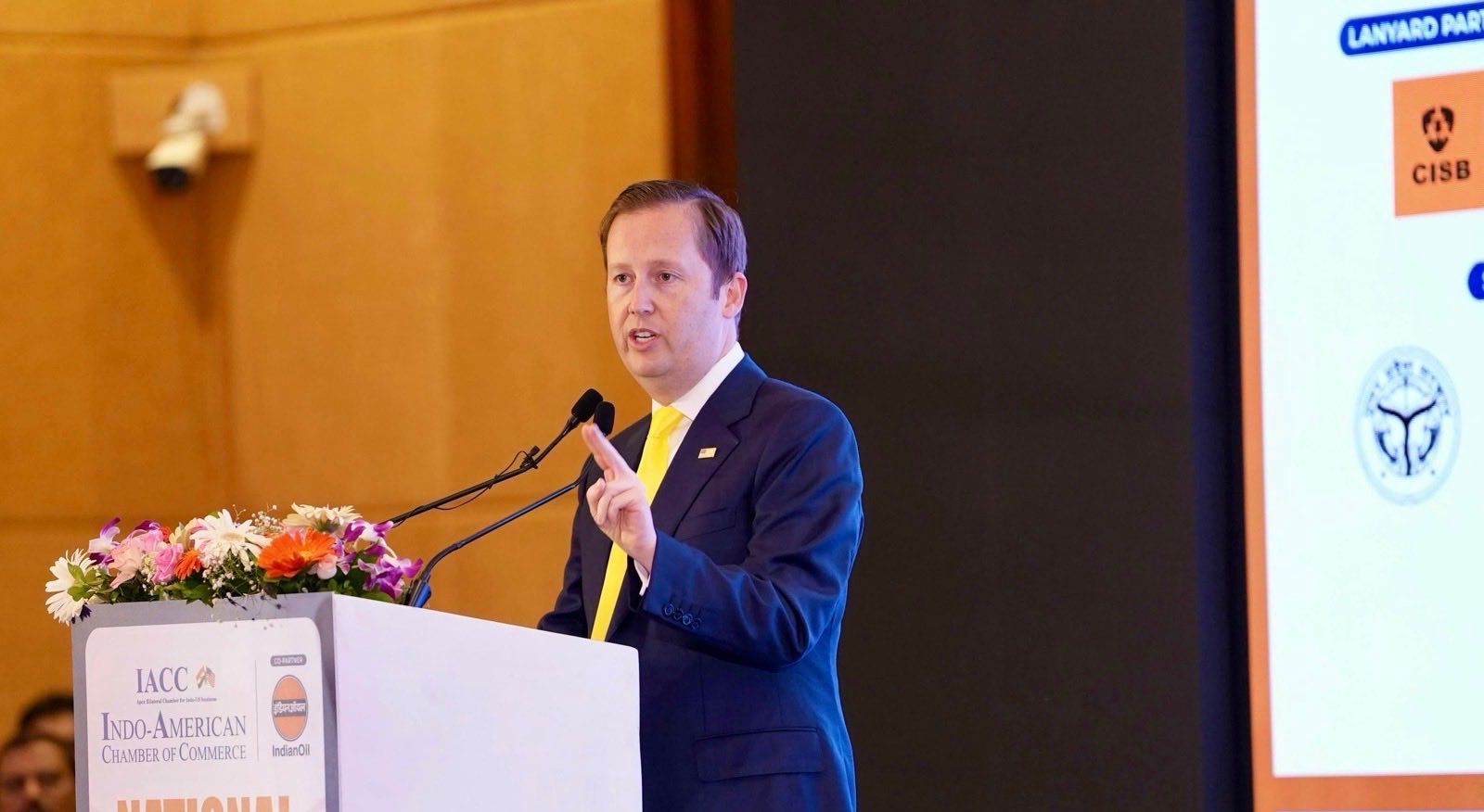
US Ambassador to India Sergio Gor has reignited one of South Asia’s most sensitive diplomatic fault lines, after describing Jammu and Kashmir as an “important part of India” during his first visit to the Union Territory on August 19. Pakistan’s foreign ministry immediately hit back, summoning the US chargé d'affaires in Islamabad and lodging what it called a “strong demarche” – a formal written protest – against the remarks.
What Gor said
Gor, who also serves as President Donald Trump’s Special Envoy for South and Central Asia, travelled to Srinagar to meet Jammu and Kashmir Chief Minister Omar Abdullah. Speaking to reporters, he said: “Everybody here knows I am the US ambassador to India, and this is an important part of India... It is an incredibly beautiful place.” He also indicated that Washington could review its Level 4 “Do Not Travel” advisory for the region, citing security improvements made by the Centre and the Union Territory government, though he stopped short of announcing a change: “I cannot make any big announcements here today, but it is something we [will look at].”
Gor's comment breaks with decades of studied US neutrality on Kashmir. This was the first standalone visit to Jammu and Kashmir by a sitting US ambassador since India read down Article 370, diluting the region’s special constitutional autonomy in August 2019. The last comparable visit was by then-ambassador Kenneth Juster, who went as part of a larger delegation of envoys in 2020; he had earlier made a standalone trip in 2018, meeting the then-governor N.N. Vohra.
Why the wording matters
For decades, Washington’s position on Kashmir has rested on studied neutrality rather than explicit endorsement of either country’s claim. That approach goes back to the 1972 Simla Agreement, in which India and Pakistan committed to resolving the dispute bilaterally, without third-party mediation – a framework successive US administrations have generally deferred to, while stopping short of calling Kashmir “part of India” in the way Gor now has. The US has traditionally urged India and Pakistan to negotiate directly, as per Simla and the 1999 Lahore process, and avoided taking a position on the region’s ultimate status.
Pakistan, for its part, has long wanted Kashmir’s status resolved in line with older UN Security Council resolutions calling for a plebiscite – a position India considers overtaken by Simla’s bilateral framework. Gor’s remark, and his hint at loosening the travel advisory, therefore edges towards language India has sought from Washington for years and that Pakistan has long worked to prevent.
Pakistan’s response
Pakistan's Ministry of Foreign Affairs said it had “strongly condemned and categorically rejected the characterisation of Jammu and Kashmir as a ‘part of India" adding that the region “is an internationally recognised disputed territory, awaiting final disposition in accordance with the relevant UNSC resolutions and the aspirations of the Kashmiri people”. It called the remarks “factually incorrect” and “irresponsible”, arguing that they “negated the long-standing and well-documented position of the United States on the Jammu & Kashmir dispute” and ran contrary to “the United States’ commitment to supremacy of international law and the UN Charter”.
Pakistan’s foreign ministry summoned US chargé d'affaires in Islamabad as the position of US ambassador has been lying vacant for a few years now. Notably, Islamabad’s statement also acknowledged Trump’s earlier offer to mediate between India and Pakistan following their four-day military conflict in May 2025, even as it urged Washington “to ensure that its public statements remain consistent with the disputed status of Jammu and Kashmir”. India has consistently rejected any third-party mediation on Kashmir, citing Simla.
The bigger picture
Analysts, however, caution against reading too much into a single remark. As one assessment put it, Gor’s comment “aligns closely with New Delhi’s position”, but “there has been no formal announcement changing the United States’ broader diplomatic position on the India-Pakistan dispute” – meaning the more concrete signal is Washington’s stated willingness to revisit its travel advisory, not a declared shift in Kashmir policy itself.
Even so, the episode came at a delicate moment: it follows the May 2025 India-Pakistan conflict, comes as Washington and Islamabad have been drawing closer on other fronts, and coincides with renewed Indian efforts, including a documentary on Operation Sindoor, to press its narrative on the region internationally. Former Jammu and Kashmir Chief Minister Mehbooba Mufti, meanwhile, has urged Gor to go further and withdraw the travel advisory outright, arguing it has become “a wall between Kashmir and the world” for a region economically dependent on tourism.
Renowned strategic analyst Brahma Chellaney said that Gor’s remarks were in sharp contrast with U.S. Ambassador Donald Blome’s 2022 visit to Pakistan-administered Kashmir, where he used the term “Azad Jammu and Kashmir” and described the region’s sites as reflecting the “cultural and historical richness of Pakistan”. He said on X that Gor’s comments appeared to be aimed at repairing strained U.S.-India ties, even while President Donald Trump has continued to frame Kashmir as the central India-Pakistan dispute, with less emphasis on the cross-border terrorism that India identifies as the root cause of tensions.
He believes that US ambassadors “often adapt their messaging to the countries where they are posted”, but that rarely leads to an official change in state department’s policy.