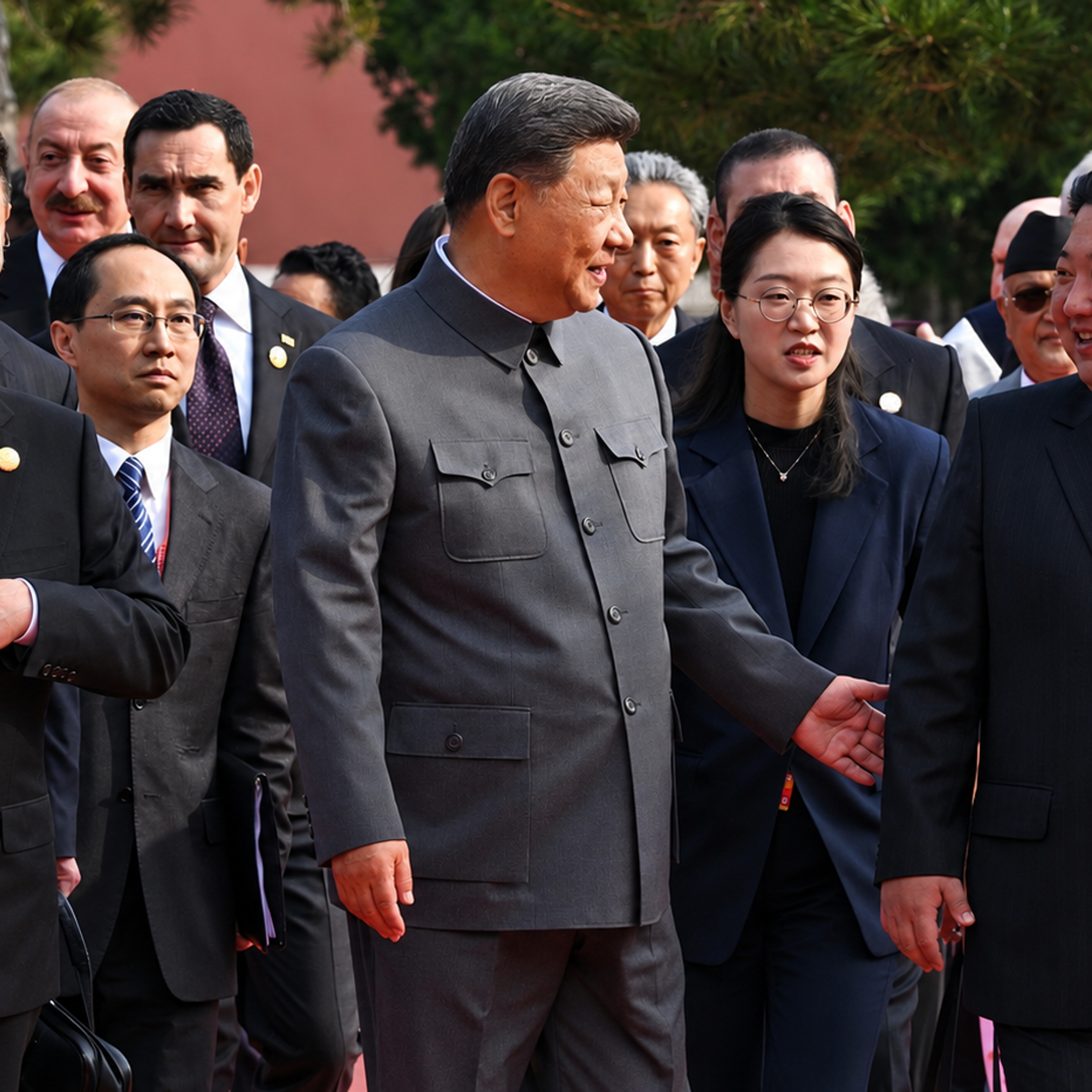
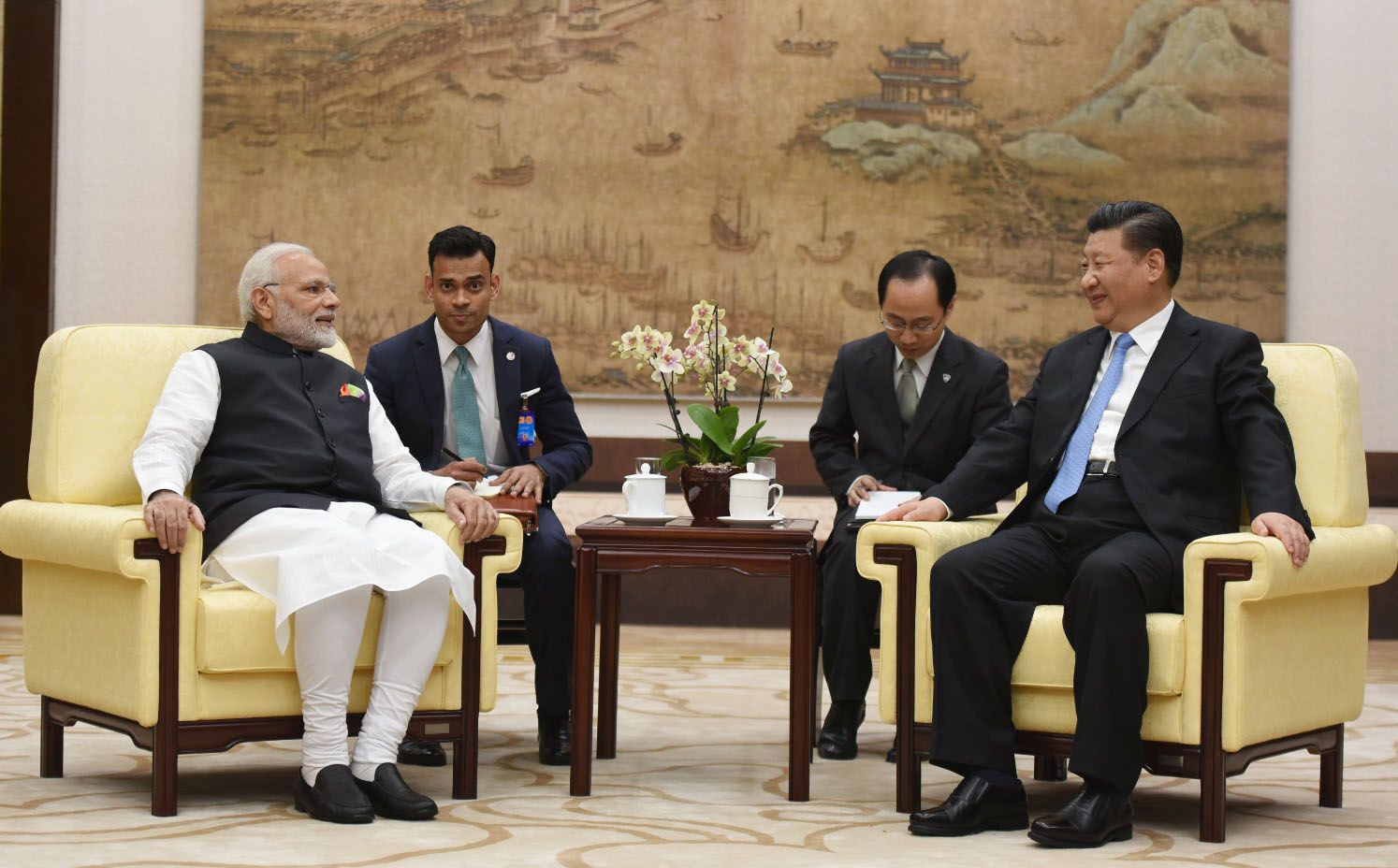
Chinese President Xi Jinping is likely to attend next month’s BRICS (Brazil, Russia, India, China, and South Africa) summit in New Delhi – a trip that would mark his first visit to India in seven years and a striking diplomatic moment. Coming just weeks after New Delhi and Beijing traded sharp words over a contentious mapping exercise in Arunachal Pradesh, the prospect of Xi’s presence – reportedly with a delegation some 400 officials strong, roughly double the size of his last Indian visit in 2019 – underscores how far the world’s two most populous nations are prepared to go to keep their delicate rapprochement on track.
Indian officials say the sheer scale of preparations is telling. “Chinese officials are busy finalising hotels and security protocols,” one Indian source with direct knowledge told Reuters. India is hosting the summit on 12-13 September, and officials from both sides are expected to use the gathering to explore deeper engagement while continuing to manage long-standing differences over the border and regional security.
Xi’s precise travel plans, and the agenda for any bilateral meeting with Prime Minister Narendra Modi, are yet to be finalised. Beijing, for its part, has been cautious in giving statements: the Chinese foreign ministry said that it “attaches great importance to and actively participates in BRICS cooperation” and supports India’s hosting of the summit, adding that it currently has “no information available to provide” about the trip.
The goodwill is being tested, however, by a row that has flared over cartography. On August 7, the Survey of India formally assigned standard names to 27 locations in Arunachal Pradesh, a north-eastern Indian state that Beijing claims in part as “Zangnan”, or southern Tibet. China objected almost immediately, and the exercise landed alongside separate, unverified claims from a local fact-finding team of Chinese troop activity around Upper Subansiri – allegations that sparked political outrage in New Delhi, where the opposition has pressed Modi’s government over its handling of the border.
Yet neither side has allowed the dispute to spiral. Beijing has described the border situation as “generally stable”, while India’s National Security Adviser, Ajit Doval, travelled to Beijing for the 25th round of Special Representative talks with Chinese counterpart Wang Yi – a sign that both governments are keen to keep the boundary question contained rather than let it derail a summit neither wants to see disrupted.
That restraint reflects just how much is riding on New Delhi’s turn as BRICS chair. India assumed the rotating presidency at a moment of considerable strain: Washington has imposed tariffs of up to 50 per cent on Indian goods, including a 25 per cent levy tied to New Delhi’s purchases of Russian oil, and has separately threatened additional duties on any country seen as aligning with the bloc’s push to reduce reliance on the US dollar. A preparatory foreign ministers’ meeting in May failed to produce a joint declaration for the first time in years, exposing fault lines within the grouping over West Asia and de-dollarisation.
Analysts have argued that Washington’s escalating tariffs and sanctions pressure, first under the Trump administration’s trade war with Beijing and later its punitive levies on New Delhi, gave both capitals a shared incentive to steady their own relationship rather than face two fronts at once; China’s ambassador to India publicly voiced Beijing’s opposition to the US tariffs on India even as Modi pressed ahead with outreach to Beijing.
Yet, India, as host, is expected to steer clear of overtly anti-dollar rhetoric while instead pushing softer alternatives and rallying members around shared frustration at Washington’s tariff “coercion”, trade resilience and reform of global financial institutions. Border stability, regional security and the mechanics of expanding India-China engagement are all expected to feature in any bilateral discussions on the summit's margins.
Wang Youming, director of the Institute of Developing Countries at the China Institute of International Studies, a think tank affiliated with China’s foreign ministry, has argued that sensitive proposals for a common BRICS currency or payment system “will likely stay off the agenda”, with New Delhi instead expected to float milder ideas such as a “BRICS Digital Currency Alliance” even as calls grow within the bloc for a broader “BRICS unified market” to blunt the impact of Washington’s tariffs.
“For India, the current BRICS chair, the challenge lies in carving out room for cooperation – particularly under Donald Trump’s watchful eye and the need to steer clear of his red lines. The opportunities and obstacles presented by the BRICS India Year are more conspicuous under such pressure,” he writes.
Xi-Modi’s previous meets
Xi’s only prior visit to India came in October 2019, when he travelled to the temple town of Mamallapuram, on the Tamil Nadu coast, for a second “informal summit” with Modi – a sequel to their first such meeting in Wuhan in 2018. Even then, the mood was uneasy, as the summit unfolded amid Chinese anger over New Delhi’s revocation of Kashmir’s special status, and the two leaders did not manage to agree on a joint statement, settling instead for a pledge to “prudently manage” their differences.
That fragile understanding collapsed within months. In June 2020, Indian and Chinese troops clashed violently at Patrolling Point 14 in the Galwan Valley, in the highest and first fatal confrontation on the border since 1975, killing 20 Indian soldiers and, by Beijing’s account, four Chinese ones. The clash plunged relations into their worst period in decades, freezing high-level exchanges, hardening India's screening of Chinese investment, and locking tens of thousands of troops into a four-year military stand-off along the Line of Actual Control (LAC).
The thaw, when it came, was gradual and driven as much by external pressure as by bilateral goodwill. Disengagement crept forward at one friction point after another between 2020 and 2022, before talks stalled over the last two flashpoints, Depsang and Demchok. It was only in October 2024 that the two sides finally reached an understanding restoring patrolling rights there, clearing the way for Modi and Xi to hold talks on the sidelines of the BRICS summit in Kazan, Russia – their first substantive meeting since Galwan.
Nearly a year after Kazan, the two leaders met again on the sidelines of the SCO summit in Tianjin in August 2025, welcoming the “positive momentum” in ties and reaffirming that the countries were “development partners, not rivals”. That Tianjin visit came shortly after Modi’s own trip to China last year – his first in seven years – which, as Reuters notes, has been followed by only gradual improvement in the broader relationship.
Should Xi travel to New Delhi next month, it would mark his first return since Mamallapuram and complete a rare loop of reciprocal visits between the two Asian giants – one that both governments, for now, appear determined to protect from the frictions still simmering along their disputed Himalayan border.